


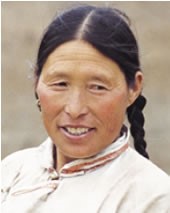

The Groma people live primarily in the Chumbi Valley region of southern Tibet in western China, near the borders of Bhutan and India. They are officially classified within the broader Tibetan nationality by the Chinese government, although they possess their own distinct linguistic identity. Their language, known as Groma or Tromowa, belongs to the southern branch of Tibetic languages and is closely connected to communities living between Tibet, Bhutan, and Sikkim.
Very little detailed information exists about the Groma, and many anthropological sources treat them as part of the larger Tibetan population. Historically, they developed within the harsh environment of the Himalayan plateau, where survival depended heavily on livestock herding, trade routes, and adaptation to high-altitude conditions. The Chumbi Valley has long served as an important corridor between Tibet and South Asia, exposing the Groma to influences from neighboring Tibetan, Bhutanese, and Himalayan cultures.
Their history is deeply tied to Tibetan civilization and the broader religious and cultural traditions of the Tibetan Plateau. Despite political and social changes in modern China, the Groma continue to maintain a distinct cultural identity rooted in Tibetan language, family structures, and religious customs.
The Groma live much like other traditional Tibetan peoples of the Himalayan region. Many families herd yaks, sheep, and goats across high mountain pastures, relying on livestock for food, clothing, transportation, and trade. Harsh weather, isolated terrain, and limited economic opportunities shape daily life in many Groma communities.
Women often carry a large share of the daily workload, including caring for children, preparing food, tending animals, processing wool and dairy products, and managing household responsibilities. Men may spend long periods with herds or gathering socially within village life. In remote communities, life remains physically demanding and closely connected to seasonal rhythms and survival in the mountains.
Meals commonly include barley products, yak butter tea, dairy foods, meat, and simple high-altitude staples common among Tibetan peoples. Family and clan relationships are highly valued, and traditional customs continue to shape marriages, festivals, and social obligations. Isolation and rugged geography have helped preserve many older cultural practices among the Groma.
The Groma are strongly influenced by Tibetan Tantric Buddhism, which shapes nearly every aspect of religious and community life. Monasteries, prayer rituals, pilgrimages, sacred objects, prayer flags, and devotion to Buddhist teachers play important roles within their spiritual practices. Pilgrimages to sacred Himalayan sites such as Mount Kailas are highly respected acts of devotion.
Alongside formal Tibetan Buddhism, many Groma also practice older animistic and folk religious traditions connected to spirits, local deities, nature powers, and protective rituals. Spirit appeasement ceremonies and practices tied to unseen spiritual forces remain influential in some communities. This blending of Buddhist teaching with folk spirituality and ritual protection is common throughout parts of Tibetan culture.
There are no known indigenous Christian believers among the Groma. Historically, Christian work in Tibetan regions often faced severe resistance and persecution, which contributed to the continued absence of a visible Christian presence among this people.
The Groma people face both practical and spiritual challenges. Their isolated mountain environment creates difficulties related to healthcare access, transportation, education, economic opportunity, and communication with the outside world. Harsh winters and remote geography can make daily survival difficult for many families.
Spiritually, the Groma remain almost completely unreached with the gospel. Very few have ever heard a clear explanation of Jesus Christ according to Scripture. There is a great need for faithful Christian workers who are willing to learn Tibetan culture and language, patiently build relationships, and communicate biblical truth with humility and compassion.
Access to Scripture, discipleship resources, medical care, education support, and practical community assistance could help open doors for meaningful long-term gospel witness among the Groma. Strong prayer support is also needed because ministry among Tibetan Buddhist peoples has historically been difficult and spiritually resistant.
Pray that the Groma people would hear the gospel clearly and come to know Jesus Christ as Lord and Savior.
Pray for Christian workers to serve among the Groma with wisdom, humility, perseverance, and genuine love.
Pray that the Groma people would be adopted through the People Group Adoption program so that ongoing prayer, outreach, discipleship, and future gospel engagement would continue among them.
Pray that believers serving in Tibetan regions would remain faithful under opposition and that strong biblical churches would one day be established among the Groma people.
Scripture Prayers for the Groma in China.
https://en.wikipedia.org/wiki/Groma_language
https://www.minzuyuyan.com/en/node/4144
https://people-groups.asiaharvest.org/India/Groma-PBW.pdf
https://www.nature.com/articles/s41467-022-28827-2
https://www.sciencedirect.com/science/article/pii/S0960982224005815
| Profile Source: Joshua Project |



