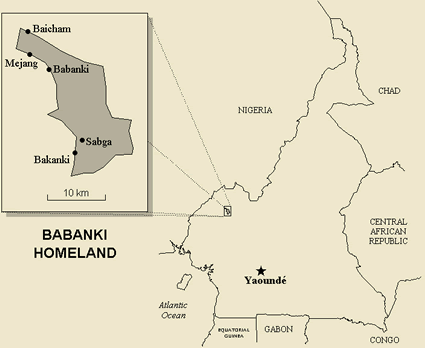

The Babanki, who often call themselves Kejom, are an ethnic community living in the highland region of northwestern Cameroon. Their homeland lies in the Western Cameroon Grassfields, an area known for its many closely related languages and traditional chiefdoms. Babanki communities are centered especially around the settlements of Kejom Keku and Kejom Ketinguh in the Northwest Region near Bamenda.
The Babanki language belongs to the Grassfields branch of the Southern Bantoid languages within the larger Niger-Congo language family. This places the Babanki among a wide network of related peoples across the Cameroon Highlands who share similar linguistic roots and cultural traditions.
Oral histories describe earlier migrations and the formation of local clans that eventually developed into organized chiefdoms. Over time these communities established strong village structures under traditional leadership while maintaining distinctive language and cultural practices that continue today.
Babanki communities are typically organized around villages located in fertile highland valleys. Agriculture forms the foundation of daily life, and families work together to cultivate crops and care for livestock. Farming, local trade, and small crafts contribute to household livelihoods.
Family relationships and community cooperation play a central role in social life. Extended families often live near one another and support each other through shared work and mutual aid. Age-group associations, community gatherings, and village meetings help strengthen social bonds and maintain unity within the community.
Traditional leadership also remains important. Villages are typically guided by a chief, often called a fon, together with councils and elders who help preserve customs and resolve disputes. Cultural expressions such as music, storytelling, festivals, and masked ceremonies reflect the deep heritage of the Grassfields societies and continue to shape community identity.
Christianity is the primary religion among the Babanki people, and many communities include churches where believers gather for worship, teaching, and fellowship. Christian faith is expressed through church gatherings, prayer, and community involvement.
The New Testament has been translated into the Babanki language, allowing people to hear and read portions of scripture in their own language. Access to scripture in a familiar language supports both personal devotion and the teaching ministry of local churches. Alongside Christian faith, traditional religion sometimes competes with faith in Christ.
Although the gospel is present among the Babanki, continued spiritual growth and discipleship are important. Churches benefit from strong biblical teaching and leaders who are equipped to guide believers toward deeper understanding of Scripture.
Resources that encourage Scripture engagement in the Babanki language can help strengthen faith and discipleship. Training for pastors, teachers, and Christian workers can also support the development of healthy and mature churches.
As believers grow in faith, there is opportunity for the Babanki church to share the message of Christ with neighboring communities and other peoples of the region.
Pray that Babanki believers will grow in a deep understanding of God's word and live out their faith in daily life.
Pray for pastors and church leaders who will faithfully teach scripture and disciple younger believers.
Pray that the Babanki New Testament will be widely read, heard, and understood within the community.
Pray that churches among the Babanki will develop a vision to share the good news of Jesus Christ with African peoples without a sound gospel witness.
Scripture Prayers for the Babanki in Cameroon.
https://www.kejom.org/about/
https://en.wikipedia.org/wiki/Babanki_language
https://lepetitprince.eu/world/african/babanki/
https://www.101lasttribes.com/tribes/babanki.html
| Profile Source: Joshua Project |