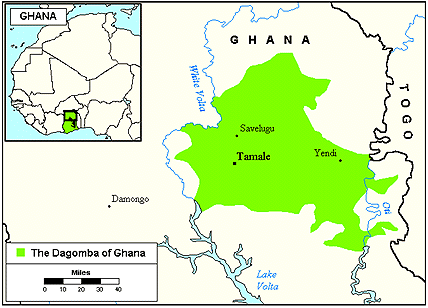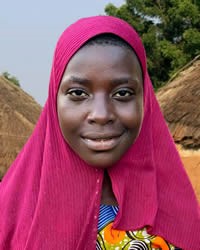

The Dagbani people, also called the Dagomba, are one of the largest ethnic groups in northern Ghana. They belong to the Mole-Dagbani ethnic group, which also includes the Mamprusi and Nanumba people. The Dagbani language, a branch of the Gur language family, is widely spoken and serves as a major local language in Ghana.
The Dagbani people primarily live in the Northern Region of Ghana, with Tamale, Yendi, and Savelugu being key towns. According to the 2021 Ghana Population and Housing Census (GSS, 2021), the Dagbani form the dominant ethnic group in northern Ghana, numbering over 1.16 million people.
The Dagbani are predominantly agrarian, with farming and animal husbandry forming the backbone of their economy. They cultivate maize, millet, yam, groundnuts, and rice, relying on seasonal rains. The dry season limits agricultural activities, leading to food insecurity in some areas. Many Dagbani people keep cattle, goats, sheep, and poultry, often as a form of wealth.
In urban areas like Tamale, they engage in trading textiles, shea butter, and livestock at major markets.
The Dagbani people have a well-organized chieftaincy system, with the Yaa Naa (King of Dagbon) as the supreme leader based in Yendi. Chiefs play political, judicial, and spiritual roles in society (Ladouceur, 1979).
Education in Dagbon has improved, yet literacy rates remain below the national average, especially among rural communities and women (Ghana Statistical Service, 2021). Many children leave school early to work on farms or marry young.
The Dagbani people primarily follow Islam, with a minority practicing traditional African Religion or Christianity. Most are Sunni Muslims, influenced by early trade routes from Mali and Hausa traders. Mosques and Islamic schools (madrasas) are widespread.
Some still practice ancestral worship, relying on shrines, diviners and rituals. Their funeral rites are a mixture of Islamic and traditional practices, sometimes involving animal sacrifices. They celebrate their Islamic heritage and Dagbani chieftaincy traditions. Their naming ceremony involves Islamic prayers recited over newborns on the 7th day.
Christianity is growing in urban areas but faces resistance in traditional settings.
Traditional ceremonies include a Fire Festival. This is an ancient traditional celebration marks historical and spiritual events.
Many rural Dagbani communities lack clean drinking water, leading to high disease rates.
High maternal and infant mortality rates remain a challenge (WHO Ghana, 2023).
Many girls drop out due to poverty or early marriage.
They need sustainable agriculture, small businesses, and better markets to fight poverty.
Many Dagbani have never heard the full gospel in a culturally relevant way.
Those who find Christ lack strong discipleship structures.
Since oral learning is common, radio, audio Bibles and gospel films are crucial tools.
Social pressure makes turning to Christ difficult.
Pray the Dagbani people would be receptive to the gospel.
Pray that God would send more workers and strengthen local believers in Ghana.
Pray for economic and social development They need clean water, healthcare, and education in rural areas.
Pray for Peace in Dagbon Past chieftaincy disputes have caused unrest; pray for unity.
Scripture Prayers for the Dagomba in Ghana.
Ghana Peace Council, 2023
Nyarko et al., 2018
FAO Ghana, 2022
Schildkrout, 2006
Wilks, 2000
UNICEF Ghana, 2020
Songsore, 2017
Ghana Water Report, 2021
UNICEF Ghana, 2020
| Profile Source: Joshua Project |