
People-in-Country Profile
Peoples Data Filter:
Printer friendly version:
Step 1 - Select a Country:  
Send us your updates!
Can you provide any of the following for this people?
Step 2 - Select a People:
Baloch, Southern of Iran
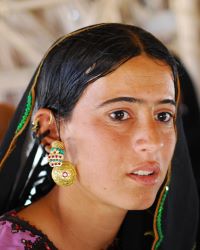
Baloch, Southern People Photo
View Baloch, Southern in all countries.
Submit People Photo:
Peoples
               
Geographic
Global
               
Global
           
 
Affinity Bloc
           
Global


People Cluster
       
Region


People
   
Country


People-by-Country (Profile)


Religion
Language


Global
   
Language


Religion
                             
Baloch, Southern of Iran
 
Profile Text
Submit Profile Text:
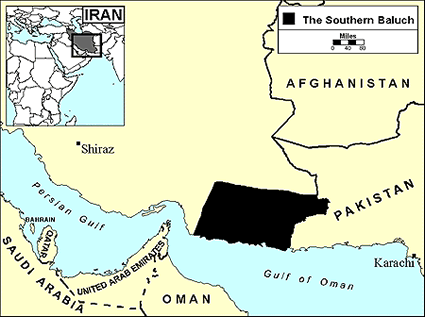
The Southern Baluch of Iran are part of a much larger Baluch community numbering about eight million. Their homeland straddles the borders of Iran and Pakistan, with a majority living in Pakistan. About half of those in Iran live in cities, while the others are semi-nomadic shepherds. The various Baluch groups speak different languages, each with distinguishing characteristics. These languages have been divided into three groups: Eastern, Western, and Southern Baluchi.

Their name, "Baluch," is shrouded in controversy. Some say it means "nomad," while others claim that it is an old Persian word meaning "the cock's crest." Their history is just as mysterious. Some have traced their origins to Nimrod, son of Cush (Noah's grandson). But while some things are uncertain, we do know that they first moved to the region in the twelfth century. During the Moghul period, this territory became known as "Baluchistan."

What Are Their Lives Like?
Baluchmayar is the honor code by which the Baluch live. These principles include extending hospitality and mercy, dealing with each other honestly, and offering refuge to strangers. They are preserved through both songs and poetry. Children learn proper behavior by watching their elders, and are taunted whenever they misbehave.

The traditional Baluch economy is based on a combination of farming and semi-nomadic shepherding. They usually raise sheep, cattle, or goats. Agriculture is limited because of the harsh climate; nevertheless, it plays a large role in the economy. Their chief crop is wheat. While their survival techniques may vary, each community tries to keep a wide variety of animals and grow many different crops. If the local economy does not provide adequate job opportunities, the young men often move to the cities in search of work.

One wild plant, called the "dwarf palm," is used as a dietary supplement. The meat of the palm is eaten, and the leaves are used to make ropes, shoes, mats, and tents.

Baluch societies are organized into kin-based clans and territorially defined tribes. Male elders are the heads of these tribal units. Village settlements are clusters of mud houses, loosely organized around the home of the local chief. They live in these permanent settlements in the summertime. However, in winter, they migrate to the plains and coastal areas, seeking green grass for their livestock. During this time, they live in tents, and move freely across the landscape as the weather dictates. These temporary settlements are smaller.

The entire household is responsible for tending the family's herd. Women work in groups, threshing and separating the harvest; while plowing and planting are done by the men. Traditionally, land is not privately owned but belongs to the whole tribe.

What are their beliefs?
Prior to the coming of Islam, the Baluch were probably followers of Zoroaster. Today, they are Sunni Muslims. Their religious practices remain private, and there is no concept of a "state religion." All forms of secular authority are separated from the spiritual authority held by religious leaders.

What are their needs?
The Baluch have been isolated for many years due to Iran's harsh climate, the difficulty of communicating in mountainous terrain, and their reputation as bandits. Since the governments of Iran, Afghanistan, and Pakistan all have a share in Baluchistan's welfare, they have begun building roads and developing agriculture programs. However, the Baluch have remained largely unaffected by these developmental changes.

Very little missions work is taking place among the Southern Baluch. The Jesus film is available, as well as scripture portions. There are no known believers among them.

Since illiteracy among the Baluch is very high, Christian workers might find open doors into Iran as teachers.

Prayer Points
Ask the Lord to call those who are willing to go to Iran and share Christ with the Baluch.
Pray that God will give missions agencies favor and strategies for reaching these Muslims.
Ask God to open doors for Christian businessmen, teachers, and other tentmakers to share the Gospel with them.
Pray that God will raise up qualified linguists to complete translation of the Bible into the various Baluchi languages.
Ask the Holy Spirit to soften the hearts of the Southern Baluch towards Christians so that they will be receptive to the Gospel.
Pray that God will open the hearts of Iranian governmental leaders to the Gospel.
Ask the Lord to raise up a strong local church among the Southern Baluch.

View Baloch, Southern in all countries.

 
Prayer Links Submit Links:
PrayerGuard.net
Global Prayer Digest: 2006-10-28
 
Web Profile Links Submit Links:
www.everyculture.com/Russia-Eurasia-China/index.html
www.muslimjourneytohope.com
en.wikipedia.org/wiki/Baloch
www.balochonline.com
www.farsinet.com/pwo
 
Web Resource Links Submit Links:
Audio RecordingsMegaVoice Audio Bible and Stories
Audio RecordingsGlobal Recordings
Film / VideoJesus Film
Film / VideoWorld Christian Videos
Printed MatterNo Frontiers Literature

 
Maps
Submit Map:
Country Map:
Detailed UN Political map
Ethnolinguistic Map:
University of Texas map collection
  
  Submit Update:
Country: Iran
Continent:
Asia
Region:
Central Asia
Country Persecution Rank:3 (Only top 50 ranked, 1 = highest persecution ranking)
Yes
Country Details: World Factbook
Population in this Country:
449,000
Largest Provinces on file:
HormozganKerman
Sistan va Baluchestan
Total Provinces on file:3
Location within Country:Baluchistan Province.
(Source: www.ethnologue.com)
   
 
People
Submit Update:
People Name in Country: Baloch, Southern
People Name General:
Baloch, Southern
Alternate People Names:
BalochBaluch
Baluchi, SouthernSouthern Baluch
People Code: 109469
Population in this Country: 449,000
Population in all Countries: 1,259,000
Yes
   
 
Iranian-Median
Baloch
People Name General:
Baloch, Southern
CNT24b
Ethnic Relationships:
Affinity Bloc -> People Cluster -> Peoples Ethnicity Tree
   
 
Language
Submit Update:
Primary Language:
Balochi, Southern (449,000 Speakers)
Language Code (16th): bcc    Ethnologue Listing
BCC
Primary Dialect:
Makrani
Dialect Code:
bcc05
Total Languages Spoken:
1
   
 
Religion
Submit Update:
Primary Religion:
Islam
Religion Sub-division:Sunni
% Christian Adherents:0.00 %
% Evangelical:0.00 %
   
 
Joshua Project Progress Indicators
Yes
Progress Scale: 1.1     Few, if any, known believers. Christian Adherents <=5%.
Need-Ranking Score: 73        Details
   
 
Other Progress Indicators *
Agency Progress (API):Level 0   No agency commitment
Church Progress (CPI):Level 0   No known believers
 
 
Bible Translation Status
Submit Update:
Bible Portions: 1992-1994
New Testament: 1999
Complete Bible: None Reported
Possible Bible Sources: Forum of Bible Agencies
 World Bible Finder
 World Christian Resource Directory
 
 
Ministry Activity
Register Ministry Activity:
Description: Register your ministry activity among this people group. Contact the Adopt-A-People Clearinghouse to learn about others that might be focused on this people group.
 
Baloch, Southern of Iran
* Notes:
  • Significant effort is made to match photos with people groups. In most cases the photo source has identified the people group. However, in some instances when the exact people group is not identified Joshua Project has made educated attempts at matching. As a result some photos may be representative of the people cluster rather than the specific people group. Mismatches are the fault of Joshua Project, not the photographer. Please contact us if you believe a photo is not matched with the correct people group.
  • Percentages may be printed as '0.00%' because of space limitations, but some are slightly greater than zero.
  • The exactness of the above numbers can be misleading. Numbers can vary by several percentage points or more.
  • People group population figures are now maintained as a percentage of the national population. Click here for details.
  • Joshua Project does not have specific ministry activity data supporting the "Other Progress Indicators."
  • Discrepancies may exist between "Other Progress Indicators" because of the varying sources of information.
  • Joshua Project does not know the exact content of web audio recordings. In general they are Bible reading and teaching.
  • As on-site realities are understood, barriers of acceptance may be found in many of the larger people groups that will require multiple distinct church planting efforts.
  • This data may contain errors and needs continual correcting and updating. Click here to send feedback.