
People-in-Country Profile
Peoples Data Filter:
Printer friendly version:
Step 1 - Select a Country:  
Send us your updates!
Can you provide any of the following for this people?
Step 2 - Select a People:
Jula, Dyula of Cote d'Ivoire
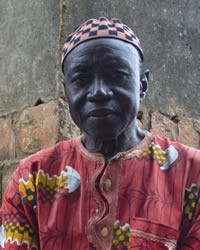
Jula, Dyula People Photo
View Jula, Dyula in all countries.
Submit People Photo:
Peoples
               
Geographic
Global
               
Global
           
 
Affinity Bloc
           
Global


People Cluster
       
Region


People
   
Country


People-by-Country (Profile)


Religion
Language


Global
   
Language


Religion
                             
Jula, Dyula of Cote d'Ivoire
 
Profile Text
Submit Profile Text:
A majority of the Dyula live along the trade routes of the Ivory Coast. Dyula clans have also settled in Burkina Faso, Mali, Ghana, and Guinea-Bissau. The name dyula means "itinerant trader," and the Dyula are respected for their trading abilities.

In the 1400's, European explorers and merchants who arrived in the area found a flourishing Dyula society. The Portuguese, who were first to arrive, plundered ivory, gold, and ostrich feathers. Later, the Dutch and English explorers implemented the more lucrative slave trade. The Ivory Coast was colonized in 1908 by France. Today, French remains the country's official language.

The Ivory Coast gained its independence in 1960. Five years later, the government implemented a new civil code that undermined all traditional forms of social organization. The new code outlawed polygamy (multiple spouses), abolished the bride price, outlawed forced marriages, and tightened divorce laws.

What Are Their Lives Like?
The Dyula live in clans, and the clan is the most important aspect of their lives. The people are fiercely loyal to their clans, defending them proudly. They express their history and devotion through the oral traditions of dance and storytelling. Men and women live in separate houses made of mud or cement-the men in round houses and the women in rectangular ones. The father is the head of the family and inheritances are passed down from fathers to their sons. Older males possess the most power and influence.

Even though it is illegal, the Dyula still practice polygamy (multiple spouses) and young people are encouraged to marry within their own clans; even marriages between cousins are approved. Girls usually marry at age 16. Since sanitation in the villages is so primitive, nearly half of the population is under the age of 15 and only about 13% live beyond age 45. Therefore, the Dyula have great respect for the elderly, especially if a man is an Islamic scholar.

The Dyula began settling in towns during the 1500's. Some founded their own independent villages; others chose to settle in towns containing other ethnic groups and submit to the local government. The social reforms of 1965 eliminated much of the authority that had previously belonged to family and village leaders.

In addition to being successful merchants and businessmen, the Dyula are excellent craftsmen who create beautiful pottery and cloth for export. Yams are the country's main export; approximately 80% of the country's export economy is agricultural.

The moral principles of the Dyula are based on obedience, honesty, and dedication to their people. Such precepts are motivated by a driving sense of human dignity.

What are their beliefs?
The majority of the Dyula are Sunni Muslim. Most of the others, whom the Muslims call "pagans," hold to traditional animistic beliefs (believe that non-living objects have spirits). West African Islam does, however, generally retain local traditions and is more tolerant of diversity than elsewhere. Muslim scholars are held in high esteem.

Their religious ideals share several similarities with Christianity: the belief in one God who is eternal, creator, omniscient; the existence of protecting spirits (or angels); the concept of the sanctuary or the holy of holies; the Spirit of God who communicates; and analogies to explain complex concepts.

What are their needs?
Proper sanitation and health care are lacking among the Dyula. Medical missionaries are needed to live and work among the Dyula, showing them the love of Jesus in practical ways.

Even though about a third of the entire country's population is considered Christian and despite devoted efforts by missionaries, there are no known Christians among the Dyula. Very few Christian resources are available to them in their native language. Christian laborers and additional evangelistic tools are needed to penetrate this Muslim tribe with the Gospel.

Prayer Points
Pray that the Lord of the harvest will send forth faithful laborers to live and work among the Dyula.
Ask God to speed the completion of the Jesus film and other evangelistic materials into the Jula language.
Pray that God will reveal Himself to these precious people through dreams and visions.
Ask God to raise up teams of intercessors who will faithfully stand in the gap for the Dyula.
Take authority over the spiritual principalities and powers that are keeping the Dyula bound.
Ask the Holy Spirit to soften the hearts of the Dyula towards Christians so that they will be receptive to the Gospel.
Ask the Lord to save key leaders among the Dyula who will boldly declare the Gospel.
Pray that strong local churches will be planted among the Dyula.

View Jula, Dyula in all countries.

 
Prayer Links Submit Links:
PrayerGuard.net
Global Prayer Digest: 2009-02-27
 
Web Profile Links Submit Links:
www.everyculture.com/Africa-Middle-East/index.html
www.muslimjourneytohope.com
www.gowestafrica.org/peoplegroups/jula/
www.gowestafrica.org/peoplegroups/julakong/
www.passionforjula.com
www.sim.org/index.php/content/djoula
www.sim.org/pg.asp?pgID=20&fun=1
 
Web Resource Links Submit Links:
Audio RecordingsMegaVoice Audio Bible and Stories
Audio RecordingsFaith Comes By Hearing
Audio RecordingsGlobal Recordings
Film / VideoJesus Film
Film / VideoWorld Christian Videos
Printed MatterWorld Christian Tract Ministry
Printed MatterWorld Missionary Press
ScriptureWorld Scriptures

 
Maps
Submit Map:
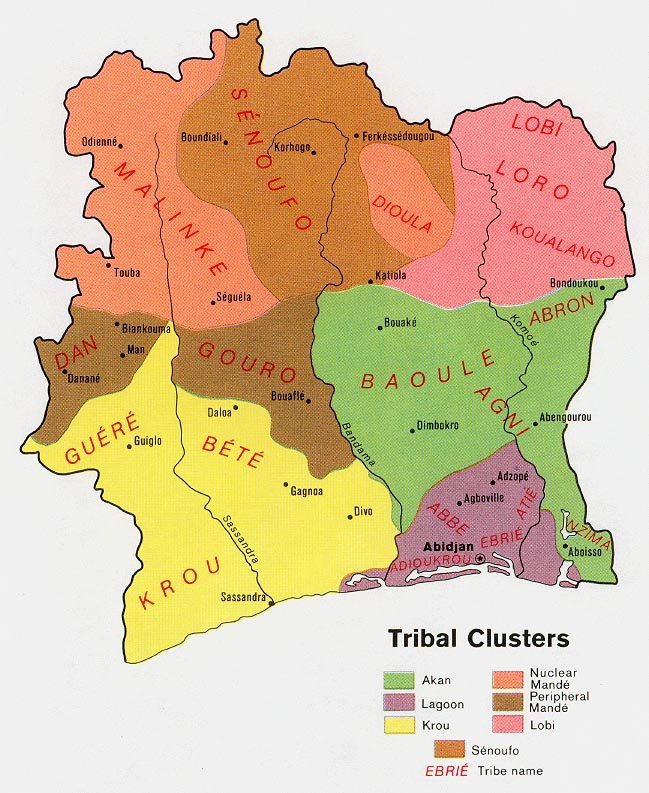
Ethnolinguistic Map:
University of Texas map collection
Linguistic Map:
Ethnologue language map
  
  Submit Update:
Country: Cote d'Ivoire
Continent:
Africa
Region:
West and Central Africa
No
Country Details: World Factbook
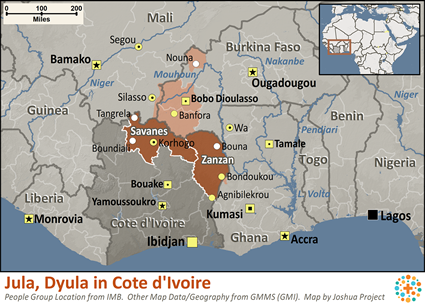
Location within Country:Northern Region, Ferkessedougou Department, Kong Subprefecture.
(Source: www.ethnologue.com)
   
 
People
Submit Update:
People Name in Country: Jula, Dyula
People Name General:
Dioula
Alternate People Names:
DjoulaDyula
JoulaKong
Kong DyulaKong Jula
MaasinaMalinka
WangaraYola
People Code: 104323
Population in this Country: 289,000
Population in all Countries: 672,000
Yes
   
 
Sub-Saharan African
Malinke-Jula
People Name General:
Dioula
NAB63h
Ethnic Relationships:
Affinity Bloc -> People Cluster -> Peoples Ethnicity Tree
   
 
Language
Submit Update:
Primary Language:
Jula (289,000 Speakers)
Language Code (16th): dyu    Ethnologue Listing
DYU
Total Languages Spoken:
1
   
 
Religion
Submit Update:
Primary Religion:
Islam
Religion Sub-division:Sunni
% Christian Adherents:0.03 %
% Evangelical:0.02 %
   
 
Joshua Project Progress Indicators
Yes
Progress Scale: 1.2     Evangelicals >.01% but <=2%. Christian Adherents <=5%.
Need-Ranking Score: 63        Details
Church Planting Team:Yes (Data from 2002)
100+ Believers:Yes (Data from 2002)
   
 
Other Progress Indicators *
Global Evangelical Status:Level 1   Less than 2% Evangelical. Some evangelical resources available, but no active church planting within past 2 years
Agency Progress (API):Level 3   Multiple agencies involved
Church Progress (CPI):Level 2   One known church
 
 
Bible Translation Status
Submit Update:
Bible Portions: 1992
New Testament: 1993-1997
Complete Bible: None Reported
Possible Bible Sources: Forum of Bible Agencies
 World Bible Finder
 World Christian Resource Directory
 
 
Ministry Activity
Register Ministry Activity:
Description: Register your ministry activity among this people group. Contact the Adopt-A-People Clearinghouse to learn about others that might be focused on this people group.
 
Jula, Dyula of Cote d'Ivoire
* Notes:
  • Significant effort is made to match photos with people groups. In most cases the photo source has identified the people group. However, in some instances when the exact people group is not identified Joshua Project has made educated attempts at matching. As a result some photos may be representative of the people cluster rather than the specific people group. Mismatches are the fault of Joshua Project, not the photographer. Please contact us if you believe a photo is not matched with the correct people group.
  • Percentages may be printed as '0.00%' because of space limitations, but some are slightly greater than zero.
  • The exactness of the above numbers can be misleading. Numbers can vary by several percentage points or more.
  • People group population figures are now maintained as a percentage of the national population. Click here for details.
  • Joshua Project does not have specific ministry activity data supporting the "Other Progress Indicators."
  • Discrepancies may exist between "Other Progress Indicators" because of the varying sources of information.
  • Joshua Project does not know the exact content of web audio recordings. In general they are Bible reading and teaching.
  • As on-site realities are understood, barriers of acceptance may be found in many of the larger people groups that will require multiple distinct church planting efforts.
  • This data may contain errors and needs continual correcting and updating. Click here to send feedback.