
People-in-Country Profile
Peoples Data Filter:
Printer friendly version:
Step 1 - Select a Country:  
Send us your updates!
Can you provide any of the following for this people?
Step 2 - Select a People:
Berber, Zekara of Morocco
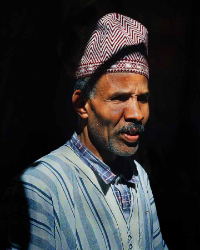
Berber, Zekara People Photo
View Berber, Zekara in all countries.
Submit People Photo:
Peoples
               
Geographic
Global
               
Global
           
 
Affinity Bloc
           
Global


People Cluster
       
Region


People
   
Country


People-by-Country (Profile)


Religion
Language


Global
   
Language


Religion
                             
Berber, Zekara of Morocco
 
Profile Text
Submit Profile Text:
There are about ten million Berbers scattered across the vast regions of Northern Africa. Their tribes stretch from the Siwa Oasis in Egypt to the Atlantic Ocean. It is thought that they once inhabited the entire North African territory, forcing the Negro population to move further southward through the desert. However, the exact origins of the Berbers and how they arrived in North Africa still remain a mystery.

The word Berber comes from an Arabic name for the aboriginal people west and south of Egypt. The Romans in the third century A.D. used this term to describe the "people of the Maghrib." The Maghrib refers to the regions of North Africa that were conquered by Muslims between 670 and 700 A.D. It included Morocco, Algeria, Tunisia, and the western portion of Libya.

Although the Maghrib has been, for the most part, "Arabized" by language and Islamic culture over the centuries, there are still groups of Berbers, like the nine Saharan Berber tribes, who have retained much of their original Berber traditions and characteristics.

What Are Their Lives Like?
Since the Sahara Desert is a harsh environment, most of the Saharan tribes occupy a number of oases. While there are many similarities between the various Berber groups, their particular lifestyles and quality of life vary according to the region in which they live.

The native Berber economy rests on a fine balance between farming and breeding cattle. Every tribe, without exception, depends heavily on domestic animals for carrying heavy loads, milk and dairy products, meat, and hides or wool. No Berber tribe depends on agriculture for survival. Hunting rarely adds to the food supply.

The Berbers call themselves the Imazighen, which means "man of noble origin." Their various languages belong to the Hamito-Semitic language family which includes five major groupings as well as a large number of dialects. Although the Berber languages differ greatly from one another in sound, they only vary slightly in grammar and vocabulary.

The Berbers are often noted for their skills in various crafts. Domestic tasks such as weaving and pottery are the main work of the women. The men specialize in woodworking, metalworking, and, more surprisingly, fine needlework. In regard to labor, the men do most of the farming, while the women are responsible for milking and gathering.

Berber societies can be broken down into three basic units: the community, the district, and the tribe. The community is a political collection of clans; the district is a cluster of communities; and the tribe is a group of districts that are characterized by a common territory, name, and culture. Government at the community level is notably democratic. All authority is vested in an assembly called the jemaa. The jemaa, composed of all adult males, usually meets weekly.

In nearly every Berber society, each district, and sometimes each community as well, is divided into two opposing factions called sofs. Membership into the sof is hereditary. Among tribes that no longer live in their original environments, the political units are allied with one another in identical divisions of higher levels known as lefs. Bonds of alliance are re-confirmed by traditional forms of hospitality as well as by huge annual feasts to which members invite one another. If warfare occurs, it is almost exclusively between districts of the opposite lef. However, since lefs are primarily defensive rather than offensive alliances, their primary purpose is to preserve peace in a region.

What are their beliefs?
The majority of Algerians are Muslims. However, other Berber groups such as the Kabyles, Shawiya, Tuareg, and other Saharan Berbers are only nominally Muslim. Their observances of Islamic law are generally lax.

The concept of baraka, or holiness, is highly developed in North Africa. The Berbers believe that many people are endowed with baraka, of which the holiest are the shurifa, or the direct descendants of Mohammed.

Another class of holy people is known as the marabouts. Among some Berbers, the Tuaregs in particular, the marabouts are considered to be different from ordinary men. They are believed to possess, even after death, the powers of protection and healing.

In view of the general acceptance of Islam, it is particularly interesting that almost all Berbers prefer monogamous marriages (marriage to only one partner). Even the oasis dwellers and the Tuareg hold this preference. In the few tribes where polygamy does exist, it is practiced only by the few wealthy men.

What are their needs?
As can be seen in the above table, the Saharan Berbers have few Christian resources available to them. Because it is difficult to reach them geographically, they must be targeted by individual church planting efforts.

The quality of life for the Berbers is quite poor. The need for community development projects may provide open doors through which missionaries may enter.

Algeria remains closed to traditional missionary efforts, and fundamental Muslim groups are very outspoken against Christianity. Much prayer is needed to break down the barriers that separate the Saharan Berbers from the Gospel of Jesus Christ.

Prayer Points
Take authority over the spiritual principalities and powers that are keeping the Saharan Berbers bound.
Ask the Lord to call people who are willing to go to North Africa and share Christ with the Berbers.
Pray that God will raise up loving African Christians to reach out to their Muslim neighbors.
Ask God to strengthen, encourage, and protect the small number of Berber Christians who are scattered throughout North Africa.
Pray that God will raise up qualified linguists to complete translation of the Bible into each of the Berber languages.
Ask the Holy Spirit to soften the hearts of the Saharan Berbers towards Christians so that they will be receptive to the Gospel.
Pray that God will raise up faithful intercessors who will stand in the gap for the Saharan Berbers.
Ask the Lord to raise up a strong local church among the Berbers of North Africa.

View Berber, Zekara in all countries.

 
Prayer Links Submit Links:
PrayerGuard.net
 
Web Profile Links Submit Links:
www.everyculture.com/Africa-Middle-East/index.html
www.muslimjourneytohope.com
en.wikipedia.org/wiki/Berbers
imazighen.vze.com
tinfatino.free.fr/index2.php
www.arabbible.com
www.ariseshinemorocco.org
 
Web Resource Links Submit Links:
Audio RecordingsMegaVoice Audio Bible and Stories
Audio RecordingsGlobal Recordings
Film / VideoGods Story
Film / VideoJesus Film
Film / VideoWorld Christian Videos

 
Maps
Submit Map:
Country Map:
Detailed UN Political map
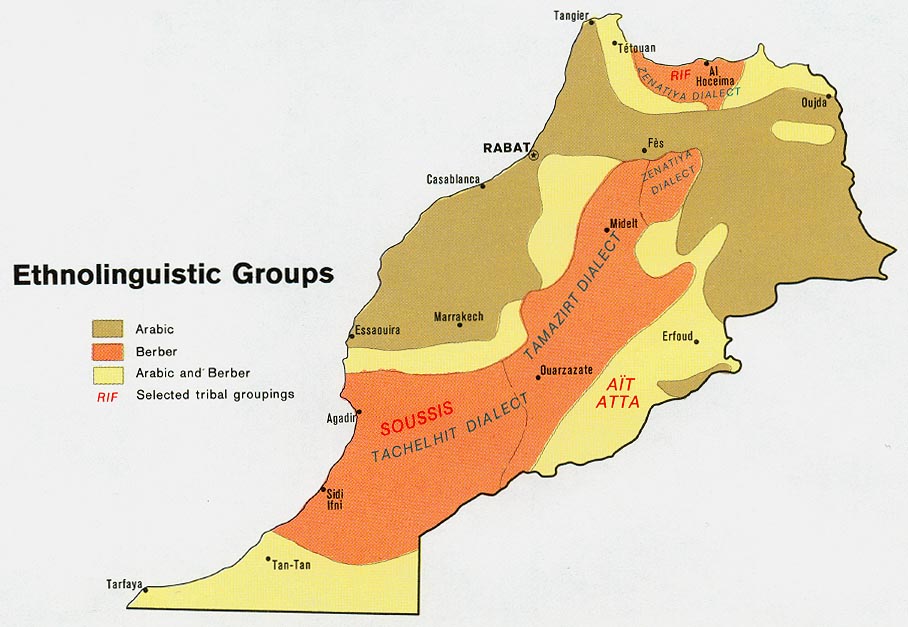
Ethnolinguistic Map:
University of Texas map collection
Linguistic Map:
Ethnologue language map
  
  Submit Update:
Country: Morocco
Continent:
Africa
Region:
Middle East and North Africa
Country Persecution Rank:40 (Only top 50 ranked, 1 = highest persecution ranking)
Yes
Country Details: World Factbook
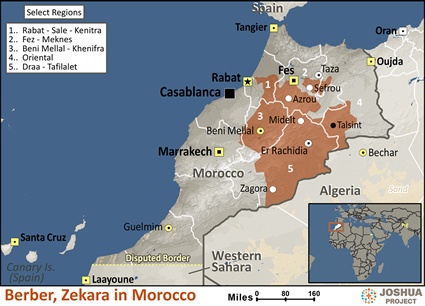
Location within Country:Middle Atlas, High Atlas, eastern High Atlas Mountains.
(Source: www.ethnologue.com)
   
 
People
Submit Update:
People Name in Country: Berber, Zekara
People Name General:
Berber, Zekara
Alternate People Names:
Zekara BerberZkara
People Code: 101279
Population in this Country: 65,000
Population in all Countries: 65,000
Yes
   
 
Arab World
Berber-Shilha
People Name General:
Berber, Zekara
CMT32b
Ethnic Relationships:
Affinity Bloc -> People Cluster -> Peoples Ethnicity Tree
   
 
Language
Submit Update:
Primary Language:
Tamazight, Central Atlas (65,000 Speakers)
Language Code (16th): tzm    Ethnologue Listing
TZM
Total Languages Spoken:
1
   
 
Religion
Submit Update:
Primary Religion:
Islam
% Christian Adherents:0.00 %
% Evangelical:0.00 %
   
 
Joshua Project Progress Indicators
Yes
Progress Scale: 1.1     Few, if any, known believers. Christian Adherents <=5%.
Need-Ranking Score: 73        Details
   
 
Other Progress Indicators *
Agency Progress (API):Level 0   No agency commitment
Church Progress (CPI):Level 0   No known believers
 
 
Bible Translation Status
Submit Update:
Bible Portions: 1919-1981
New Testament: None Reported
Complete Bible: None Reported
Possible Bible Sources: Forum of Bible Agencies
 World Bible Finder
 World Christian Resource Directory
 
 
Ministry Activity
Register Ministry Activity:
Description: Register your ministry activity among this people group. Contact the Adopt-A-People Clearinghouse to learn about others that might be focused on this people group.
 
Berber, Zekara of Morocco
* Notes:
  • Significant effort is made to match photos with people groups. In most cases the photo source has identified the people group. However, in some instances when the exact people group is not identified Joshua Project has made educated attempts at matching. As a result some photos may be representative of the people cluster rather than the specific people group. Mismatches are the fault of Joshua Project, not the photographer. Please contact us if you believe a photo is not matched with the correct people group.
  • Percentages may be printed as '0.00%' because of space limitations, but some are slightly greater than zero.
  • The exactness of the above numbers can be misleading. Numbers can vary by several percentage points or more.
  • People group population figures are now maintained as a percentage of the national population. Click here for details.
  • Joshua Project does not have specific ministry activity data supporting the "Other Progress Indicators."
  • Discrepancies may exist between "Other Progress Indicators" because of the varying sources of information.
  • Joshua Project does not know the exact content of web audio recordings. In general they are Bible reading and teaching.
  • As on-site realities are understood, barriers of acceptance may be found in many of the larger people groups that will require multiple distinct church planting efforts.
  • This data may contain errors and needs continual correcting and updating. Click here to send feedback.