
People-in-Country Profile
Peoples Data Filter:
Printer friendly version:
Step 1 - Select a Country:  
Send us your updates!
Can you provide any of the following for this people?
Step 2 - Select a People:
Shilha, Southern of Morocco
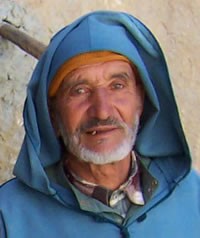
Shilha, Southern People Photo
View Shilha, Southern in all countries.
Submit People Photo:
Peoples
               
Geographic
Global
               
Global
           
 
Affinity Bloc
           
Global


People Cluster
       
Region


People
   
Country


People-by-Country (Profile)


Religion
Language


Global
   
Language


Religion
                             
Shilha, Southern of Morocco
 
Profile Text
Submit Profile Text:

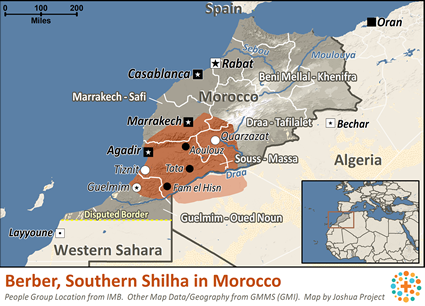
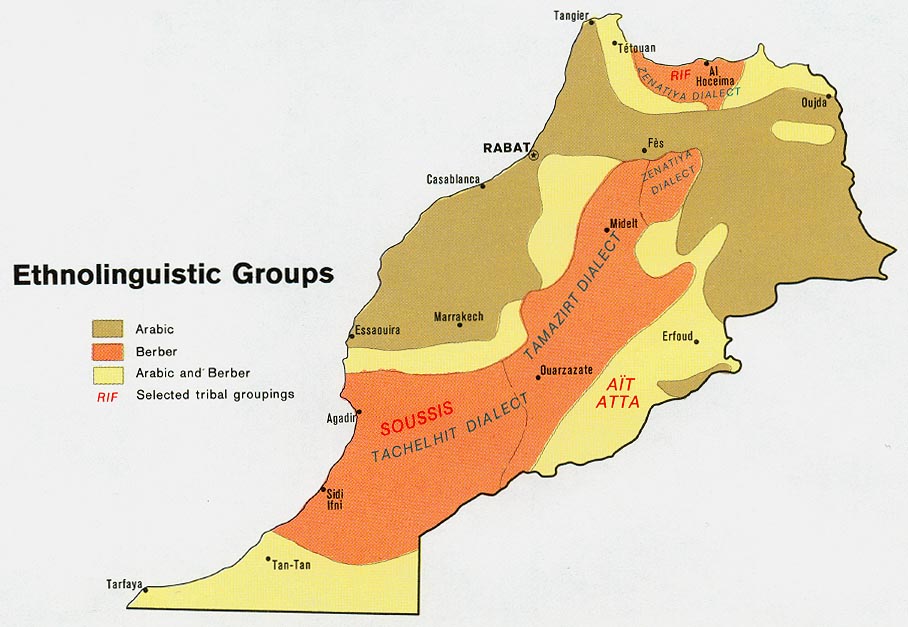
The Southern Shilha (also known as the Sousi Berbers) live in the western High Atlas and the Anti Atlas Mountains of southwestern Morocco. They also live in the plains and valleys which lie between them.

Most parts of the mountains are well watered, and between November and May the region is blanketed in snow. Vegetation is almost non-existent along the southern slopes. But wherever they live, a majority of the Shilha raise crops and livestock. (The varieties and breeds depend on local conditions of the climate and soil.)

The people live in villages of all sizes, using the limited soil and water resources with care. They build small dams and cultivate terraces where cereals and other crops are grown.

The Southern Shilha are a poor but proud people. They are tough and hard working, scratching out a meager existence in a part of the world that is physically antagonistic to an agricultural society.

What Are Their Lives Like?
No other group in Morocco starting from tribal origins has achieved as much as the Southern Shilha. A high degree of unity is the key to their success. This unity extends beyond tribal boundaries to encompass all who speak Tachelhit, their native language.

Most of the Shilha are farmers and shepherds. On the plots of ground that are not regularly irrigated, they grow barley and sometimes rye. On the lower slopes, they herd sheep and goats. Surplus farm and animal products are sold at weekly markets.

In the villages, the Berber way of life has remained unchanged over the centuries. Most Shilha villages contain between 50 and 500 people. They typically live in two-story, mud brick homes with flat roofs. In the more rugged mountain areas they live in sturdy goat skin tents.

Urban men and women wear western clothing, sometimes with long hooded robes, or jellabas, over them. Men wear turbans, or skull caps, called tagiyas, and women wear veils or head scarves. Rural women dress colorfully, but modestly, wearing several layers of clothing.

The Shilha don't really value education because they believe that hard work is of higher value. Only a small number complete more than a few years of public schooling. In rural areas; however, many male children attend Islamic schools where they are taught the Koran.

A typical family consists of close relatives living under the authority of the male head of the family. A new bride, often as young as 14, will move into the home of the husband's family after marriage.

Since the late 19th century, many Shilha have left their poor, overpopulated valleys, in hopes of finding new resources in the northern cities of Morocco. Some have become profitable grocers, shopkeepers, or wholesalers. Others have entered the fabric trade. Today, some of the most important businessmen in Casablanca are Shilha.

What are their beliefs?
Although the Shilha are 99.5% Muslim, their religion is mingled with spiritism and mysticism. Interestingly, this blended religion has created in them a curiosity and yearning to know more about their god. They worship a god whom they believe wants to be present in their daily lives. Such a spiritual climate is ripe for a presentation of the Gospel! Unfortunately, distribution of Bibles is against the law at this time.

What are their needs?
In rural areas, only about half of the people have access to health services. These facilities usually only consist of a small clinic with a nurse, but no doctor. Most villages contain a shrine for their particular "saint." People often visit these domed buildings in search of healing.

No church currently exists among the Shilha, and only portions of the Bible have been translated into Tachelhit. It is illegal for a Moroccan to become a Christian or to evangelize others; however, the Shilha are showing an interest in Christianity and the Bible now more than ever before. Morocco is closed to traditional missions work, but there are creative ways in which to enter the country as tentmakers.

Prayer Points
Ask the Lord to send Christian medical teams to work among the Shilha.
Pray that God will encourage the small number of Shilha believers.
Ask God to raise up those willing to go to Morocco as tentmakers.
Ask the Holy Spirit to continue to stir a hunger in the people to have a personal relationship with the one true God.
Pray that God will open the hearts of Morocco's governmental leaders to the Gospel.
Ask God to raise up qualified linguists to complete translation of the Bible into Tachelhit.
Pray that the laws restricting the preaching of the Gospel in Morocco will change.
Ask the Lord to raise up a strong local church among the Shilha.

View Shilha, Southern in all countries.

 
Prayer Links Submit Links:
PrayerGuard.net
Global Prayer Digest: 2006-11-03
Global Prayer Digest: 2006-11-04
 
Web Profile Links Submit Links:
www.everyculture.com/Africa-Middle-East/index.html
www.muslimjourneytohope.com
en.wikipedia.org/wiki/Berbers
imazighen.vze.com
tinfatino.free.fr/index2.php
www.arabbible.com
www.ariseshinemorocco.org
 
Web Resource Links Submit Links:
Audio RecordingsMegaVoice Audio Bible and Stories
Audio RecordingsGlobal Recordings
Film / VideoGods Story
Film / VideoJesus Film, versions available
Film / VideoJesus Film, view now
Film / VideoWorld Christian Videos

 
Maps
Submit Map:
Country Map:
Detailed UN Political map
Ethnolinguistic Map:
University of Texas map collection
Linguistic Map:
Ethnologue language map
 
  Submit Update:
Country: Morocco
Continent:
Africa
Region:
Middle East and North Africa
Persecution Rank:37 (Only top 50 ranked, 1 = highest persecution ranking)
Yes
Country Details: World Factbook
   
 
People
Submit Update:
People Name in Country: Shilha, Southern
People Name General:
Berber, Southern Shilha
Alternate People Names:
Berber, SouthernIshilhayn
ShleuhShluh
Sous BerberSousi Berber
Tashelhit
People Code: 108945
Population in this Country: 2,947,000
Population all Countries: 3,199,000
Yes
   
 
Arab World
Berber-Shilha
People Name General:
Berber, Southern Shilha
CMT32g
Ethnic Relationships:
Affinity Bloc -> People Cluster -> Peoples Ethnicity Tree
   
 
Language
Submit Update:
Primary Language:
Tachelhit (2,947,000 Speakers)
Language Code (16th): shi    Ethnologue Listing
SHI
Total Languages Spoken:
1
   
 
Religion
Submit Update:
Primary Religion:
Islam
Religion Sub-division:Sunni
% Christian Adherents:0.04 %
% Evangelical:Unknown
   
 
Joshua Project Progress Indicators
Yes
Progress Scale: 1.2   Evangelicals >.01% but <=2%. Professing Christians <=5%
   
 
Other Progress Indicators *
GSEC Status:Level 2   Less than 2% Evangelical. Initial (localized) church planting within past 2 years
Agency Progress (API):Level 0   No agency commitment
Church Progress (CPI):Level 0   No known believers
 
 
Bible Translation Status
Submit Update:
Bible Portions: 1906-1925
New Testament: None Reported
Complete Bible: None Reported
Possible Bible Sources: Forum of Bible Agencies
 World Bible Finder
 World Christian Resource Directory
 
 
Ministry Activity
Register Ministry Activity:
Description: Register your ministry activity among this people group. Contact the Adopt-A-People Clearinghouse to learn about others that might be focused on this people group.
 
Shilha, Southern of Morocco
* Notes:
  • Significant effort is made to match photos with people groups. In most cases the photo source has identified the people group. However, in some instances when the exact people group is not identified Joshua Project has made educated attempts at matching. As a result some photos may be representative of the people cluster rather than the specific people group. Mismatches are the fault of Joshua Project, not the photographer. Please contact us if you believe a photo is not matched with the correct people group.
  • Percentages may be printed as '0.00%' because of space limitations, but some are slightly greater than zero.
  • The exactness of the above numbers can be misleading. Numbers can vary by several percentage points or more.
  • People group population figures are now maintained as a percentage of the national population. Click here for details.
  • Joshua Project does not have specific ministry activity data supporting the "Other Progress Indicators."
  • Discrepancies may exist between "Other Progress Indicators" because of the varying sources of information.
  • Joshua Project does not know the exact content of web audio recordings. In general they are Bible reading and teaching.
  • As on-site realities are understood, barriers of acceptance may be found in many of the larger people groups that will require multiple distinct church planting efforts.
  • This data may contain errors and needs continual correcting and updating. Click here to send feedback.