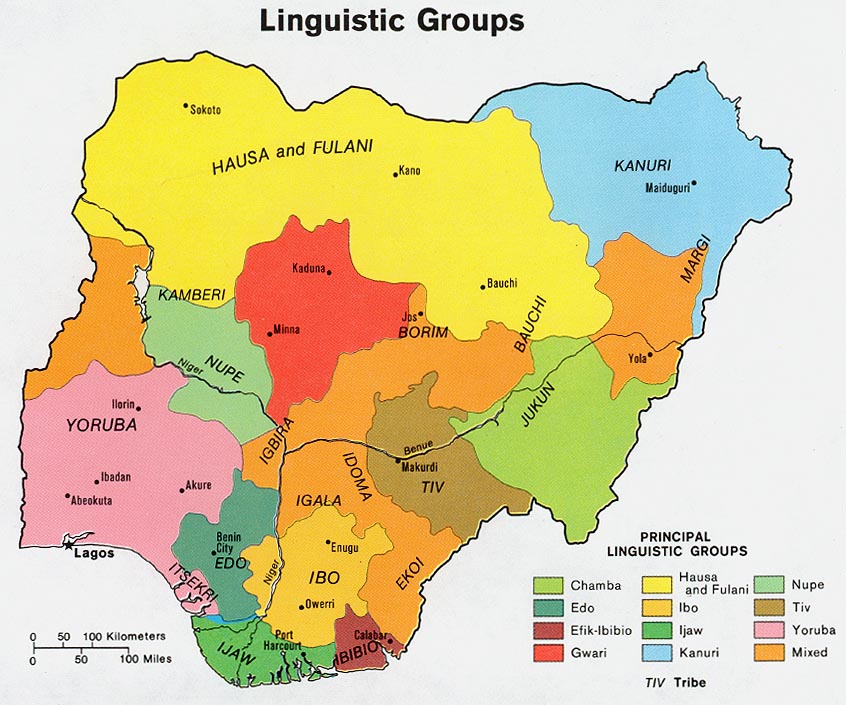

The Igala people trace their origins to a powerful kingdom that emerged in the confluence region of the Niger and Benue Rivers in present-day Kogi State, central Nigeria. Their oral traditions speak of a divine kingship established centuries ago, with the Attah Igala serving as both political and spiritual leader. The Igala language belongs to the Volta-Niger branch of the Niger-Congo language family. Historically, the Igala Kingdom maintained extensive trade networks and political influence over neighboring groups, controlling important river trade routes. The kingdom's power peaked between the 15th and 18th centuries before coming under British colonial administration in the early 20th century. Today, the Igala remain one of the major ethnic groups in Nigeria's Middle Belt region, maintaining strong cultural identity while navigating modern Nigerian society.
Most Igala families live in rural communities where subsistence farming forms the backbone of daily life. They cultivate yams, cassava, maize, and rice, with yams holding particular cultural significance as the primary staple crop celebrated in annual harvest festivals. Fishing provides important food and income for those near the Niger and Benue Rivers. Traditional compounds house extended families, with multiple generations living together and sharing agricultural labor and family responsibilities. The Attah Igala continues to command respect as paramount traditional ruler, while local chiefs maintain authority in their domains. Women manage households, process agricultural products, and engage in market trading, though men generally control land inheritance and major decisions. Education has become increasingly valued, with more children attending schools, though many leave early to help with farming or due to financial constraints. Urban migration has increased as young people seek employment in Nigerian cities, creating tension between traditional village life and modern aspirations. Social life revolves around extended family networks, age-grade associations, and community gatherings for festivals and ceremonies that reinforce collective identity.
Christianity has made significant inroads, with many identifying as Christians, while Islam has also attracted followers. This religious environment exhibits profound syncretism, meaning nominal adherence to Christianity or Islam frequently coexists with continued participation in traditional rituals, consultation of diviners, and maintenance of family shrines. Many Igala Christians attend church but also participate in traditional festivals and consult spiritual specialists when facing serious problems. Church leadership sometimes lacks theological training, resulting in syncretistic practices being accommodated rather than challenged through biblical teaching.
They believe in a supreme creator deity but focus daily practices on intermediary spirits associated with natural phenomena, ancestral forces, and the sacred kingship of the Attah. Shrines dedicated to various spirits exist throughout Igala territory, where priests and priestesses perform rituals and sacrifices. Divination plays important roles in decision-making about illness, agriculture, and life choices. The Attah Igala occupies a unique position as both political ruler and spiritual mediator between people and supernatural powers. Masquerade traditions involve elaborate ceremonies where masked figures represent ancestral spirits.
The Igala face significant healthcare challenges, with many rural communities lacking medical facilities, trained personnel, and essential medicines. Maternal mortality remains high, while childhood diseases claim lives that could be saved through basic interventions. Many villages lack clean water and adequate sanitation. Agricultural development would transform family welfare as communities struggle with outdated techniques, unpredictable rainfall, and limited access to improved seeds or storage facilities. Educational infrastructure requires expansion, as many villages lack secondary schools and existing primaries operate with insufficient teachers and materials. Economic opportunities remain severely limited for young people who cannot access capital or training. Infrastructure deficiencies in roads and electricity isolate communities from markets and services.
Beyond physical needs, the Igala require access to the gospel message presented clearly within their cultural context. While churches exist, many areas lack vibrant fellowships of biblically grounded believers who can disciple new converts and demonstrate transformed lives. Existing churches often lack trained leaders equipped to teach Scripture systematically. Biblical materials in Igala need wider distribution. The syncretistic environment creates confusion about Christ's exclusive claims, requiring patient teaching that helps people understand why traditional practices must be abandoned rather than integrated with Christian faith.
Pray that God would raise up Igala evangelists and church planters who can communicate the gospel effectively and establish communities of genuine disciples.
Ask the Lord to bring spiritual breakthrough in communities dominated by traditional practices, that the Holy Spirit would reveal Christ as the only mediator between God and humanity.
Pray for Bible translation work to continue, making Scripture available in Igala so believers can grow in biblical understanding.
Intercede for the Attah Igala and traditional leaders, that they would encounter Jesus Christ and use their influence to open doors for the gospel.
Ask God to strengthen existing Igala Christians facing pressure to compromise with traditional practices, that they would stand firm while demonstrating Christ-like love.
Pray for trained Bible teachers to equip church leaders theologically, enabling them to guide congregations toward biblical faithfulness.
Request improved healthcare, clean water, and agricultural development, that communities would see Christian compassion demonstrated through practical service.
Ask God to send workers willing to invest long-term in disciple-making relationships among the Igala.
Pray for the next generation, that they would hear the gospel clearly and become passionate followers of Christ who transform their communities.
Scripture Prayers for the Igala in Nigeria.
Boston, J.S. "The Igala Kingdom." Ibadan: Oxford University Press, 1968.
Achimugu, Lucky. "The Igala Traditional Religious Belief System." OGIRISI 10 (2014): 116-129.
| Profile Source: Joshua Project |