
People-in-Country Profile
Peoples Data Filter:
Printer friendly version:
Step 1 - Select a Country:  
Send us your updates!
Can you provide any of the following for this people?
Step 2 - Select a People:
Jew, Bukharic of Uzbekistan
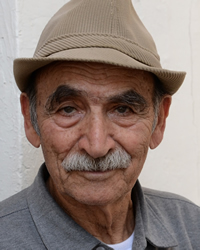
Jew, Bukharic People Photo
View Jew, Bukharic in all countries.
Submit People Photo:
Peoples
               
Geographic
Global
               
Global
           
 
Affinity Bloc
           
Global


People Cluster
       
Region


People
   
Country


People-by-Country (Profile)


Religion
Language


Global
   
Language


Religion
                             
Jew, Bukharic of Uzbekistan
 
Profile Text
Submit Profile Text:
Jews of Asia
Because of their unique history and culture, Jews have a strong sense of identity. Although they have much in common with other Jews around the world, the Jews of Asia have a very distinctive lifestyle. Most of the Jews in this part of Asia are Ashkenazim, or descendants of the Jews who inhabited the Germanic region of Europe. One of their most distinguishing features is their use of the Yiddish language (a German dialect that has some Hebrew elements). Most of the Ashkenazim came into Central Asia from other parts of the Soviet Union before and during World War II.

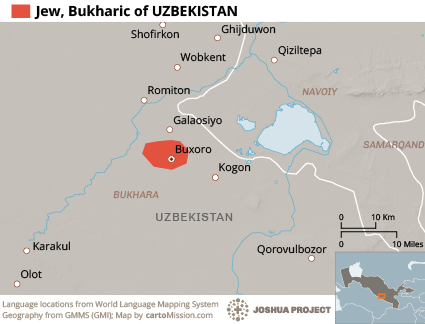
Bukharan Jews are an indigenous group within Uzbekistan and Tajikistan. They are known as "Bukharan" because they settled primarily in Bukhara, Uzbekistan but they prefer to be known as "Israel" or "Yahudi." They claim descent from the ten tribes of Israel who were exiled to Persia in the fifth century. They speak Bokhara, a Jewish dialect of Tajik. Some Jews also live in India, mainly in Bombay and the surrounding areas. They are known as Bene Israel ("the Children of Israel"). They speak an Indo-Aryan language called Marathi.

What Are Their Lives Like?
The Jews of Ashkenazic descent have lifestyles that are very much like those of other Jews in the former Soviet Union. However, they were allowed greater freedoms than the Jews in other parts of the Soviet Union, and they clung to their Judaism tenaciously. While some of them work as peddlers, shoemakers, or barbers, many have become factory laborers or workers on "collective (community) farms." Recently, large numbers of Jews have left Uzbekistan due to economic hardship and fear of a nationalistic trend in the government.

In past centuries, the Bukharan Jews have experienced much discrimination from the predominant Muslim population. They were forced to live in isolated parts of the cities, called mahallas, to wear special signs on their clothing which marked them as Jews, and to pay special taxes. Only in the last ten years have Bukharan Jews been able to give cultural expression openly without fear of persecution. Today, a number of Hebrew study groups have been organized and are growing stronger.

During Soviet rule, both Bukharan men and women worked in factories that produced butter, bricks, or textiles. Recently, they have returned to many of their traditional crafts, such as shoemaking, hairdressing, tailoring, and photography. The women are particularly known for their dancing at both Jewish and Muslim weddings. There are also a large number of well-educated Bukharan Jews working as engineers, doctors, teachers, and musicians.

Bukharan Jewish males were the heads of their patrilineal (descent traced through the males) extended families. Now, a pattern of separate nuclear families is becoming predominant. Bukharan Jews nearly always marry other Bukharan Jews. The parents of the groom send a matchmaker to the parents of the bride, and both dowry and bride-price must be settled prior to the engagement. Divorce is permitted among Bukharan Jews and a law exists to regulate the marriages of widows.

In Bombay, the Jews are employed in numerous professions. Some of them work in the service industry or as clerks, mechanics, white-collar workers, and skilled laborers. A significant number are professionals such as doctors, teachers, and lawyers.

Most Bombay Jewish families are typical nuclear families. That is, they are composed of a man, a woman, and their dependents. In order to keep wealth and prestige within the family, the Bombay Jews have traditionally preferred marriage between cousins. Divorce is completely disapproved of and is very uncommon.

What are their beliefs?
The Ashkenazic Jews who live in cities have a weak religious lifestyle and many have intermarried with Muslims. However, the Bukharan and Bombay Jews adhere to all traditional Jewish beliefs. They follow the Law of Moses by observing strict dietary laws, circumcising all male children, and observing the Sabbath. They also celebrate Jewish festivals like Yom Kippur (Day of Atonement), and Passover.

What are their needs?
Many of the Ashkenazic Jews have intermarried with the Muslim community. Because they are open to others outside the Jewish community, perhaps they will be open to the Gospel. The Bukharan Jews of Uzbekistan are uncertain about the direction of their nation. With the collapse of the Soviet Union, Uzbekistan is going through rapid and drastic changes. Anti-Semitism (persecution of Jews) is a possible result of the rise in nationalism. The Bombay Jews are strongly influenced by tradition, making them unreceptive to change.

Each of these Jewish communities needs to be introduced to Jesus, their Messiah. Intercession must be made for the Jews if they are to come to an understanding of the Gospel and a saving knowledge of Christ.

Prayer Points
* Ask the Lord of the harvest to send forth loving Christians to work among the Jewish communities.
* Ask the Holy Spirit to grant wisdom and favor to the missions agencies that are targeting the Jews of Asia.
* Pray that as Jewish people watch the Jesus film, they will understand that He is the long awaited Messiah.
* Ask the Lord to soften the hearts of the Jews towards Christians so that they might hear and receive the message of salvation.
* Pray that the Lord Jesus will reveal Himself to the Jews through dreams and visions.
* Pray that God will grant Jewish believers favor as they share their faith in Christ with their own people.
* Take authority over the spiritual principalities and powers that are keeping the Jews bound.
* Pray that strong local churches will be raised up in each Jewish community.

View Jew, Bukharic in all countries.

 
Prayer Links Submit Links:
PrayerGuard.net
Global Prayer Digest: 2006-10-17
Global Prayer Digest: 2007-05-19
Global Prayer Digest: 2007-12-02
Global Prayer Digest: 2008-11-27
Global Prayer Digest: 2008-12-02
 
Web Profile Links Submit Links:
www.everyculture.com/Russia-Eurasia-China/index.html
sofar.uw.hu/
www.jewishvirtuallibrary.org/jsource/History/Bukha...
www.kehilatshofar.com/
www.mindspring.com/~jaypsand
www.worldjewishcongress.org/commwjc.html
 
Web Resource Links Submit Links:
None Reported

Send Joshua Project a map of the Jew, Bukharic Speaking of Uzbekistan to display here.
Submit People Map:


Maps
Submit Map:
Country Map:
Detailed UN Political map
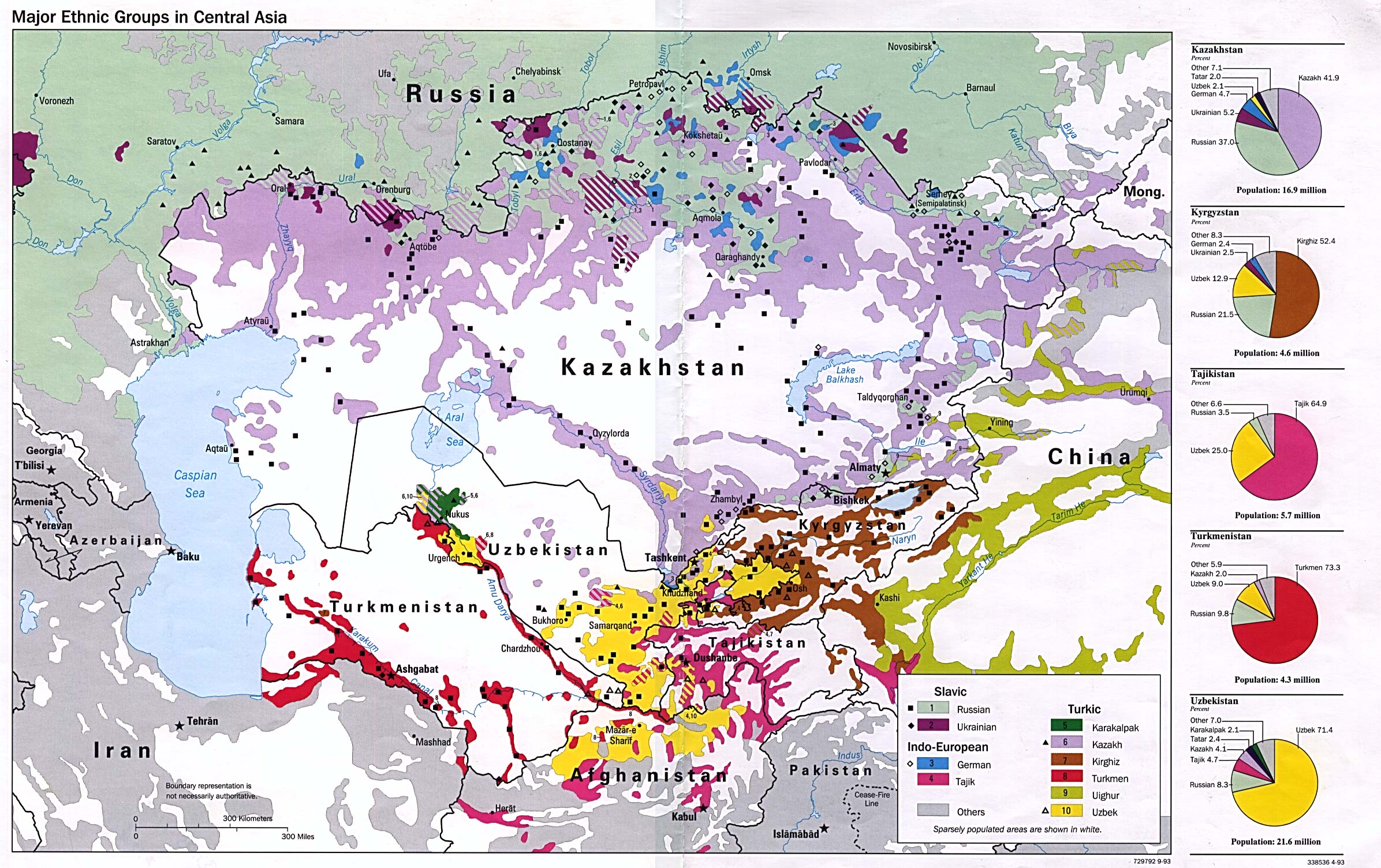
Ethnolinguistic Map:
University of Texas map collection
Linguistic Map:
Ethnologue language map
  
  Submit Update:
Country: Uzbekistan
Continent:
Asia
Region:
Central Asia
Country Persecution Rank:10 (Only top 50 ranked, 1 = highest persecution ranking)
No
Country Details: World Factbook
   
 
People
Submit Update:
People Name in Country: Jew, Bukharic
People Name General:
Jew, Bukharic Speaking
People Code: 104244
Population in this Country: 4,900
Population in all Countries: 136,000
Yes
   
 
Jews
Jews
People Name General:
Jew, Bukharic Speaking
CMT35
Ethnic Relationships:
Affinity Bloc -> People Cluster -> Peoples Ethnicity Tree
   
 
Language
Submit Update:
Primary Language:
Bukharic
Language Code (16th): bhh    Ethnologue Listing
BHH
Secondary Languages:
Uzbek, Northern (Unknown)Yiddish, Eastern (Unknown)
Total Languages Spoken:
3
   
 
Religion
Submit Update:
Primary Religion:
Ethnic Religions
Religion Sub-division:Judaism
% Christian Adherents:0.02 %
% Evangelical:Unknown
   
 
Joshua Project Progress Indicators
Yes
Progress Scale: 1.2     Evangelicals >.01% but <=2%. Christian Adherents <=5%.
Need-Ranking Score: 69        Details
   
 
Other Progress Indicators *
Agency Progress (API):Level 0   No agency commitment
Church Progress (CPI):Level 0   No known believers
 
 
Bible Translation Status
Submit Update:
Bible Portions: Help start a Bible Translation
New Testament: None Reported
Complete Bible: None Reported
 
 
Ministry Activity
Register Ministry Activity:
Description: Register your ministry activity among this people group. Contact the Adopt-A-People Clearinghouse to learn about others that might be focused on this people group.
 
Jew, Bukharic of Uzbekistan
* Notes:
  • Significant effort is made to match photos with people groups. In most cases the photo source has identified the people group. However, in some instances when the exact people group is not identified Joshua Project has made educated attempts at matching. As a result some photos may be representative of the people cluster rather than the specific people group. Mismatches are the fault of Joshua Project, not the photographer. Please contact us if you believe a photo is not matched with the correct people group.
  • Percentages may be printed as '0.00%' because of space limitations, but some are slightly greater than zero.
  • The exactness of the above numbers can be misleading. Numbers can vary by several percentage points or more.
  • People group population figures are now maintained as a percentage of the national population. Click here for details.
  • Joshua Project does not have specific ministry activity data supporting the "Other Progress Indicators."
  • Discrepancies may exist between "Other Progress Indicators" because of the varying sources of information.
  • Joshua Project does not know the exact content of web audio recordings. In general they are Bible reading and teaching.
  • As on-site realities are understood, barriers of acceptance may be found in many of the larger people groups that will require multiple distinct church planting efforts.
  • This data may contain errors and needs continual correcting and updating. Click here to send feedback.