Acehnese in Indonesia
PRINT VERSION:

SHARE:


 Photo Source:
Status Aceh - Pixabay
Photo Source:
Status Aceh - Pixabay


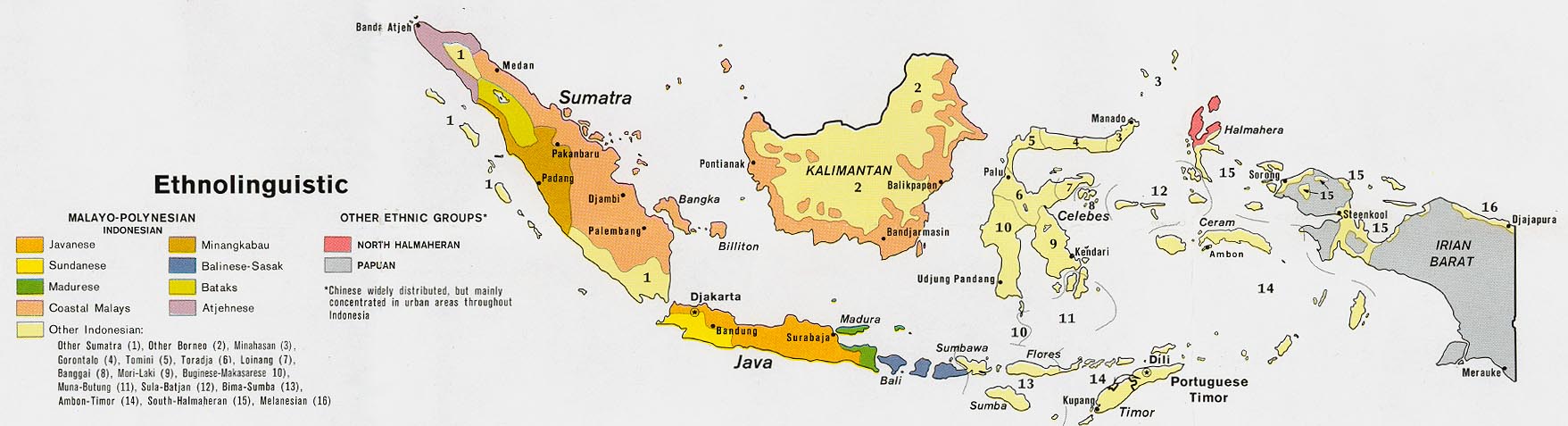
The Aceh people live on the northern tip of the island of Sumatra in Aceh province. Their provincial capital of Banda Aceh used to be a stopover for Southeast Asian Muslims traveling by ship to Mecca. For this reason, the city is sometimes known as "The Veranda of Mecca". The Aceh people, also known as the Akhir, A-Tsing and Urueng, are the majority ethnic group in Aceh.
The Aceh speak their own language and most also speak the Indonesian national language. The Aceh are a blend of many ethnic groups, which might explain why the Aceh in some areas are taller than most Indonesians. The Aceh are a majority in the regencies of Aceh Besar, Pidie, North Aceh and West Aceh; they are a minority in Central and South Aceh.
Most Aceh are either farmers or fishermen. Traditional homes in Aceh consist of a sleeping room and a large living room, which may also serve as the kitchen containing a rectangular clay hearth filled with ashes. These houses generally stand on stilts two meters high. Families use the space beneath the house to keep cows, sheep, goats and chickens, or to store tools and firewood. The floor and walls are made of bamboo or wood from coconut trees. Roofs are covered with clay tiles or thatch made of palm leaves. Most new homes built today, however, are from cement block and mortar.
Traditionally, both men and women in Aceh wore a sarong, a modest and colorful skirt. However, in recent years there has been a move toward Islamic dress. The traditional Aceh weapon is the rencong, an ornate sword. Men wear it folded into the sarong as one of the accessories to their ceremonial dress. Women typically run the households, while men tend to stay out of domestic affairs, including child rearing. All children, even the youngest, are expected to help with the family work. Inheritance is settled according to Islamic law with men receiving a double portion yet houses and land are always passed down to the women.
Known throughout Indonesia as devout followers of Islam, the Aceh are very proud of their Muslim faith. Their lives are strongly influenced by Islamic law and Aceh province even has special autonomy to apply Islamic law instead of Indonesian national law in certain cases.
The Aceh are strict Sunni Muslims and have been very instrumental in spreading Islam throughout Indonesia and other Southeast Asian countries. It is often stated that "to be Aceh is to be Muslim." The Aceh people have strongly and even violently opposed other Aceh people who converted to other religions. Because Aceh was the first province in Indonesia where Shari'a Islamic law was formally instituted, other strongly Islamic provinces are also seeking to implement Shari'a law. The law requires all women, even non-Muslims, to wear head coverings. Other ethnic groups living in Aceh province, however, may worship according to their own religion. Orthodox Islam for many Aceh people is combined with animistic beliefs in spirits and various superstitions. These beliefs center on seeking protection through magic by either appeasing or controlling both good and bad spirits.
In December 2004, Aceh was hit by a tsunami that destroyed many areas and took 120,000 lives. Aceh still needs significant reconstruction and rehabilitation; however, several non-government organizations that originally offered help have now left. Believers who can help create sustainable solutions to economic and infrastructure needs can open doors for gospel conversations.
Ask God to give the Indonesian church a burden to pray for the salvation of the Acehnese.
Ask God to send workers with needed skills and wisdom to meet the needs for reconstruction in the context of living and sharing God's grace.
Ask the Holy Spirit to direct these workers to people who are open to the gospel.
Ask Jesus to reveal himself to elders and family leaders as the only way to God.
Pray for the start of a Disciple Making Movement that will lead to disciples and churches that multiply through many generations.
Scripture Prayers for the Acehnese in Indonesia.
| Profile Source: Joshua Project |
| People Name General | Acehnese |
| People Name in Country | Acehnese |
| Pronunciation |
AH-chay-NEEZ
|
| Alternate Names | Achehnese; Atjeh |
| Population this Country | 4,024,000 |
| Population all Countries | 4,114,000 |
| Total Countries | 2 |
| Indigenous | Yes |
| Progress Scale | 1 ● |
| Unreached | Yes |
| Frontier People Group | No |
| GSEC | 1 (per PeopleGroups.org) |
| Pioneer Workers Needed | 80 |
| People ID | 10144 |
| ROP3 Code | 100036 |
| ROP25 Code | 300028 |
| ROP25 Name | Acehnese |
| Country | Indonesia | ||
| Region | Asia, Southeast | ||
| Continent | Asia | ||
| 10/40 Window | Yes | ||
| National Bible Society | Website | ||
| Persecution Rank | 42 (Open Doors top 50 rank, 1 = highest persecution ranking) | ||
| Location in Country | North tip of Sumatra, both coasts, Aceh Province, Aceh Besar, Aceh Jaya, Aceh Barat, Nagan Raya, Aceh Barat Daya, Aceh Selatan, Aceh Sinkil, Aceh Tamiang, Kota Langsa, Aceh Timr, Aceh Utara, Kota Lhokseumawe, Bireuen, Pidie Jaya, and Pidie regencies; Weh and neighboring islands off north tip; into Sumatera Utara Province, Tapanuli Tengah regency, south coast enclave. Source: Ethnologue 2016 | ||
| Country | Indonesia |
| Region | Asia, Southeast |
| Continent | Asia |
| 10/40 Window | Yes |
| National Bible Society | Website |
| Persecution Rank | 42 (Open Doors top 50 rank, 1 = highest persecution ranking) |
| Location in Country | North tip of Sumatra, both coasts, Aceh Province, Aceh Besar, Aceh Jaya, Aceh Barat, Nagan Raya, Aceh Barat Daya, Aceh Selatan, Aceh Sinkil, Aceh Tamiang, Kota Langsa, Aceh Timr, Aceh Utara, Kota Lhokseumawe, Bireuen, Pidie Jaya, and Pidie regencies; Weh and neighboring islands off north tip; into Sumatera Utara Province, Tapanuli Tengah regency, south coast enclave.. Source: Ethnologue 2016 |
| Primary Religion: | Islam |
| Major Religion ▲ | Percent |
|---|---|
| Buddhism |
0.03 %
|
| Christianity (Evangelical 0.01 %) |
0.12 %
|
| Ethnic Religions |
0.00 %
|
| Hinduism |
0.00 %
|
| Islam |
99.85 %
|
| Non-Religious |
0.00 %
|
| Other / Small |
0.00 %
|
| Unknown |
0.00 %
|
| Primary Language | Aceh (4,024,000 speakers) |
| Language Code | ace Ethnologue Listing |
| Primary Dialect | Tunong |
| Dialect Code | 6657 Global Recordings Listing |
| Language Written | Yes ScriptSource Listing |
| Total Languages | 1 |
| Primary Language | Aceh (4,024,000 speakers) |
| Language Code | ace Ethnologue Listing |
| Primary Dialect | Tunong |
| Dialect Code | 6657 Global Recordings Listing |
| Total Languages | 1 |
| People Groups | Speaking Aceh |
Primary Language: Aceh
| Bible Translation ▲ | Status (Years) |
|---|---|
| Bible-Portions | Yes (1973) |
| Bible-New Testament | Yes (1996) |
| Bible-Complete | Yes (1997) |
| FCBH NT (www.bible.is) | Online |
| YouVersion NT (www.bible.com) | Online |
| Possible Print Bibles | |
|---|---|
| Amazon | |
| World Bibles | |
| Forum Bible Agencies | |
| National Bible Societies | |
| World Bible Finder | |
| Virtual Storehouse | |
| Resource Type ▲ | Resource Name | Source |
|---|---|---|
| Audio Recordings | Audio Bible teaching | Global Recordings Network |
| Film / Video | Indigitube.tv Video / Animation | Create International |
| Film / Video | Jesus Film: view in Aceh | Jesus Film Project |
| Film / Video | LUMO film of Gospels | Bible Media Group/LUMO |
| Film / Video | World Christian Videos | World Christian Videos |
| General | Bible for Children | Bible for Children |
| General | Faith Comes By Hearing - Bible in text or audio or video | Faith Comes by Hearing |
| General | Scripture Earth Gospel resources links | Scripture Earth |
| General | YouVersion Bible versions in text and/or audio | YouVersion Bibles |
| Mobile App | Android Bible app: Aceh | YouVersion Bibles |
| Mobile App | Download audio Bible app from Google Play Store | Faith Comes by Hearing |
| Mobile App | iOS Bible app: Aceh | YouVersion Bibles |
| Photo Source | Status Aceh - Pixabay |
| Map Source | People Group location: IMB. Map geography: ESRI / GMI. Map design: Joshua Project. |
| Profile Source | Joshua Project |
| Data Sources | Data is compiled from various sources. Learn more. |