Balinese in Indonesia
PRINT VERSION:

SHARE:


 Photo Source:
_paVan_ - Flickr
Photo Source:
_paVan_ - Flickr
Licensed under CC BY 2.0


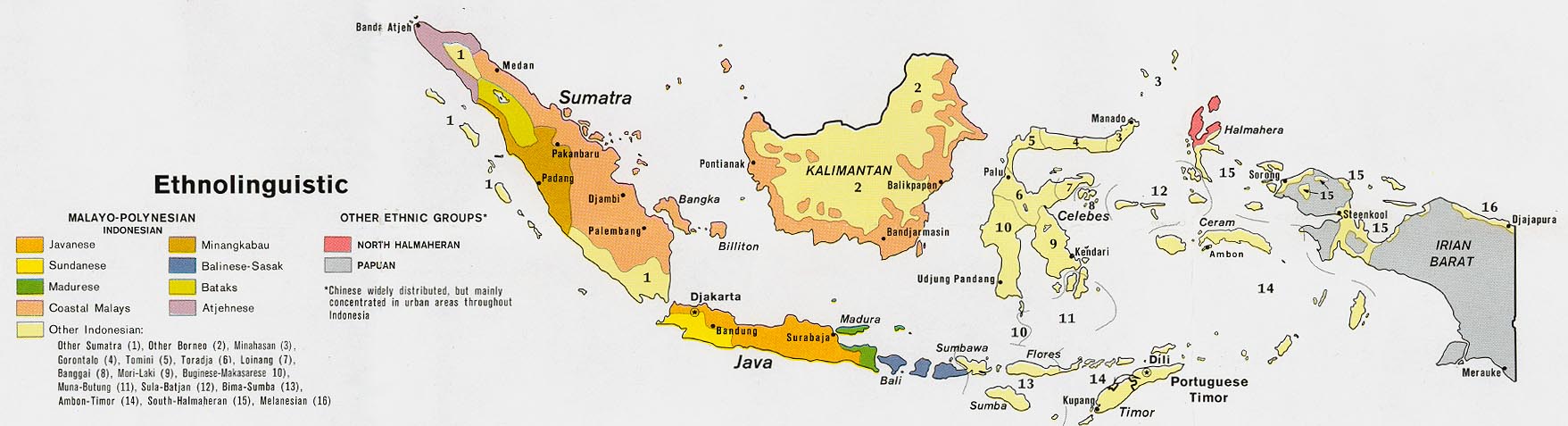
The island of Bali is probably better known than the country of Indonesia. The word "Bali" brings to mind visions of a tropical paradise. Its beauty, friendly people, exquisite art and unique dance have made Bali a favorite destination for millions of tourists from around the world. On this "Island of the gods" reside the Balinese. However, many Balinese can also be found on the nearby island of Lombok, as well as in Lampung, Sulawesi, South Kalimantan, Sumbawa and Papua.
Most Balinese live in very close-knit villages with strong family, social, religious and economic interrelationships. Much of the village's interactions are centered on Hindu worship in the temples and agricultural cooperatives in the surrounding fields. The Balinese have two distinct groups, the Baliaga, (indigenous Balinese) and the Bali Majapahit (originally from the Majapahit Kingdom of Java). The Bali Majapahit inhabit most of the island with some located in the lowlands. They are the group here described as "Balinese". The Balinese' main livelihood is rice farming. Their irrigation system is called subak (sharing water resources). The solidarity among those who share water is displayed in their meetings and religious ceremonies. The natural beauty of Bali and the unique culture of the Balinese have provided the impetus for a booming tourist industry. The face of the island has been changed with the development of luxury hotels, souvenir shops and other tourist related industries. Along with these changes have come a variety of employment opportunities. The Balinese are known throughout the world for their artistic abilities. Many Balinese villages specialize in one form of art. Their artistic talents can be seen in the variety of their paintings, carvings, sculpting, dancing and weavings.
Most Balinese live in very close-knit villages with strong family, social, religious, and economic interrelationships.
Hinduism is the primary religion of the Balinese. Even though Hinduism has greatly affected the culture, the Balinese have managed to maintain their original culture, so that Balinese Hinduism differs from Indian Hinduism. Balinese Hindus believe that there is one god that can be explained by the Trimurti, a concept of three aspects of God: Brahma, the creator; Vishnu, the protector; and Shiva, the destroyer. The Balinese practice Panca Yadnya (5 Ceremonies): 1) Manusia Yadnya (life cycle ceremonies); 2) Putra Yadnya (ancestral ceremonies); 2) Dewa Yadnya (ceremonies to gods who save the world); 4) Resi Yadnya (priest ordination); and 5) Buta Yadnya (ceremonies to protect against evil spirits). The impact of Hinduism can be seen throughout Bali. For example, each neighborhood provides a dadia (communal shrine). Both individual families and larger assemblies use this shrine to offer food and flowers to their gods.
A great need in Bali is a government plan for tourism development. Ironically, a key challenge is to maintain the integrity of Balinese culture in the face of the destructive forces that often accompany tourism. Well-conceived and well-executed laws could preserve the beauty and culture of Bali as well as promote its tourist trade for many years to come.
Pray for the Holy Spirit to move among Balinese elders to open their communities to the Lord of lords.
Pray for the Balinese to have many chances to hear that Jesus Christ is who he says he is in the four gospels.
Pray for loving workers.
Pray for Balinese disciples to make more disciples.
Scripture Prayers for the Balinese in Indonesia.
IPN, 2011 Copyrighted © Used with permission.
| Profile Source: Joshua Project |
| People Name General | Balinese |
| People Name in Country | Balinese |
| Pronunciation |
bah-lih-NEEZ
|
| Alternate Names | |
| Population this Country | 4,200,000 |
| Population all Countries | 4,206,000 |
| Total Countries | 2 |
| Indigenous | Yes |
| Progress Scale | 1 ● |
| Unreached | Yes |
| Frontier People Group | No |
| GSEC | 2 (per PeopleGroups.org) |
| Pioneer Workers Needed | 84 |
| People ID | 10606 |
| ROP3 Code | 100850 |
| ROP25 Code | 300765 |
| ROP25 Name | Bali |
| Country | Indonesia | ||
| Region | Asia, Southeast | ||
| Continent | Asia | ||
| 10/40 Window | Yes | ||
| National Bible Society | Website | ||
| Persecution Rank | 42 (Open Doors top 50 rank, 1 = highest persecution ranking) | ||
| Location in Country | Bali Province, widespread throughout entire island, including Penida; to east, Nusa Tenggara Barat Province, Kota Mataram and Lombok Barat regency, west central Lombok island. Source: Ethnologue 2016 | ||
| Country | Indonesia |
| Region | Asia, Southeast |
| Continent | Asia |
| 10/40 Window | Yes |
| National Bible Society | Website |
| Persecution Rank | 42 (Open Doors top 50 rank, 1 = highest persecution ranking) |
| Location in Country | Bali Province, widespread throughout entire island, including Penida; to east, Nusa Tenggara Barat Province, Kota Mataram and Lombok Barat regency, west central Lombok island.. Source: Ethnologue 2016 |
| Primary Religion: | Hinduism |
| Major Religion ▲ | Percent |
|---|---|
| Buddhism |
0.26 %
|
| Christianity (Evangelical 0.15 %) |
1.26 %
|
| Ethnic Religions |
0.00 %
|
| Hinduism |
95.23 %
|
| Islam |
3.24 %
|
| Non-Religious |
0.01 %
|
| Other / Small |
0.00 %
|
| Unknown |
0.00 %
|
| Primary Language | Bali (Indonesia) (4,200,000 speakers) |
| Language Code | ban Ethnologue Listing |
| Language Written | Yes ScriptSource Listing |
| Total Languages | 1 |
| Primary Language | Bali (Indonesia) (4,200,000 speakers) |
| Language Code | ban Ethnologue Listing |
| Total Languages | 1 |
| People Groups | Speaking Bali (Indonesia) |
Primary Language: Bali (Indonesia)
| Bible Translation ▲ | Status (Years) |
|---|---|
| Bible-Portions | Yes (1910-1988) |
| Bible-New Testament | Yes (1978-1989) |
| Bible-Complete | Yes (1990) |
| FCBH NT (www.bible.is) | Online |
| YouVersion NT (www.bible.com) | Online |
| Possible Print Bibles | |
|---|---|
| Amazon | |
| World Bibles | |
| Forum Bible Agencies | |
| National Bible Societies | |
| World Bible Finder | |
| Virtual Storehouse | |
| Resource Type ▲ | Resource Name | Source |
|---|---|---|
| Audio Recordings | Audio Bible teaching | Global Recordings Network |
| Audio Recordings | Story of Jesus audio | Jesus Film Project |
| Film / Video | Jesus Film: view in Bali | Jesus Film Project |
| General | Bible for Children | Bible for Children |
| General | Faith Comes By Hearing - Bible in text or audio or video | Faith Comes by Hearing |
| General | Faith Comes By Hearing - Bible in text or audio or video | Faith Comes by Hearing |
| General | Faith Comes By Hearing - Bible in text or audio or video | Faith Comes by Hearing |
| General | Gospel resources links | Scripture Earth |
| General | YouVersion Bible versions in text and/or audio | YouVersion Bibles |
| Mobile App | Android Bible app: Bali | YouVersion Bibles |
| Mobile App | Download audio Bible app as APK file | Faith Comes by Hearing |
| Mobile App | Download audio Bible app from Google Play Store | Faith Comes by Hearing |
| Mobile App | iOS Bible app: Bali | YouVersion Bibles |
| Photo Source | _paVan_ - Flickr Creative Commons |
| Map Source | People Group location: IMB. Map geography: ESRI / GMI. Map design: Joshua Project. |
| Video Source | The Waiting World |
| Profile Source | Joshua Project |
| Data Sources | Data is compiled from various sources. Learn more. |