Bengali-speaking South Asian in Myanmar (Burma)
PRINT VERSION:

SHARE:


The Bengali are considered to be the original inhabitants of the Bengal region of southwest Asia. This territory is divided politically between Bangladesh and West Bengal, a state in India. Bengali is the native language spoken by most of the groups in this region. Most of the Bengali diaspora are from Bangladesh, and they are commonly called Bangladeshis.
Although the Bengalis are primarily classified according to language, their culture remains very diversified. In general, the Bengalis are a proud people, highly ambitious, and always striving for excellence. Although outside influences are being incorporated into their culture, the Bengalis remain very proud of their cultural heritage. They are noted in South Asia for their literature.
While the vast majority of Bengalis live in Bangladesh and northeast India, there are significant communities in a number of other countries and other parts of India as well. There are Bengali diaspora communities in Oman, the UAE, Saudi Arabia, Kenya, Myanmar, Singapore, and Japan.
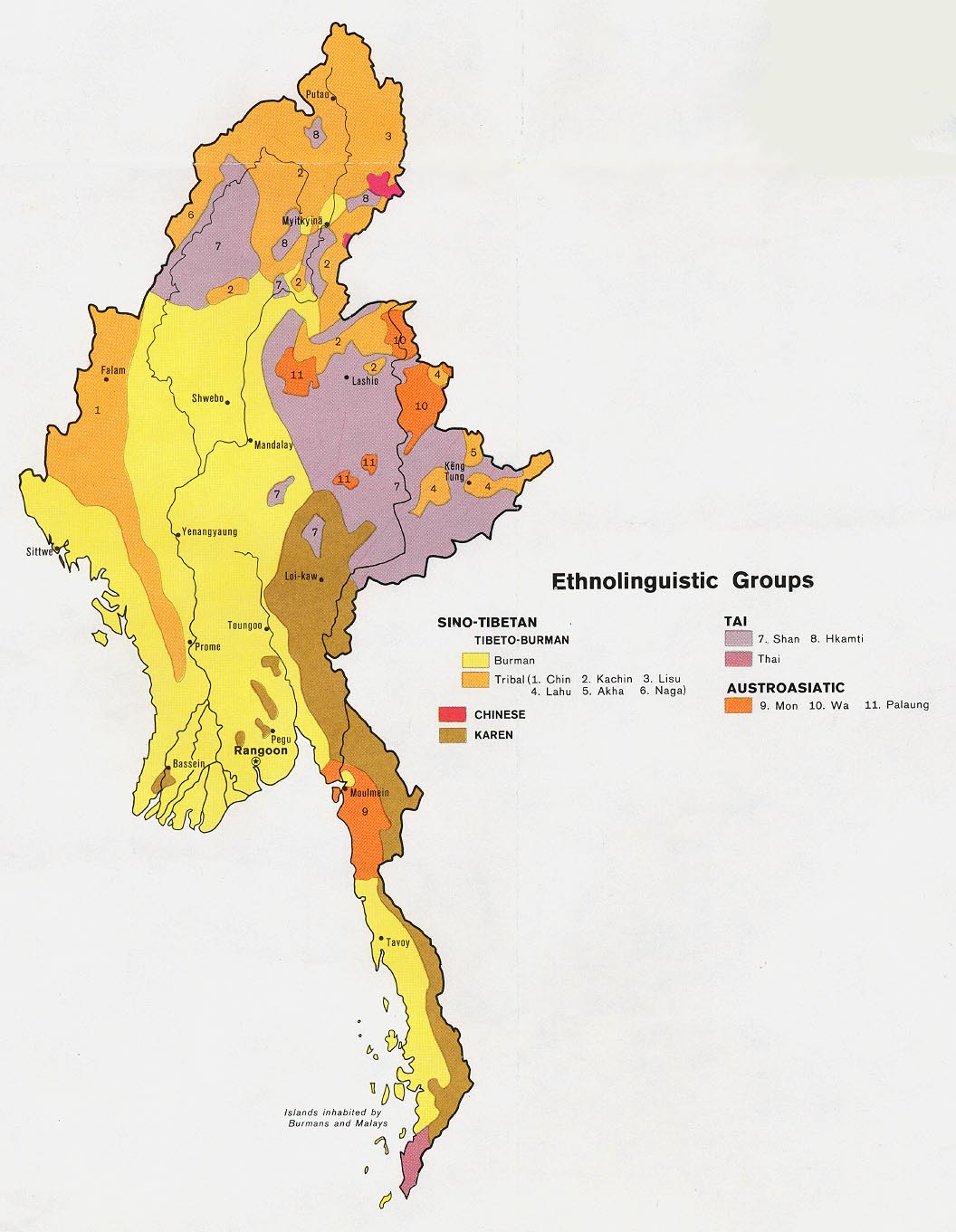
There are large Bengali speaking communities in Myanmar, both from the Hindus and the Muslims. A good percentage of these are Muslims who spill over from neighboring Bangladesh, and the Burmese government views them as an extension of someone else's control being exerted in their country. This region is densely populated, and Muslim Bengalis are known to flee from the frequent floods that hit Bangladesh. This is a cultural ecotone, where Muslim Bengali culture clashes with the Buddhist Burmese one. The Burmese government would love to expel the Muslim Rohingyas, who are now living as refugees in Myanmar. They try to lump the Muslim Bengalis in with the Rohingyas so they can have an excuse to get rid of them as well. Hindu Bengalis are feeling the pressure, so their women often wear the bhindi on their foreheads as a sign they are Hindu, not Muslim.
There is no clear answer as to where poverty-stricken Rohingyas and Bengalis can live. Hopefully, the international community will take many of them in to lessen the tensions in Myanmar.
Most Bengali people in Myanmar are Sunni Muslims who believe that the One, Supreme God, Allah, spoke through his prophet, Mohammed, and taught mankind how to live a righteous life through the Koran and the Hadith. To live a righteous life, you must utter the Shahada (a statement of faith), pray five times a day facing Mecca, fast from sunup to sundown during the month of Ramadan, give alms to the poor, and make a pilgrimage to Mecca if you have the means. Muslims are prohibited from drinking alcohol, eating pork, gambling, stealing, slandering, and making idols. They gather for corporate prayer on Friday afternoons at a mosque, their place of worship.
In most of the Muslim world, people depend on the spirit world for their daily needs since they regard Allah as too distant. Allah may determine their eternal salvation, but the spirits determine how well we live in our daily lives. For that reason, they must appease the spirits. The often use charms and amulets to help them deal with spiritual forces.
The Hindus among the Bengalis in Myanmar focus on the gods and goddesses of Hinduism. They have a pragmatic approach to spiritual matters, worshipping the deities they believe will help them in practical ways.
The Muslim Bengalis in Myanmar need a place where they can live in peace and earn a living. They would be much more productive if they were not in this no-win situation in Myanmar.
Pray for the physical and spiritual needs of the Bengalis to be met in Myanmar.
Pray for the Holy Spirit to move among Bengali-speaking communities all over the world so that they will hunger for truth and righteousness.
Pray for Bengali Muslims in Myanmar to have the chance to hear and respond to Jesus Christ.
Pray for a Disciple Making Movement among Bengalis in Myanmar.
Scripture Prayers for the South Asian, Bengali-speaking in Myanmar (Burma).
| Profile Source: Joshua Project |
| People Name General | South Asian, Bengali-speaking |
| People Name in Country | South Asian, Bengali-speaking |
| Natural Name | Bengali-speaking South Asian |
| Pronunciation |
ben-GAH-lee
|
| Alternate Names | Bangla-Bhasa; Bengali, Muslims; Hindu; साउत एशियन, बिंगाली-स्पीकिंग |
| Population this Country | 282,000 |
| Population all Countries | 1,884,000 |
| Total Countries | 21 |
| Indigenous | No |
| Progress Scale | 1 ● |
| Unreached | Yes |
| Frontier People Group | No |
| GSEC | 1 (per PeopleGroups.org) |
| Pioneer Workers Needed | 6 |
| People ID | 10790 |
| ROP3 Code | 101254 |
| ROP25 Code | 301073 |
| ROP25 Name | Bengali |
| Country | Myanmar (Burma) | ||
| Region | Asia, Southeast | ||
| Continent | Asia | ||
| 10/40 Window | Yes | ||
| National Bible Society | Website | ||
| Persecution Rank | 17 (Open Doors top 50 rank, 1 = highest persecution ranking) | ||
| Country | Myanmar (Burma) |
| Region | Asia, Southeast |
| Continent | Asia |
| 10/40 Window | Yes |
| National Bible Society | Website |
| Persecution Rank | 17 (Open Doors top 50 rank, 1 = highest persecution ranking) |
No people group map currently available. Use the above button to submit a map.
Ethnolinguistic map or other map
| Primary Religion: | Islam |
| Religion Subdivision: | Sunni |
| Major Religion ▲ | Percent |
|---|---|
| Buddhism |
0.00 %
|
| Christianity (Evangelical 0.13 %) |
0.40 %
|
| Ethnic Religions |
0.00 %
|
| Hinduism |
21.60 %
|
| Islam |
70.00 %
|
| Non-Religious |
8.00 %
|
| Other / Small |
0.00 %
|
| Unknown |
0.00 %
|
| Primary Language | Bengali (282,000 speakers) |
| Language Code | ben Ethnologue Listing |
| Primary Dialect | Siripuria |
| Dialect Code | 7966 Global Recordings Listing |
| Language Written | Yes ScriptSource Listing |
| Total Languages | 1 |
| Primary Language | Bengali (282,000 speakers) |
| Language Code | ben Ethnologue Listing |
| Primary Dialect | Siripuria |
| Dialect Code | 7966 Global Recordings Listing |
| Total Languages | 1 |
| People Groups | Speaking Bengali |
Primary Language: Bengali
| Bible Translation ▲ | Status (Years) |
|---|---|
| Bible-Portions | Yes (1800-1980) |
| Bible-New Testament | Yes (1801-1984) |
| Bible-Complete | Yes (1809-2022) |
| FCBH NT (www.bible.is) | Online |
| YouVersion NT (www.bible.com) | Online |
| Possible Print Bibles | |
|---|---|
| Amazon | |
| World Bibles | |
| Forum Bible Agencies | |
| National Bible Societies | |
| World Bible Finder | |
| Virtual Storehouse | |
| Photo Source | COMIBAM / Sepal |
| Profile Source | Joshua Project |
| Data Sources | Data is compiled from various sources. Learn more. |