Betawi in Indonesia
PRINT VERSION:

SHARE:


 Photo Source:
AWG97 - Wikimedia
Photo Source:
AWG97 - Wikimedia
Licensed under CC BY-SA 4.0


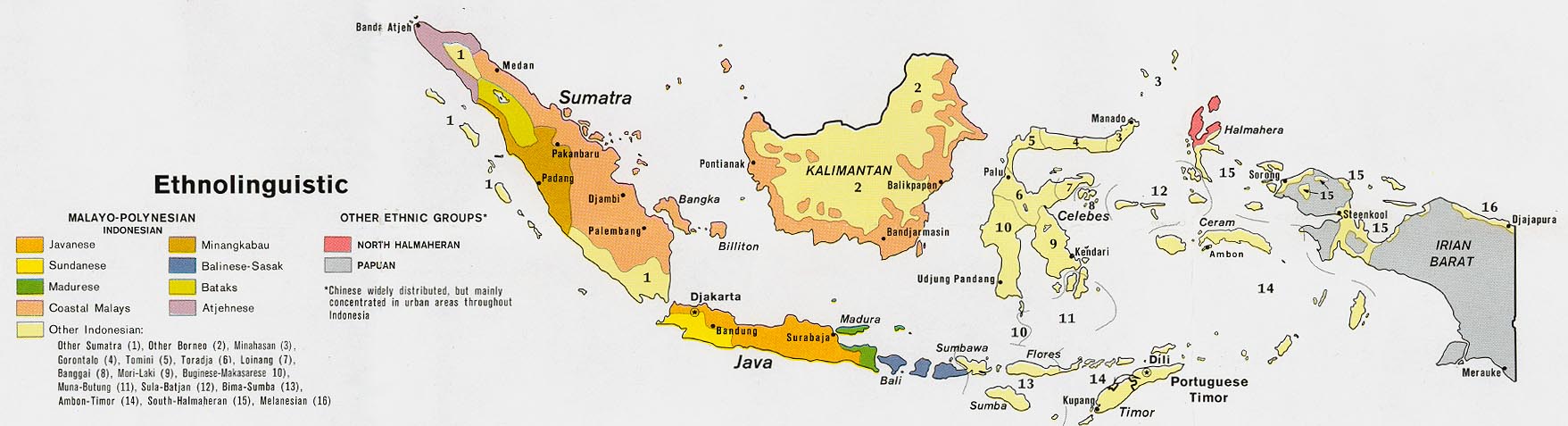
Often called "people of Jakarta," or "people of Batavia," the Betawi are the original inhabitants of Jakarta. Their ancestors came to Batavia (the historical name for Jakarta) in the 15th century. Today, the original Betawi community occupies areas surrounding Jakarta, such as Pasar Minggu, South Jakarta, East Jakarta, Condet and Kampung Sawah in Bekasi (West Java Province).
In areas surrounding Jakarta, most Betawi people make a living by farming rice, growing fruit and fishing. Over time, much of the land they have used for rice farming has been sold as sites for housing complexes, factories and other facilities required for modernization. As a result, many farmers have sought work in the city, becoming traders or tukang ojek (motorcycle taxi drivers). Others work as traders, civil servants, laborers, craftsman, or employees of private companies.
The Betawi resist separation from their families. A Betawi person going through financial difficulty can ask for help from his family members and relatives as opposed to moving away to seek work. Because of this practice, outsiders often consider the Betawi lazy in comparison to people of other ethnicities who have more recently settled in Jakarta.
The Betawi identify schooling with the lifestyle of the ethnic Chinese or the colonial Dutch, causing them to reject education. Additionally, Islamic teachers have urged the Betawi not to attend government-run schools, but instead to enroll in Islamic schools. These factors combine to create resistance to schooling, resulting in a low level of education for the Betawi.
Unique Betawi art forms include lenong (a form of folk theater), ondel-ondel (large puppets used in parades), tari topeng (a form of dance in which the performers wear masks) and wayang golek (shadow theater utilizing wooden puppets). Their traditional form of music is called tanjidor. Sadly, Betawi people themselves rarely perform their traditional art forms anymore.
The Betawi are resistant to outside ideas, and most automatically reject the gospel. Portions of scripture are available in the Betawi language, as are the JESUS film and a handful of other Christian resources.
Islamic teaching and ethics guide daily life in the Betawi community. The Betawi follow four key principles. First, they greet one another with the Islamic salutation Assalamualaikum (Peace be to you), to which the answer is Waalaikumsalam (Peace to you too). Second, they pray five times a day. Third, girls must be married as soon as they reach the required minimum age. Fourth, a host must offer his guests hospitality as much as he is able. The Betawi philosophy for life is "Good fortune is for today; tomorrow is tomorrow's affair." They believe that Allah will give them good fortune. Although the Betawi are generally Muslims, they still believe in spirits that inhabit places such as trees, bridges and graveyards.
The young generation of Betawi need modern education and scientific knowledge to adapt to the information era and new technology. They need to expand their knowledge base beyond agriculture to enable them to survive in Jakarta, a metropolitan city in which productivity and efficiency are highly valued.
Pray for the completion of the New Testament in Betawi and for the Holy Spirit to create a hunger for truth among them.
Ask God to overcome the Betawi's resistance to schooling and to send gospel workers to the Betawi to modernize their education.
Thank God for the believers among the Betawi; ask God to draw their families to himself.
Pray for a Disciple Making Movement among the Betawi resulting in the planting of churches that multiply throughout the group.
Scripture Prayers for the Betawi in Indonesia.
| Profile Source: Joshua Project |
| People Name General | Betawi |
| People Name in Country | Betawi |
| Pronunciation |
beh-TAH-wee
|
| Alternate Names | Batavi; Betawi Asli; Jakarta Malay |
| Population this Country | 5,749,000 |
| Population all Countries | 5,749,000 |
| Total Countries | 1 |
| Indigenous | Yes |
| Progress Scale | 1 ● |
| Unreached | Yes |
| Frontier People Group | No |
| GSEC | 1 (per PeopleGroups.org) |
| Pioneer Workers Needed | 115 |
| People ID | 10815 |
| ROP3 Code | 101296 |
| ROP25 Code | 301107 |
| ROP25 Name | Betawi |
| Country | Indonesia | ||
| Region | Asia, Southeast | ||
| Continent | Asia | ||
| 10/40 Window | Yes | ||
| National Bible Society | Website | ||
| Persecution Rank | 42 (Open Doors top 50 rank, 1 = highest persecution ranking) | ||
| Location in Country | Java island, Jawa Barat Province, Bogar, Bekasi, and Karawang regencies including Depok and Bekasi cities; Banten Province, from Tangerang recency and city; dominant in Jakarta special capital territory. Source: Ethnologue 2016 | ||
| Country | Indonesia |
| Region | Asia, Southeast |
| Continent | Asia |
| 10/40 Window | Yes |
| National Bible Society | Website |
| Persecution Rank | 42 (Open Doors top 50 rank, 1 = highest persecution ranking) |
| Location in Country | Java island, Jawa Barat Province, Bogar, Bekasi, and Karawang regencies including Depok and Bekasi cities; Banten Province, from Tangerang recency and city; dominant in Jakarta special capital territory.. Source: Ethnologue 2016 |
| Primary Religion: | Islam |
| Major Religion ▲ | Percent |
|---|---|
| Buddhism |
0.58 %
|
| Christianity (Evangelical 0.13 %) |
2.23 %
|
| Ethnic Religions |
0.00 %
|
| Hinduism |
0.02 %
|
| Islam |
97.14 %
|
| Non-Religious |
0.03 %
|
| Other / Small |
0.00 %
|
| Unknown |
0.00 %
|
| Primary Language | Betawi (5,749,000 speakers) |
| Language Code | bew Ethnologue Listing |
| Language Written | Yes ScriptSource Listing |
| Total Languages | 1 |
| Primary Language | Betawi (5,749,000 speakers) |
| Language Code | bew Ethnologue Listing |
| Total Languages | 1 |
| People Groups | Speaking Betawi |
Primary Language: Betawi
| Bible Translation ▲ | Status (Years) |
|---|---|
| Bible-Portions | Yes (2000-2020) |
| Bible-New Testament | No |
| Bible-Complete | No |
| Possible Print Bibles | |
|---|---|
| Amazon | |
| World Bibles | |
| Forum Bible Agencies | |
| National Bible Societies | |
| World Bible Finder | |
| Virtual Storehouse | |
| Resource Type ▲ | Resource Name | Source |
|---|---|---|
| Audio Recordings | Audio Bible teaching | Global Recordings Network |
| Audio Recordings | Story of Jesus audio | Jesus Film Project |
| Film / Video | Jesus Film: view in Betawi | Jesus Film Project |
| Film / Video | World Christian Videos | World Christian Videos |
| General | Bible for Children | Bible for Children |
| General | Scripture Earth Gospel resources links | Scripture Earth |
| Photo Source | AWG97 - Wikimedia Creative Commons |
| Map Source | People Group location: IMB. Map geography: ESRI / GMI. Map design: Joshua Project. |
| Profile Source | Joshua Project |
| Data Sources | Data is compiled from various sources. Learn more. |