Northern Pashtun in Afghanistan
PRINT VERSION:

SHARE:


 Photo Source:
Don LaVange - Flickr
Photo Source:
Don LaVange - Flickr
Licensed under CC BY-SA 2.0


The Pashtun of Afghanistan and Pakistan have been called the largest Muslim tribal society in the world. There are at least 30 major tribes, and countless sub-tribes and clans. Spread over a vast geographical area and riven by socio-economic, political, tribal and linguistic (dialectical) differences, Pashtuns nevertheless share a unique sense of common identity. Pashtun identity is based on four elements: Heritage (descent from a common ancestor); Islam (99.9% Muslim); the Pashtunwali Code of Honor ("The Way of the Pashtun"); and to some extent, Language (Pakhtu or Pashto). They live primarily in Afghanistan and Pakistan, though there is a significant Pashtun diaspora in the Arab Gulf and many Western countries.
There have been efforts to reach the Pashtun since 1818, when William Carey translated parts of the Old Testament into Pakhto, based on interaction with Pashtun traders who caravanned (and settled) across north India and beyond. (In South Asia, the name "Pashtun/Pakhtun" was anglicized to "Pathan"—a name immortalized in Rudyard Kipling's novels and British colonial history; today, the Pashtun in India, Bangladesh, and throughout South Asia are known as "Pathan".) The first intentional mission to the Pashtun was launched by the Church Missionary Society in Peshawar, Pakistan (then Northwest India) in 1853. This was followed by over 150 years of faithful witness, through mission hospitals, schools, colleges, literature, friendship evangelism, and other forms of witness by national Pakistani (Punjabi) Christians and expatriate missionaries. Despite this record, and the slow but growing number of scattered Pashtun believers, a vibrant, indigenous, disciple-making movement has yet to take root and spread.
The majority of Pashtun live in Pakistan. They are concentrated mainly in the northern and western provinces of Khyber Pakhtunkhwa and Baluchistan. The Durand Line (the border established under British colonial rule) divides traditional Pashtun homelands in Afghanistan and present-day Pakistan. However, due to tribal, linguistic, social and economic ties, the border is porous, and volatile—fertile ground for the drug trade, smuggling, and cross-border militancy.
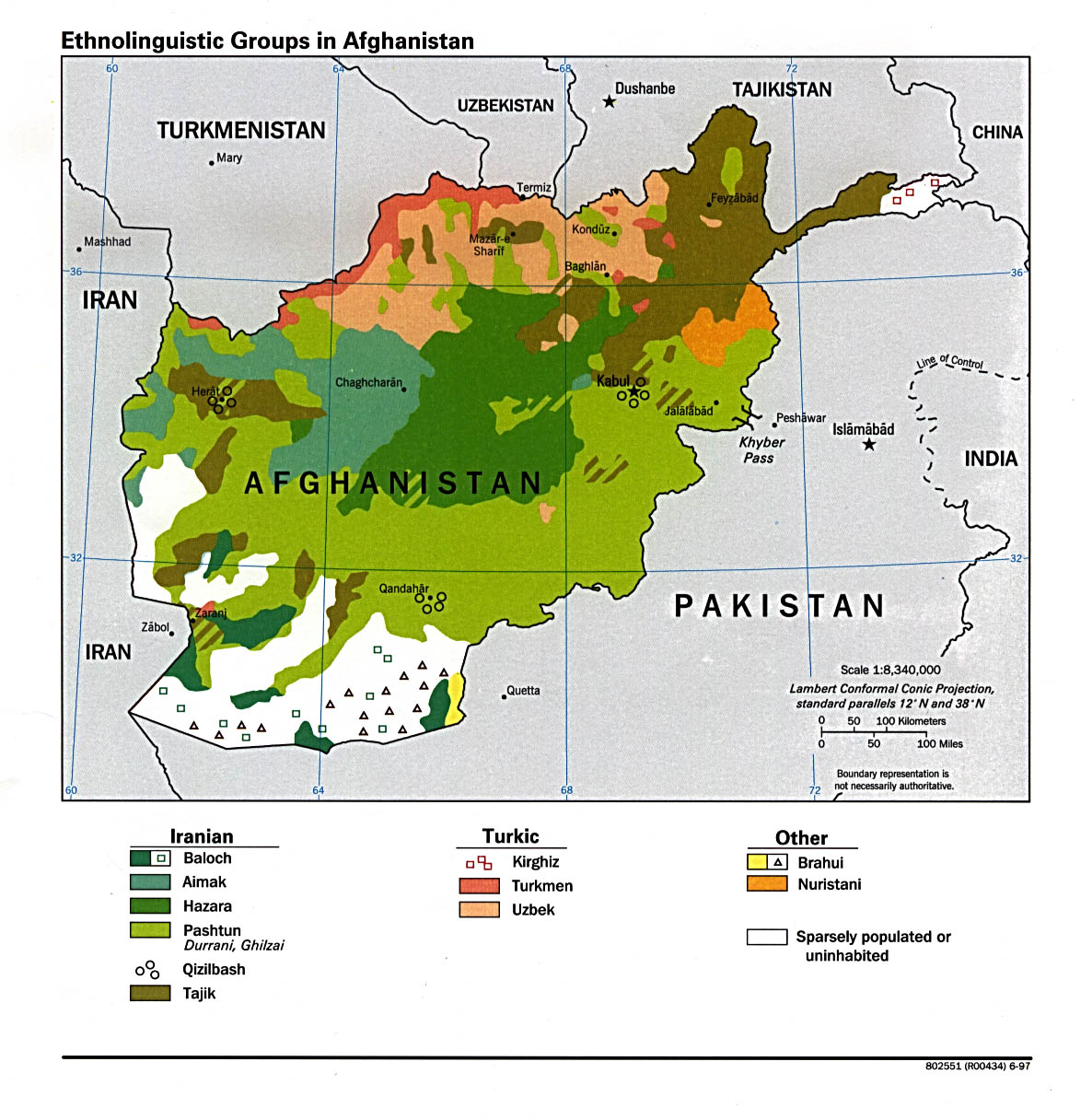
The Pashtun are the largest people group among Afghanistan's peoples. More significant than dialectical differences, a Pashtun's primary loyalty is to his particular social group (tribe or sub-tribe). The Pashtun were the traditional rulers of Afghanistan for over 250 years. Since the overthrow of the Afghan king, communist coup and Soviet invasion in the 1970s, Afghanistan has been in a state of constant conflict. In the 1970's and 1980 's, the Pakistan-Afghanistan borderlands were the launchpad for mujahideen ("freedom fighters") who, with Western, Saudi, and global support, resisted and overthrew the communist regime. The cost was high: Over 3.5 million refugees settled into hundreds of refugee camps in border provinces of Iran and Pakistan; one-third of the population was displaced. During the 1990s, Pashtun tribal areas and thousands of Arab-funded madrassas (religious schools) throughout Pakistan, became the seedbed for the rise of the Taliban movement. Driven by a combination of religious zeal and Pashtun nationalism, and fueled by Arab money, the "Taliban" (a term for "religious students") imposed a harsh, hyper-conservative (Wahabi) version of Islam on the country. Unfortunately, attempts toward a peace accord and durable central government have, to date, been unsuccessful. Armed opposition continues. Instability, endemic corruption, and on-going violence have led to widespread disillusionment—and the migration of tens of thousands of Afghans (mainly young men) seeking jobs and opportunity in Europe and the West.
Although most Pakistani Christians are from a former low-caste background and speak Punjabi, some have overcome social, language and prejudice barriers to reach out in love to their Muslim neighbors. Despite growing anti-Western and anti-American sentiment over the last 20 years, Pakistan still offers opportunities for investment, learning, business and service. Many expatriates have enjoyed the renowned hospitality and friendship of Pashtuns and other Pakistani peoples.
It will be very difficult to get people into the Pashtun homeland to present the gospel and disciple new believers.
Media. Pray for the production and distribution of all forms of media in the Pashto language, including literature, videos, music, movies, radio, websites, and social media. The demand and response have increased!
Scripture. Pray for Bible translations in progress!
Laborers. Pray for more workers to serve among the Pashtun people—in education, business, healthcare, development, and other professional areas!
Believers. No one knows how many Pashtuns are following Jesus. Seeds of the Gospel have been sown widely. The greatest barriers to faith are social and cultural. Pray for God's Spirit to strengthen and protect new believers and to empower their lives and witness!
Scripture Prayers for the Pashtun, Northern in Afghanistan.
| Profile Source: Joshua Project |
| Other PDF Profile |
| People Name General | Pashtun, Northern |
| People Name in Country | Pashtun, Northern |
| Natural Name | Northern Pashtun |
| Pronunciation |
pahsh-TOON
|
| Alternate Names | Afghan; Eastern Pashto; Eastern Pathan; Khan Saheb; Khans; Musalman; Paktoons; Pashtun, Western; Pathan; Pushtun; Pushtun Afghan; Safi; Shafi; Western Pathan; पश्तून, नॉर्दर्न |
| Population this Country | 7,292,000 |
| Population all Countries | 40,163,000 |
| Total Countries | 18 |
| Indigenous | Yes |
| Progress Scale | 1 ● |
| Unreached | Yes |
| Frontier People Group | Yes |
| GSEC | 3 (per PeopleGroups.org) |
| Pioneer Workers Needed | 146 |
| People ID | 14256 |
| ROP3 Code | 107909 |
| ROP25 Code | 306585 |
| ROP25 Name | Pashtun |
| Country | Afghanistan | ||
| Region | Asia, Central | ||
| Continent | Asia | ||
| 10/40 Window | Yes | ||
| Persecution Rank | 10 (Open Doors top 50 rank, 1 = highest persecution ranking) | ||
| Location in Country | Nangarhar province and surrounding regions; scattered. Source: Ethnologue 2016 | ||
| Country | Afghanistan |
| Region | Asia, Central |
| Continent | Asia |
| 10/40 Window | Yes |
| Persecution Rank | 10 (Open Doors top 50 rank, 1 = highest persecution ranking) |
| Location in Country | Nangarhar province and surrounding regions; scattered.. Source: Ethnologue 2016 |
| Primary Religion: | Islam |
| Major Religion ▲ | Percent |
|---|---|
| Buddhism |
0.00 %
|
| Christianity (Evangelical 0.01 %) |
0.01 %
|
| Ethnic Religions |
0.00 %
|
| Hinduism |
0.00 %
|
| Islam |
99.98 %
|
| Non-Religious |
0.00 %
|
| Other / Small |
0.00 %
|
| Unknown |
0.00 %
|
| Primary Language | Pashto, Northern (7,292,000 speakers) |
| Language Code | pbu Ethnologue Listing |
| Language Written | Yes ScriptSource Listing |
| Total Languages | 1 |
| Primary Language | Pashto, Northern (7,292,000 speakers) |
| Language Code | pbu Ethnologue Listing |
| Total Languages | 1 |
| People Groups | Speaking Pashto, Northern |
Primary Language: Pashto, Northern
| Bible Translation ▲ | Status (Years) |
|---|---|
| Bible-Portions | Yes (1824-2010) |
| Bible-New Testament | Yes (1818-1991) |
| Bible-Complete | Yes (1895-2019) |
| FCBH NT (www.bible.is) | Online |
| YouVersion NT (www.bible.com) | Online |
| Possible Print Bibles | |
|---|---|
| Amazon | |
| World Bibles | |
| Forum Bible Agencies | |
| National Bible Societies | |
| World Bible Finder | |
| Virtual Storehouse | |
| Photo Source | Don LaVange - Flickr Creative Commons |
| Map Source | People Group location: Joshua Project. Map geography: ESRI / GMI. Map design: Joshua Project. |
| Video Source | The Waiting World |
| Profile Source | Joshua Project |
| Data Sources | Data is compiled from various sources. Learn more. |