Tharu unspecified in Nepal
PRINT VERSION:

SHARE:


The Tharu have lived quiet, simple lives for four centuries. About two thirds live in Nepal and the rest live further south in India's Uttar Pradesh state.
They are a gentle people. They make almost everything they use themselves, with a touch of art in everything. They have their own gods and follow a Bharra (shaman). Besides the Bharra, who treats their diseases, the village headman, bhalamansa, and the Desi-Mahajan—a moneylender—are important people within the village. They are becoming more aware of outside issues and fireside chat in the evenings is becoming more outward focused, reflecting changes in their culture.
They are becoming more aware of outside issues, and fireside chats in the evenings are becoming more outwardly focused, reflecting changes in their culture.
The Tharu people practice Hinduism, the ancient religion of India and Nepal. Hinduism is a catch-all phrase for the local religions of South Asia, so it is very diverse. At the popular level, Hindus worship and serve the gods of the Hindu pantheon. They visit Hindu temples and offer prayers, food, flowers, and incense to their gods in hopes of gaining protection and benefits. They do not have a personal or familial relationship with their gods like Christians or Jews. There are other Hindus who are much more philosophical, especially among the Brahmins.
Almost all Hindus participate in yearly celebrations like Holi, the festival of colors and the start of spring / Diwali, the festival of lights / Navratri, the celebration of autumn / and Rama Navami, Rama's birthday.
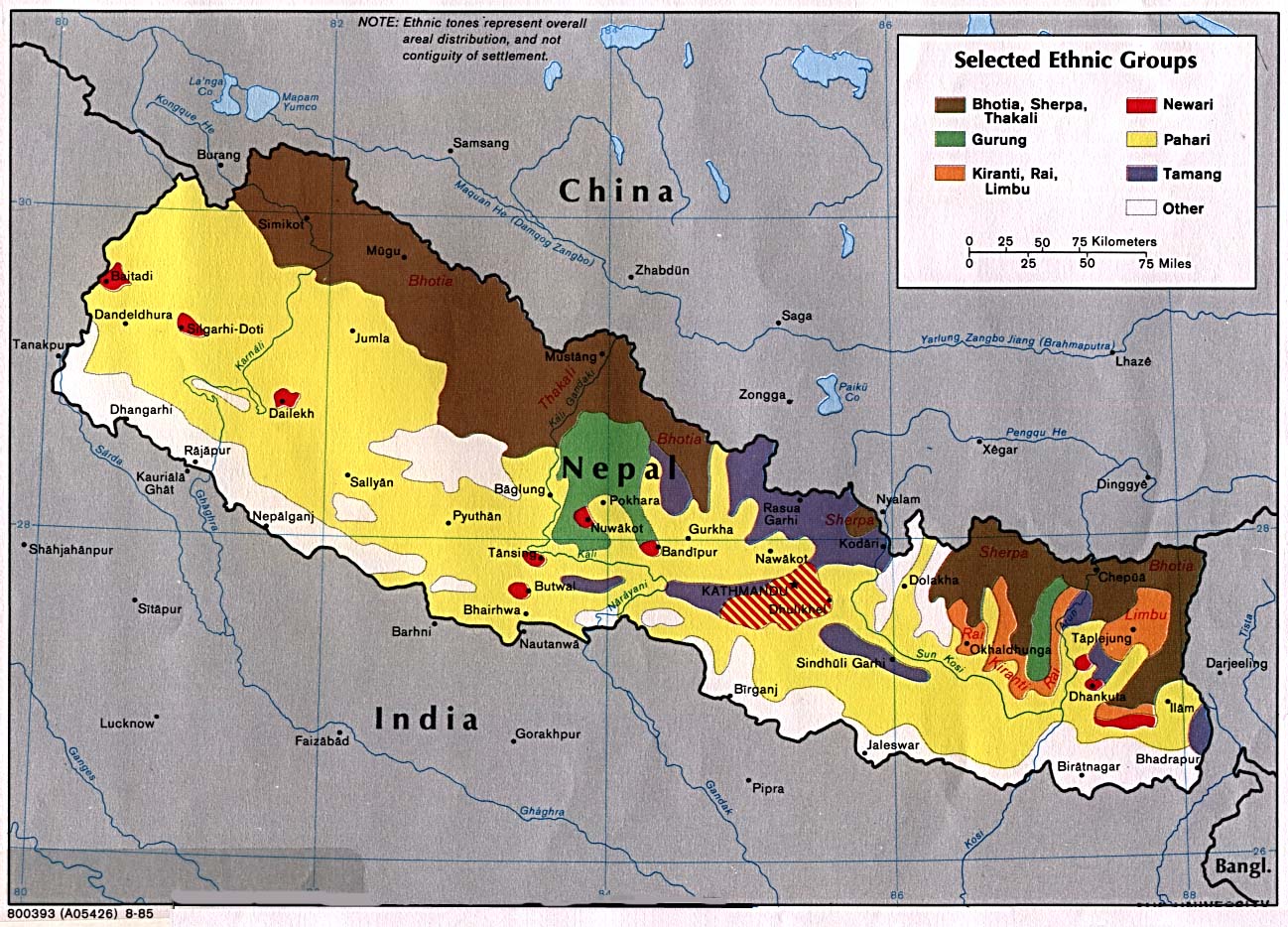
The Tharu speak several languages and are spread over a wide area of Nepal.
Pray for the gentle Tharu people to be protected from those who would take advantage of them.
Pray they will be able to care adequately for their families.
There are a few Christians among the Tharu community. Pray they will become true disciples, moving beyond mere cultural identification with Christ. Pray for the gift of conviction of sin, and for zealous hearts to really know and follow Christ.
Pray for the Lord to thrust out loving ambassadors of Christ to this unreached community.
Scripture Prayers for the Tharu unspecified in Nepal.
| Profile Source: Joshua Project |
| People Name General | Tharu |
| People Name in Country | Tharu unspecified |
| Pronunciation |
TAH-roo
|
| Alternate Names | Kathoriya; Kathoriya Tharu; Mahatos; Mahatu; Tharu Rana; थारू |
| Population this Country | 1,774,000 |
| Population all Countries | 2,314,000 |
| Total Countries | 2 |
| Indigenous | Yes |
| Progress Scale | 1 ● |
| Unreached | Yes |
| Frontier People Group | No |
| Pioneer Workers Needed | 35 |
| People ID | 15464 |
| ROP3 Code | 110011 |
| ROP25 Code | 308118 |
| ROP25 Name | Tharu |
| Country | Nepal | |||||||||||||||
| Region | Asia, South | |||||||||||||||
| Continent | Asia | |||||||||||||||
| 10/40 Window | Yes | |||||||||||||||
| National Bible Society | Website | |||||||||||||||
| Persecution Rank | Not ranked | |||||||||||||||
| Total States on file | 14 | |||||||||||||||
| Largest States |
|
|||||||||||||||
| Country | Nepal |
| Region | Asia, South |
| Continent | Asia |
| 10/40 Window | Yes |
| National Bible Society | Website |
| Persecution Rank | Not ranked |
| Total States | 14 |
| Seti 323,000 | |
| Bheri 310,000 | |
| Lumbini 253,000 | |
| Narayani 213,000 | |
| Rapti 165,000 | |
| Kosi 153,000 | |
| Sagarmatha 125,000 | |
| Mahakali 116,000 | |
| Janakpur 37,000 | |
| Bagmati 27,000 | |
| Mechi 11,000 | |
| Gandaki 4,100 | |
| Dhaulagiri 600 | |
| Karnali 500 | |
| Website | South Asia Peoples |
| Primary Religion: | Hinduism |
| Major Religion ▲ | Percent * |
|---|---|
| Buddhism |
0.72 %
|
| Christianity (Evangelical Unknown) |
3.41 %
|
| Ethnic Religions |
0.00 %
|
| Hinduism |
95.67 %
|
| Islam |
0.00 %
|
| Non-Religious |
0.00 %
|
| Other / Small |
0.00 %
|
| Unknown |
0.20 %
|
|
* From latest Nepal census data. Current Christian values may substantially differ. |
|
| Primary Language | Tharu, Dangaura (790,000 speakers) | |||||||||||||||
| Language Code | thl Ethnologue Listing | |||||||||||||||
| Language Written | Yes ScriptSource Listing | |||||||||||||||
| Total Languages | 17 | |||||||||||||||
| Secondary Languages (only 15 largest shown) |
|
| Primary Language | Tharu, Dangaura (790,000 speakers) |
| Language Code | thl Ethnologue Listing |
| Total Languages | 17 |
| Secondary Languages (only 15 largest shown) | |
| Tharu, Kathariya 706,000 | |
| Nepali 162,000 | |
| Tharu, Central 32,000 | |
| Bhojpuri 25,000 | |
| Maithili 20,000 | |
| Dotyali 2,000 | |
| Sonha 600 | |
| Rawat 500 | |
| Hindi 300 | |
| Bantawa 200 | |
| Musasa 90 | |
| Chamling 80 | |
| Majhi 70 | |
| Nepalese Sign Language 30 | |
| Thangmi 10 | |
| People Groups | Speaking Tharu, Dangaura |
Primary Language: Tharu, Dangaura
| Bible Translation ▲ | Status (Years) |
|---|---|
| Bible-Portions | Yes (2010) |
| Bible-New Testament | Yes (2018-2023) |
| Bible-Complete | No |
| FCBH NT (www.bible.is) | Online |
| YouVersion NT (www.bible.com) | Online |
| Possible Print Bibles | |
|---|---|
| Amazon | |
| World Bibles | |
| Forum Bible Agencies | |
| National Bible Societies | |
| World Bible Finder | |
| Virtual Storehouse | |
| Resource Type ▲ | Resource Name | Source |
|---|---|---|
| Audio Recordings | Audio Bible teaching | Global Recordings Network |
| Audio Recordings | Story of Jesus audio | Jesus Film Project |
| Film / Video | Jesus Film: view in Tharu, Dangaura | Jesus Film Project |
| Film / Video | LUMO film of Gospels | Bible Media Group/LUMO |
| Film / Video | My Last Day video, anime | Jesus Film Project |
| Film / Video | World Christian Videos | World Christian Videos |
| General | Faith Comes By Hearing - Bible in text or audio or video | Faith Comes by Hearing |
| General | Faith Comes By Hearing - Bible in text or audio or video | Faith Comes by Hearing |
| General | Scripture Earth Gospel resources links | Scripture Earth |
| General | YouVersion Bible versions in text and/or audio | YouVersion Bibles |
| Mobile App | Android Bible app: Tharu, Dangaura | YouVersion Bibles |
| Mobile App | iOS Bible app direct APK download | SIL |
| Mobile App | iOS Bible app: Tharu, Dangaura | YouVersion Bibles |
| Photo Source | Anonymous |
| Map Source | People Group data: Omid. Map geography: UNESCO / GMI. Map Design: Joshua Project. |
| Profile Source | Joshua Project |
| Data Sources | Data is compiled from various sources. Learn more. |