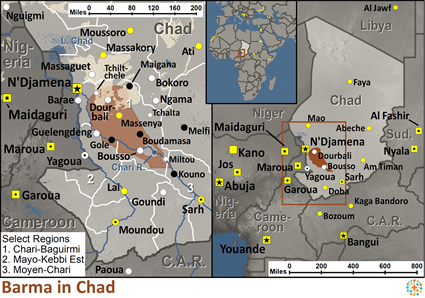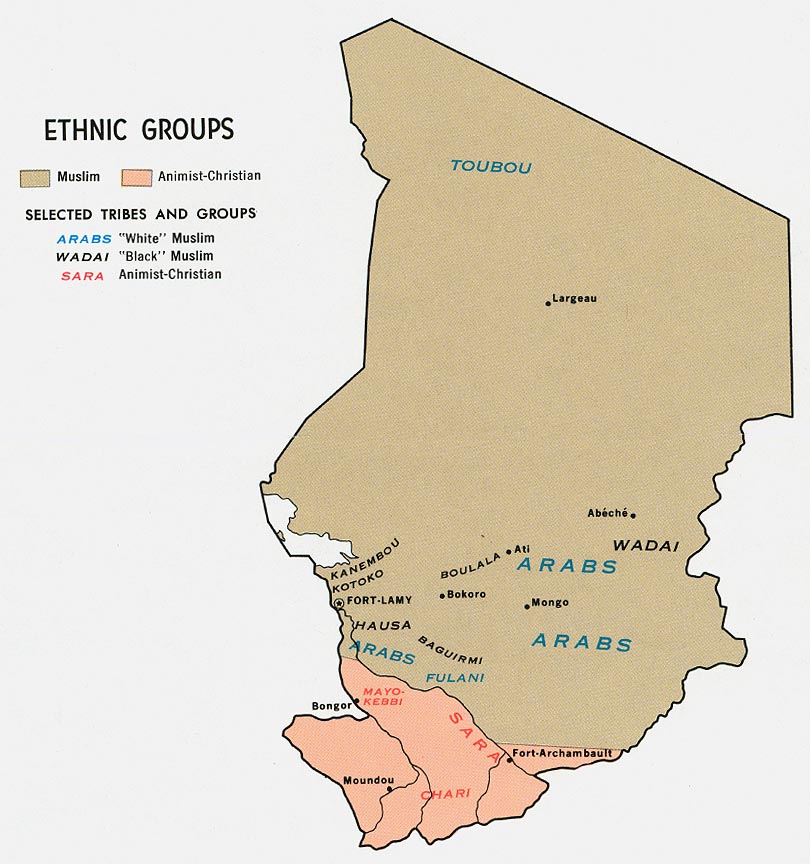

The Barma (or Bagirmi) occupy the territory between N'Djamena (Chad's capital) and Bousso, a small city farther south on the Chari River. In the 1700s, the Barmas' ancestors ruled the Bagirmi Empire, a large area across Chad and into Sudan. At the end of the 1700s, the empire was attacked by Islamic Wadai armies and was never able to regain its political independence.
The daily life of the Barma people is centered on subsistence agriculture and village-based living. Most families work in farming, growing staple crops such as millet, sorghum, and other locally adapted foods. Agriculture is usually done on small family plots, with work shared among family members. Men typically handle field preparation and heavier labor, while women often assist with planting, harvesting, food preparation, and managing the household.
In addition to farming, some Barma may raise small livestock, which provides additional food and occasionally income. Work is physically demanding and follows the rhythms of the rainy and dry seasons, with planting and harvest periods determining the pace of life. Families depend heavily on cooperation, and extended family members often live close together, sharing responsibilities and resources.
Recreational life is simple and strongly connected to community and tradition. Social gatherings are an important form of relaxation and enjoyment. These may include storytelling, music, and dancing, especially during festivals, weddings, or harvest celebrations. Such events strengthen relationships and preserve cultural identity. Evenings may be spent talking with neighbors or sharing time with family after the day's work is finished. Recreational activities are not highly individualized but are woven into the communal life of the village.
The Barma have been devout followers of the Islamic faith since the sixteenth century, though they also cling to certain pre-Islamic practices regarding the spirit world. Chad is not hospitable to Christian workers, and the region is strongly Islamic.
The Barma people have both spiritual and practical needs. Spiritually, there is a need for clear teaching about Jesus Christ that addresses their existing worldview and helps them understand the truth of the gospel. Discipleship and access to Scripture in a form they can understand are essential for lasting transformation.
Practically, many Barma communities face challenges related to poverty and limited access to resources. Reliable access to healthcare, education, and clean water can be difficult, particularly in rural areas. Improving agricultural methods, strengthening local economies, and expanding basic services would greatly enhance their quality of life.
Because their lives are closely tied to subsistence farming, they are also vulnerable to changes in weather and environmental conditions. Support that helps stabilize food supply and improve resilience would address important physical needs while opening doors for long-term relationships and ministry.
Pray for Christian radio to blanket the country of Chad, and that broadcasts in the Bagirmi language would be included.
There are very few followers of Jesus among this tribe at present. But pray for those the Lord is preparing to call to himself.
Pray that as they become Christ followers, they would live holy lives and would honor the Lord with their lives.
Pray for healthy marriages among these new Christians.
Pray also that parents would understand the need of schooling for the children.
Pray for adequate rainfall for crops and for livestock.
References
Scripture Prayers for the Barma in Chad.
| Profile Source: Joshua Project |