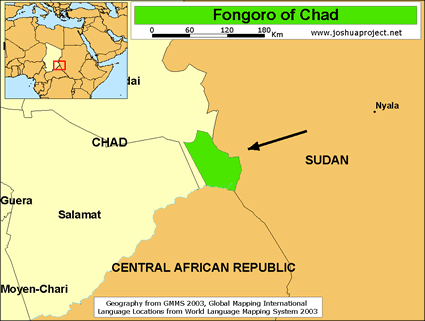
The Fongoro are a small ethnic group living in the border regions of eastern Chad and western Sudan, especially in the Sila area near Darfur. They are also known by names such as Gelege, Kole, or Forgy. Historically, the Fongoro lived in more fertile regions within or near the old Darfur Sultanate, but over the centuries they were gradually pushed into remote and less productive lands through the expansion of larger Arab and Fur populations. This displacement contributed to isolation, poverty, and increasing pressure to assimilate into surrounding peoples.
The Fongoro language is a severely endangered Central Sudanic language, and in some communities it is spoken only by older generations. Many younger people increasingly speak Fur, Arabic, or other regional languages, especially in mixed settlements and market towns. Because of this shift, both their language and distinct cultural identity are at risk of disappearing.
Traditionally, the Fongoro lived in rugged hill country and marginal lands where survival depended on adapting to difficult environmental conditions. Their history has also been shaped by conflict, migration, and instability affecting both Chad and Sudan. Many communities remain isolated from modern infrastructure, education, and outside economic opportunity.
The Fongoro traditionally depended on hunting, gathering, fishing, and small-scale farming. Sorghum cultivation remains important where farming is possible, while some families also keep goats or cattle. Fishing and drying fish for food and trade are practiced in areas near rivers or seasonal water sources. In harsher regions, gathering wild foods and forest products has historically helped families survive during difficult seasons.
Life for many Fongoro families is physically demanding because the land where they live often suffers from poor soil, limited rainfall, disease-carrying insects, and weak infrastructure. Tsetse flies and other environmental challenges affect both people and livestock. Economic opportunities are limited, and many households struggle with food insecurity and unstable income sources.
Family and clan relationships are central to community life. Villages are often organized around extended family ties, and local customs strongly influence marriage, conflict resolution, and social responsibilities. In some communities polygamy is practiced. Oral tradition and shared cultural memory remain important for preserving identity in the face of outside pressure and assimilation.
Ongoing instability in nearby Sudan and border regions has also disrupted normal life for some Fongoro communities through displacement, insecurity, and reduced access to trade or services. Remote living conditions continue to limit access to healthcare, education, transportation, and communication.
The Fongoro are primarily Sunni Muslims, and Islamic identity shapes much of community life. Religious practices commonly include prayer, fasting during Ramadan, mosque participation, and observance of Islamic traditions. Islam spread into the region centuries ago through political influence, trade networks, and interaction with neighboring Muslim peoples.
At the same time, many Fongoro communities retain traditional African spiritual beliefs alongside Islamic practice. Fear of spirits, unseen powers, curses, and local supernatural influences may continue to shape religious behavior and daily decision-making. This blending of Islamic belief with older animistic traditions creates a syncretistic spiritual environment.
Very few Fongoro have heard a clear biblical explanation of salvation through Jesus Christ. Social isolation, limited gospel access, and strong religious identity have left most without meaningful exposure to Christianity. They need to know that forgiveness of sins and reconciliation with God come through Christ alone rather than through religious identity, ritual observance, or fear-driven spiritual practices.
The Fongoro are considered both unreached and largely unengaged with the gospel. There are very few known believers among them and little sustained Christian ministry focused specifically on their communities. Their remote location, small population, and gradual assimilation into surrounding groups make outreach especially difficult.
Practical needs are also significant. Many Fongoro families struggle with poverty, food shortages, poor farming conditions, limited healthcare access, and economic isolation. Environmental hardships such as disease-carrying insects, lack of water, and weak agricultural productivity continue to affect daily life. Conflict and instability in the broader Chad-Sudan border region add further pressure and uncertainty.
There is a need for long-term Christian workers willing to live among the Fongoro, learn their culture and language, and communicate biblical truth with humility and perseverance. Scripture resources and discipleship materials in accessible languages are needed so that those who respond to the gospel can grow in faith and eventually help reach their own people. Compassionate ministry addressing both spiritual and practical needs can help demonstrate the love of Christ in meaningful ways.
Pray that the Fongoro people will hear a clear presentation of the gospel and place their faith in Jesus Christ for salvation.
Pray that God will raise up faithful Christian workers who are willing to serve among the Fongoro with wisdom, compassion, and perseverance despite difficult living conditions.
Pray that the Fongoro people will be adopted through the People Group Adoption program so that churches and believers will commit to sustained prayer and future gospel outreach among them.
Pray that any believers among the Fongoro will grow strong in biblical truth and boldly share the hope of Christ with their families and neighboring communities.
Scripture Prayers for the Fongoro in Chad.
https://en.wikipedia.org/wiki/Fongoro_people
https://en.wikipedia.org/wiki/Fongoro_language
https://peoplegroups.org/people_groups/pg011344/
https://prayafrica.org/project/fongoro-of-sudan/
https://www.ethnologue.com/language/fgr/
| Profile Source: Joshua Project |