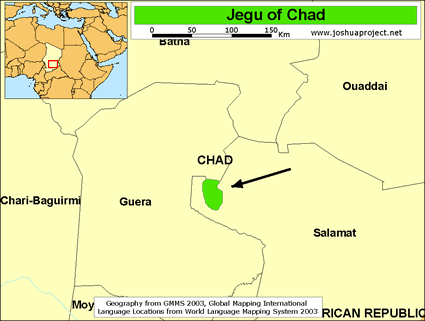
The Jegu are a small ethnic group living in central Chad, particularly in the Guéra region. They belong to the broader Chadic peoples cluster of Central Africa and are associated with the Jonkor Bourmataguil language, a little-known language spoken by relatively few people. Because of their small population and geographic isolation, the Jegu have received very little outside attention and remain among the least reached peoples in Chad.
The Jegu live within the harsh Sahel belt of Africa, a region marked by dry grasslands, periodic drought, and difficult environmental conditions. Like many small ethnic groups in Chad, their history has been shaped by adaptation to an unforgiving climate, dependence on subsistence agriculture, and interaction with neighboring Muslim peoples. Over time, larger regional languages such as Chadian Arabic have increasingly influenced smaller groups like the Jegu, placing pressure on their traditional language and cultural identity.
Because they are relatively isolated and have little written documentation, much of Jegu history and culture has been preserved through oral tradition and village life rather than formal historical records. Their remote location and limited infrastructure have contributed to their continued isolation from broader economic development and from meaningful gospel witness.
The Jegu live in a difficult environment where survival depends heavily on farming, livestock care, and careful use of limited natural resources. Like many Sahel peoples, they cultivate crops suited to dry conditions, including millet, maize, beans, and grains that can survive irregular rainfall. Some families may also keep goats, sheep, or cattle when conditions allow. Drought and poor harvests can quickly create hardship for entire communities.
Village life is usually centered around extended family relationships and local community cooperation. Homes are commonly built from mud brick or local materials with thatched roofs designed for the hot, dry climate of central Chad. Water access can be difficult, and many rural communities lack electricity, paved roads, modern sanitation, or reliable medical services.
Children often help with farming, animal care, gathering water, and household responsibilities from an early age. Social life revolves around family loyalty, seasonal agricultural cycles, weddings, religious festivals, and local traditions. Oral storytelling and shared community memory remain important for preserving identity among smaller peoples like the Jegu.
Life in the Sahel is physically demanding. Food insecurity, disease, drought, and economic isolation continue to affect many rural families. Younger generations may migrate toward towns or larger communities in search of work, but opportunities remain limited across much of the region.
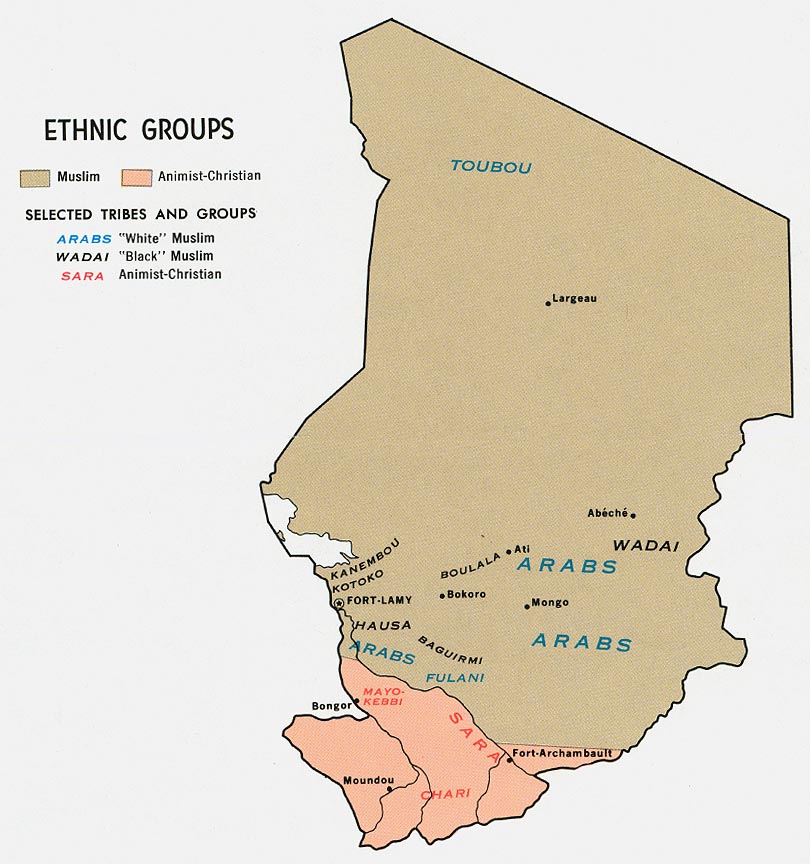
The Jegu are primarily Sunni Muslims, and Islam shapes much of community life and moral structure. Religious practices commonly include prayer, fasting during Ramadan, participation in mosque life, and observance of Islamic customs connected to marriage, burial, and community events. Islam spread throughout central Chad over many centuries through trade routes, regional rulers, and interaction with neighboring Muslim peoples.
Alongside formal Islamic belief, traditional spiritual practices and fear of unseen powers often continue to influence daily life. Like many Sahel peoples, some Jegu may rely on charms, blessings, spiritual protection rituals, or local healers when facing sickness, hardship, or fear of spiritual harm. This blending of Islam with older animistic beliefs creates a syncretistic spiritual environment.
Very few Jegu have heard a clear biblical explanation of salvation through Jesus Christ. Because there are almost no known Christian resources in their language, the gospel is often perceived as foreign or connected to outside cultures rather than something understandable within their own community. They need to hear that forgiveness of sins and reconciliation with God come through Christ alone rather than through religious identity, rituals, or fear-driven spiritual practices.
The Jegu are considered both unreached and unengaged with the gospel. There are extremely few known believers among them and little sustained ministry specifically focused on reaching their people. Their small population, remote setting, and lack of Christian resources in the Jonkor Bourmataguil language create major barriers to evangelism and discipleship.
Practical needs are also significant. Many Jegu communities face drought, food insecurity, poor healthcare access, weak infrastructure, inadequate sanitation, and limited educational opportunity. Clean water and reliable medical care are often difficult to obtain in isolated rural areas. Economic opportunities remain scarce, especially in the harsh Sahel environment.
There is a need for faithful Christian workers willing to serve long term among the Jegu with humility, patience, and cultural understanding. Scripture resources, gospel recordings, and biblical teaching in their own language are especially important so that the message of Christ can be understood clearly within their cultural setting. Compassionate ministry that addresses both spiritual and practical needs can help demonstrate the love of Christ in meaningful ways.
Pray that the Jegu people will hear a clear presentation of the gospel and place their faith in Jesus Christ for salvation.
Pray that God will provide Christian resources and gospel recordings in the Jonkor Bourmataguil language so the Jegu can understand biblical truth clearly.
Pray that the Jegu people will be adopted through the People Group Adoption program so that churches and believers will commit to sustained prayer and future gospel outreach among them.
Pray that God will raise up faithful Christian workers who are willing to serve among the Jegu with wisdom, compassion, and perseverance despite difficult living conditions.
Scripture Prayers for the Jegu in Chad.
https://peoplegroups.org/people_groups/pg011363/
https://en.wikipedia.org/wiki/Chad
https://ru.wikipedia.org/wiki/%D0%94%D0%B6%D0%B5%D0%B3%D1%83
https://www.hisfeet.com/unreached-people-groups-in-chad/
https://iwgia.org/en/chad/3498-iw2019-chad.html
| Profile Source: Joshua Project |