




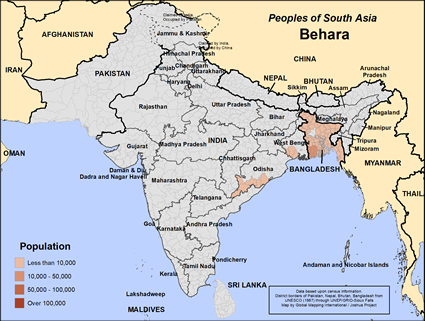
The Behara are a Muslim community found primarily in Bangladesh. They are part of the broader Bengali cultural world and speak Bengali as their primary language. Like many communities in Bangladesh, their history has been shaped by centuries of Islamic influence, regional trade, agriculture, and village-based social structures.
The Behara have lived within the cultural framework of eastern Bengal for generations, where rivers, fertile farmland, and dense rural populations have strongly influenced daily life and community identity. Family relationships, local customs, and religious traditions remain central to their social structure. Although modern education and urban migration have affected some families, many Behara still maintain close ties to traditional village life and inherited cultural practices.
Bangladesh itself has a long history of interaction between Islamic teaching and older folk traditions. As a result, many rural Muslim communities developed religious practices shaped both by orthodox Islamic belief and local spiritual customs. The Behara reflect many of these broader regional influences.
The Behara largely live in rural or semi-rural settings where agriculture, small trade, fishing, labor, and local business activities support family life. In many areas of Bangladesh, daily routines revolve around farming cycles, village markets, family responsibilities, and community relationships. Rice, fish, lentils, and vegetables form a major part of the traditional diet.
Extended family structures remain important, and respect for elders carries significant weight within the community. Weddings, religious festivals, and community gatherings help reinforce family and social ties. Hospitality is highly valued, and social life is often closely connected to both family and religious identity.
In urban areas, some Behara families have entered occupations connected to transportation, commerce, skilled labor, and government work. Even where modernization has increased, many cultural values rooted in family loyalty, modesty, and religious observance continue to shape everyday life.
Communities in Bangladesh frequently face challenges connected to flooding, economic instability, overcrowding, and access to healthcare and education. Rural populations may experience additional hardship during periods of severe weather or crop disruption.
The Behara are primarily Muslim and generally follow Sunni Islamic traditions common throughout Bangladesh. Religious life commonly includes mosque attendance, prayer, fasting during Ramadan, observance of Islamic festivals, and respect for Islamic teachers and community leaders.
At the same time, in some rural settings, Islamic belief may exist alongside folk practices, shrine-centered traditions, spiritual superstitions, or customs inherited from earlier cultural influences. This can result in a syncretistic form of religion where Islamic teaching is blended with localized spiritual practices and cultural traditions.
For many within the community, religious identity is deeply connected to family heritage and social belonging. Conversion to Christianity can therefore bring strong family opposition, social isolation, or community pressure. Many Behara have still never encountered a clear biblical explanation of salvation by grace through faith in Jesus Christ alone.
The Behara need greater access to the gospel through culturally understandable and biblically faithful ministry. Many have limited opportunity to hear the message of Christ presented clearly in their own language and cultural setting.
There is a need for trained believers who can patiently build relationships, answer questions about Scripture, and disciple new Christians who may face opposition from family or community members. Access to Bibles, Christian teaching materials, and mature local fellowships is also important for long-term spiritual growth.
Practical challenges remain significant for many families, including poverty, healthcare limitations, natural disasters, educational barriers, and unstable employment opportunities. Compassionate Christian service combined with faithful gospel witness can help demonstrate the love of Christ in meaningful ways.
The Behara would benefit from strong local churches equipped to disciple believers, support families, and continue sharing the gospel with neighboring communities throughout Bangladesh.
Pray that the Behara people will hear a clear presentation of the gospel and come to understand the salvation offered through Jesus Christ alone.
Pray that God will raise up faithful Bengali-speaking believers and church planters who are willing to serve among the Behara with wisdom, compassion, and courage.
Pray that the Behara people will be adopted through the People Group Adoption program so that ongoing prayer, outreach, discipleship, and future gospel engagement will continue among them.
Pray that believers in Bangladesh will grow strong in biblical faith and boldly share the truth of Christ with the Behara and other unreached communities.
Scripture Prayers for the Behara in Bangladesh.
https://peoplegroups.org/explore/GroupDetails.aspx?peid=15131
https://www.britannica.com/place/Bangladesh
https://www.britannica.com/topic/Islam
https://en.wikipedia.org/wiki/Bengali_Muslims
https://culturalatlas.sbs.com.au/bangladeshi-culture/bangladeshi-culture-religion
| Profile Source: Joshua Project |


