


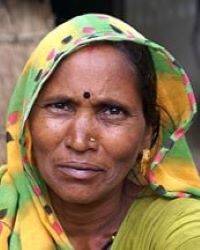

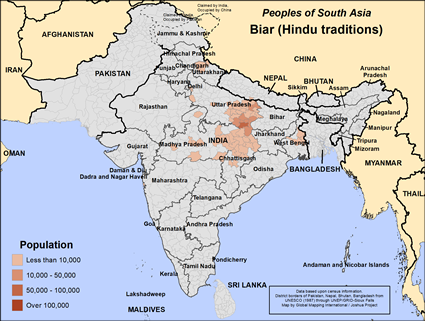
The Biar (or Bayar) community has two divisions: the Barhariya, who live north of the River Son, and the Dakkinahija, who live south of the river. These in turn are divided into several clans.
The Biar are primarily a rural people whose daily lives are closely connected to agriculture and manual labor. Most Biar families depend on farming as their main source of livelihood. They typically cultivate staple crops such as rice, wheat, and lentils, adjusting their work according to the agricultural seasons. Because many Biar households have limited landholdings, it is common for men to seek additional income as agricultural laborers, working in the fields of larger landowners during peak seasons of sowing and harvesting. Some may also engage in casual wage labor or small-scale trade to supplement their earnings.
Work responsibilities are commonly shared within the family unit. Men generally perform tasks such as plowing, irrigating fields, and handling market transactions, while women play a crucial role in planting, weeding, harvesting, and processing crops. In addition to their agricultural contributions, women are responsible for maintaining the home, preparing meals, and caring for children. Children often assist their parents with light agricultural duties and household chores, learning practical skills from an early age and contributing to the family's overall well-being.
Recreational life among the Biar is simple and centered on community interaction. Leisure time is limited due to the demands of agricultural work, but moments of rest and enjoyment are found in social and cultural activities. Village gatherings provide opportunities for fellowship, where people share stories, discuss local matters, and strengthen social ties. Religious festivals rooted in Hindu tradition are especially important occasions for recreation. During these events, the community comes together for worship, feasting, music, and dance, expressing both devotion and cultural identity.
Traditional music and dancing play a meaningful role in Biar recreational life, particularly during festivals and family celebrations such as weddings. These occasions bring together extended families and neighboring villages, fostering unity and mutual support. Children and young people often engage in simple outdoor games, while adults may enjoy conversation and communal activities after the day's work is finished.
Spouses are acquired through middlemen. The bridegroom's father receives a dowry. Vermilion is the symbol of a married woman.
Mahadeva is the Biar's special deity. They worship Kali, Deeh and Aminal Devi as village deities. A Guru Bhagi performs the sacred duties of the community. Their major Hindu festivals are Ram Navami, Nag Panchami, Dussehra, Diwali, Til Sankranti and Holi.
Uttar Pradesh, the primary home of the Biar, has only a few Christian believers. It will be difficult for the few Christians to reach out to the hundreds of groups without a gospel witness.
Pray the Biar community will hunger to know the one true God, their creator. Pray they won't be satisfied with anything less.
Pray that gospel radio in the languages of the Biar will be widely available in the districts where the Biar live.
Pray the Biar will be prepared for these radio broadcasts, to listen and understand.
References
Scripture Prayers for the Biar (Hindu traditions) in India.
| Profile Source: Joshua Project |



