


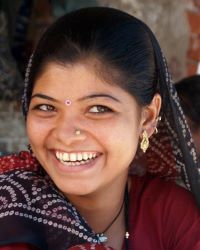

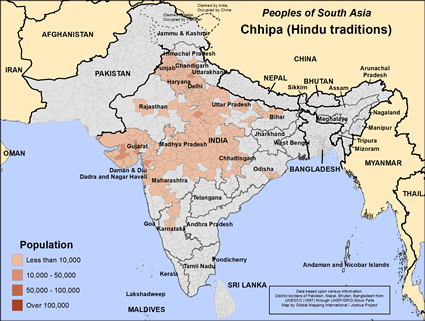
According to legend, when Parashuram set out to exterminate the Kshatriya, two brothers took shelter behind the image of the goddess Devi. The goddess advised the first one to stitch clothes and the second one to print and dye these stitched clothes to escape from Parashuram. Hence, the descendants of the second person are called Chhipa (Chippi is derived from the Hindi word chhapna, meaning printing).
Though the traditional occupation of the Chippa is dyeing and printing cloth, many are now cloth merchants. Remarriage is allowed for widows, widowers and divorcees. Their literacy rate is low, and only a few have received education up to the high school level.
The Chhipa of India, who follow Hindu traditions, enjoy recreational activities that are closely tied to community life, cultural expression, and religious observance. Because many Chhipa families are engaged in skilled occupations such as cloth printing, dyeing, and related trades, their daily routines can be demanding. As a result, leisure time is often woven into social and communal settings rather than set apart as separate pursuits.
Recreation among the Chhipa frequently centers on social interaction within the community. In the evenings, after the day's work is completed, men may gather to discuss business, share news, or talk about community matters, while women often spend time together in conversation as they complete household tasks. These informal gatherings provide an important means of relaxation and help strengthen social bonds.
Religious festivals are among the most significant sources of recreation for the Chhipa. As participants in the wider Hindu cultural tradition, they observe major festivals such as Diwali, Holi, and other regional celebrations. These occasions are marked by joyful community participation, including music, singing, and dancing. Festivals provide a welcome break from daily labor and create opportunities for families and neighbors to come together in celebration and fellowship.
Weddings and family ceremonies also serve as important recreational events. These gatherings are often elaborate and include feasting, traditional songs, and cultural performances. Such events reinforce family ties and provide opportunities for enjoyment and shared experience across generations.
Traditional music and dance play a meaningful role in Chhipa recreational life. These forms of expression are often linked to religious and social celebrations, reflecting both devotion and cultural identity. Children and young people may take part in simple games and outdoor activities, while also learning cultural traditions through participation in community events.
The Chhipa people practice Hinduism, the ancient religion of India. Hinduism is a catch-all term for the local religions of South Asia, so it is very diverse. At the popular level, Hindus worship and serve the gods of the Hindu pantheon. They visit Hindu temples and offer prayers, food, flowers, and incense to their gods in hopes of gaining protection and benefits. They do not have a personal or familial relationship with their gods like Christians or Jews. There are other Hindus who are much more philosophical, especially among the Brahmins.
Almost all Hindus participate in yearly celebrations like Holi, the festival of colors and the start of spring / Diwali, the festival of lights / Navratri, the celebration of autumn / and Rama Navami, Rama's birthday.
This community speaks more than 20 languages, thus, each language sub-group will need a separate outreach and church planting project.
Pray for improved employment opportunities, and for good schools to be made available for the children of this Hindu community.
Pray for loving ambassadors of Christ to share with this people group, discipling them in his ways.
There are no known Christian believers in this community at present, so pray for those who will soon commit themselves to follow Christ.
Pray additionally that they will live holy lives and be united around truth, accepting for themselves that Jesus is the way, the truth and the life.
References
Scripture Prayers for the Chhipa (Hindu traditions) in India.
| Profile Source: Joshua Project |



