




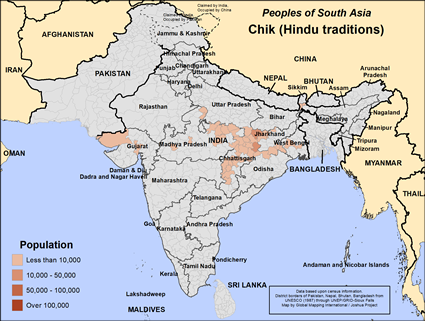
The Chik of India, who follow Hindu traditions, are a community whose history is closely associated with traditional occupations and the broader development of caste-based society in northern and eastern India. Historically, the Chik have been linked to service and artisan roles, particularly those connected with textiles, weaving, or the preparation of materials used in clothing and household goods. Their identity has been shaped over generations by these occupational specializations, which became closely tied to their place within the local social structure.
Over time, the Chik became integrated into village life, where their work served the needs of surrounding communities. Their roles were often inherited, with skills and trades passed down within families from one generation to the next. This continuity helped preserve their cultural identity, even as it also reinforced their position within the traditional caste hierarchy. Like many artisan groups, they often depended on relationships with other communities for economic survival, creating a system of mutual dependence within rural society.
Throughout their history, the Chik have lived primarily in settled communities, adapting to regional customs and cultural influences wherever they resided. Their social organization has typically centered on extended families and local networks, with elders playing an important role in maintaining traditions and guiding community life. Oral history, customs, and shared practices have been key means of preserving their identity across generations.
During the period of British colonial rule in India, economic and social changes began to affect traditional occupations. The introduction of industrial production and wider market systems challenged many artisan groups, including the Chik, whose livelihoods had long depended on local demand. While some adapted by diversifying their work or entering wage labor, many continued in traditional roles, especially in rural areas.
The Chik are farmers in India, and some of them own their land. Their income is largely derived from the slaughter of goats and sheep. Surprisingly, a Chik man can have four wives at a time, something that is much more common with Muslims than Hindus. Unlike most Hindus, they bury their dead.
In the modern era, the Chik have experienced gradual change through increased access to education, urbanization, and economic development. Some individuals have moved into new occupations beyond their traditional trades, while others continue to practice inherited skills. Despite these changes, their historical identity as a community shaped by specialized labor and village-based life remains an important part of who they are.
The Chik people practice Hinduism, the ancient religion of India. Hinduism is a catch-all term for the local religions of South Asia, so it is very diverse. At the popular level, Hindus worship and serve the gods of the Hindu pantheon. They visit Hindu temples and offer prayers, food, flowers, and incense to their gods in hopes of gaining protection and benefits. They do not have a personal or familial relationship with their gods like Christians or Jews. There are other Hindus who are much more philosophical, especially among the Brahmins.
Almost all Hindus participate in yearly celebrations like Holi, the festival of colors and the start of spring / Diwali, the festival of lights / Navratri, the celebration of autumn / and Rama Navami, Rama's birthday.
Hinduism breeds a mindset where there are many possibilities. Few would consider the idea that there is one God and one savior.
Pray for loving workers to go to them to help them begin a movement to Christ in the coming years.
Pray for a spiritual hunger that will lead the Chik to the cross and the empty grave.
Pray for a move of the Holy Spirit that will lead thousands to the only savior.
Pray for this community to thank God for the good things he provides.
References
Scripture Prayers for the Chik (Hindu traditions) in India.
| Profile Source: Joshua Project |



