




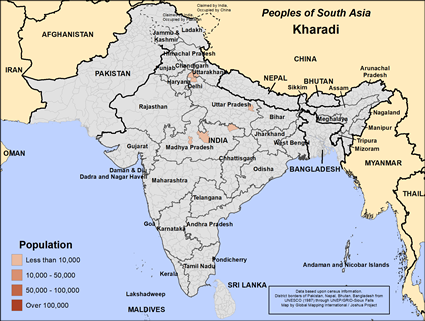
The Kharadi people are found primarily in western India, especially in Gujarat and Rajasthan, with smaller communities in neighboring regions. Their primary languages are generally Gujarati, Hindi, and regional dialects depending on location. Historically, the Kharadi have been associated with woodworking, wood turning, lacquer craft, carpentry, and the making of household and ceremonial items. The name "Kharadi" is closely connected to traditional lathe-based woodcraft practiced for generations in western India.
For centuries, Kharadi artisans produced wooden toys, cradles, household tools, decorative objects, furniture, and lacquered craft items used in village and urban life. In Gujarat especially, some Kharadi families became known for intricate lacquer work and wood-turning traditions passed down through family lines. These crafts were historically tied to local markets, festivals, and ceremonial customs.
Modern industrial manufacturing and changing consumer habits have reduced demand for many traditional handcrafted goods, leading some Kharadi families to move into agriculture, construction, transportation, factory work, or small business occupations. Even so, many continue to preserve aspects of their artisan heritage and community identity through family traditions and inherited skills.
Many Kharadi families live in villages, market towns, or expanding urban areas where employment opportunities vary widely. Some continue traditional woodworking and lacquer craft occupations, while others work as carpenters, laborers, drivers, construction workers, shopkeepers, or daily wage earners. Economic conditions differ between communities, but many households face unstable income and pressure from declining traditional crafts.
Family and community relationships remain very important. Extended families often maintain close ties, and traditional skills are frequently passed from parents to children. Marriages are generally arranged within the broader community, and weddings, festivals, and religious gatherings remain important social events. Meals commonly include flatbreads, rice, lentils, vegetables, dairy products, and regional foods typical of western India.
In areas where traditional craftsmanship continues, daily life may revolve around workshop activity, wood preparation, carving, turning, polishing, and local market trade. Younger generations increasingly pursue education and urban employment opportunities, though many still retain strong cultural ties to their ancestral communities and family traditions.
The Kharadi are primarily Hindu and participate in religious traditions commonly practiced throughout Gujarat, Rajasthan, and western India. Religious life often includes devotion to Hindu gods and goddesses, temple worship, household rituals, observance of major festivals, and ceremonies connected to family life and seasonal events.
Among artisan communities, religious identity is often closely tied to hereditary occupation and family tradition. Some Kharadi families may honor Vishwakarma, who is traditionally regarded by many artisan groups as a divine craftsman figure connected to skilled labor and craftsmanship. Folk traditions, blessings, vows, protective rituals, and local customs may also influence spiritual life alongside mainstream Hindu worship.
Concepts such as karma, dharma, ritual purity, and rebirth commonly shape religious thinking and daily life. Very few Kharadi have had meaningful exposure to biblical Christianity or a clear explanation of salvation through Jesus Christ alone.
The Kharadi people face both practical and spiritual challenges. Many artisan families struggle with declining demand for traditional crafts, unstable employment, limited educational opportunities, rising material costs, and economic uncertainty. Younger generations often leave traditional occupations in search of more stable work, which can place pressure on family identity and inherited cultural skills.
Spiritually, the Kharadi remain largely unreached with the gospel. There is a need for faithful Christian workers who can build genuine relationships within artisan communities and clearly communicate biblical truth with humility, patience, and compassion. Strong discipleship and local churches are needed so that future believers can grow spiritually and share the gospel within their own communities.
Practical ministries involving vocational assistance, education support, literacy programs, healthcare outreach, and family encouragement can help address real-life needs while opening doors for meaningful gospel witness among the Kharadi people.
Pray that the Kharadi people would hear the gospel clearly and come to faith in Jesus Christ as Lord and Savior.
Pray for Christian workers to serve among the Kharadi with humility, wisdom, compassion, and perseverance.
Pray that the Kharadi people would be adopted through the People Group Adoption program so that ongoing prayer, outreach, discipleship, and future gospel engagement would continue among them.
Pray that believers in western India would faithfully share biblical truth with the Kharadi and demonstrate the love of Christ through both word and action.
Scripture Prayers for the Kharadi in India.
https://www.researchgate.net/publication/373925889_Kharadi_Kaam_Wood_Turning_and_Lacquer_Craft_in_Dholka_Gujarat
https://indiacurrents.com/gujarats-artisanal-woodcraft/
https://en.wikipedia.org/wiki/Khati
https://www.peoplegroups.org/explore/GroupDetails.aspx?peid=46096
| Profile Source: Joshua Project |



