


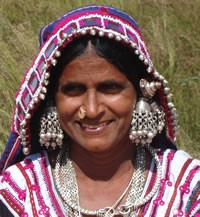

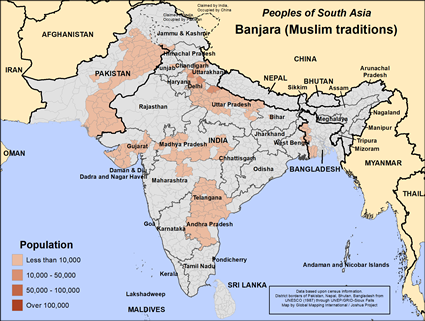
The Banjara of Pakistan are part of a historically nomadic trading and transport community spread across South Asia. For centuries, Banjaras were known for moving goods over long distances using pack animals and caravans before the development of modern railways and road systems. Their movements connected villages, towns, and markets across the Indian subcontinent. Over time, political changes, modernization, and border divisions after the partition of India significantly altered their traditional way of life. Many Banjara families eventually settled permanently in villages, towns, or urban outskirts.
In Pakistan, Muslim Banjara communities are found mainly in Sindh and Punjab. They commonly speak regional languages such as Punjabi, Sindhi, or dialects influenced by their historic migrations and interactions with surrounding populations. Though some still retain aspects of their distinct cultural identity, many have gradually blended into broader regional society while maintaining strong family and clan loyalties. Their historical identity as traveling traders and transporters continues to shape community memory and social traditions.
Most Muslim Banjara families in Pakistan are no longer nomadic, though mobility for work remains common among some groups. Many are involved in agricultural labor, animal trading, transportation work, construction, small-scale business, or wage labor. Economic conditions vary widely, but many communities experience financial instability and limited long-term employment opportunities. Some families live in rural settlements while others reside in crowded urban or semi-urban areas.
Family and clan relationships are central to Banjara life. Extended families often remain closely connected, and community honor and loyalty are highly valued. Marriages are generally arranged within the broader community structure, helping preserve social identity and family ties. Traditional clothing, music, and storytelling have historically played important roles in Banjara culture, although some customs have diminished as communities settled permanently and adapted to modern society.
Education levels and healthcare access can be uneven, especially among poorer families or those living in marginalized settlements. Younger generations increasingly seek employment in cities and are exposed to modern technology and changing social expectations, yet economic hardship and social barriers continue to affect many households.
The Banjara in Pakistan primarily follow Islam, usually within the Sunni tradition. Religious life commonly includes mosque attendance, observance of Islamic festivals, fasting during Ramadan, recitation of prayers, and participation in community religious practices. Islamic identity is an important part of personal and community life.
At the same time, some folk religious customs and superstitious beliefs may exist alongside formal Islamic practice. In certain communities, beliefs involving charms, shrines, spiritual healers, blessings, curses, or fear of unseen spiritual powers may influence daily life and decision-making. These practices reflect a blending of Islamic tradition with older regional folk beliefs.
Most Muslim Banjara have had little opportunity to hear the gospel presented clearly in a culturally understandable way. They need to know that forgiveness of sins and reconciliation with God come through Jesus Christ alone and not through religious rituals, inherited identity, or human effort.
The Muslim Banjara of Pakistan remain difficult to reach with the gospel because of social isolation, economic hardship, and the limited number of Christian workers among them. In many areas there are few believers equipped to share biblical truth in ways that connect meaningfully with Banjara culture and background. Fear of rejection, persecution, or family pressure can discourage individuals from openly exploring Christianity.
Practical needs also remain significant. Many families face poverty, unstable employment, limited educational opportunity, inadequate healthcare access, and poor living conditions. Communities living on the edges of society may struggle with social marginalization and reduced economic mobility.
There is a need for long-term Christian workers who can build trust, demonstrate Christ's love through compassionate service, and provide biblical discipleship for those interested in following Jesus. Scripture resources and Christian teaching in languages familiar to the Banjara are important for helping new believers grow strong in faith and reach their own communities with the gospel.
Pray that the Muslim Banjara of Pakistan will hear a clear and faithful presentation of the gospel and come to trust in Jesus Christ for salvation.
Pray that God will raise up wise and compassionate Christian workers who are willing to serve among the Banjara with patience and cultural understanding.
Pray that the Muslim Banjara people will be adopted through the People Group Adoption program so that churches and believers will commit to sustained prayer and future gospel outreach among them.
Pray that any believers among the Muslim Banjara will grow strong in biblical truth and boldly share Christ with their families and neighboring communities.
Scripture Prayers for the Banjara (Muslim traditions) in Pakistan.
https://en.wikipedia.org/wiki/Banjara
https://en.wikipedia.org/wiki/Nomadic_tribes_in_Pakistan
https://en.wikipedia.org/wiki/Islam_in_Pakistan
| Profile Source: Joshua Project |



