


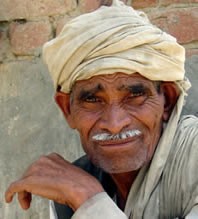

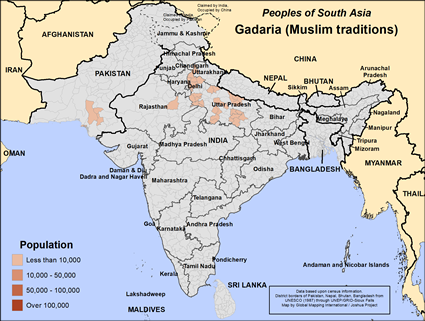
The Gadaria who follow Muslim traditions are a small pastoral community found mainly in northern India, especially in Uttar Pradesh, Uttarakhand, and Rajasthan. They are connected historically to the broader Gadaria or Gadariya community, a people traditionally associated with sheep herding, livestock care, weaving, and related rural occupations. Their primary language is generally Hindi along with regional dialects spoken in the areas where they live.
Historically, the Gadaria were known as shepherds and animal breeders who moved seasonally in search of grazing lands. Over generations, some groups adopted Islam while retaining aspects of their earlier cultural identity and traditional occupations. Many Muslim Gadaria communities continued working as herders, laborers, masons, milk sellers, or weavers as economic conditions changed. Their history reflects a blend of pastoral heritage, village life, and Islamic influence shaped by centuries of life in northern India.
Though modernization has changed many traditional lifestyles, community identity remains important among the Muslim Gadaria. Family relationships, clan ties, and local customs continue to shape social and cultural life within the community.
Many Muslim Gadaria families live in villages or small towns where work is often connected to agriculture, animal care, construction, weaving, transportation, or daily wage labor. Some still maintain livestock, especially sheep, goats, or cattle, while others have moved into urban areas seeking more stable employment opportunities. Economic hardship and unstable income affect many households.
Family and community ties are very important. Extended families often remain closely connected, and marriages are commonly arranged within the community. Daily life in rural areas may revolve around caring for livestock, seasonal farming cycles, market trade, and household responsibilities. Meals commonly include flatbreads, rice, lentils, vegetables, milk products, and regional foods common in northern India.
Religious festivals, weddings, and family gatherings play a central role in community life. While younger generations increasingly seek education and urban employment, many still retain strong cultural ties to their pastoral background and traditional community structure.
The Muslim Gadaria are primarily Sunni Muslims. They believe in Allah as the one true God and follow the teachings of the Quran along with Islamic traditions associated with Muhammad. Religious life commonly includes daily prayers, fasting during Ramadan, giving to the poor, mosque attendance, and celebration of Islamic festivals such as Eid al-Fitr and Eid al-Adha.
Alongside formal Islamic practice, some Muslim Gadaria communities also retain folk beliefs involving spirits, charms, amulets, blessings, and protection from unseen powers. In some cases, local customs and older cultural traditions influence religious life alongside orthodox Islamic teaching.
Very few Muslim Gadaria have heard a clear explanation of the gospel. Many know of Jesus only through Islamic teaching, which recognizes Him as a prophet but denies His identity as the Son of God and Savior. Christian witness among them remains very limited.
The Muslim Gadaria face both practical and spiritual challenges. Many families struggle with poverty, limited educational opportunities, unstable employment, inadequate healthcare access, and economic uncertainty tied to declining traditional occupations. Rural communities may also face difficulties related to sanitation, literacy, and long-term financial stability.
Spiritually, the Muslim Gadaria have little access to biblical teaching, discipleship, or churches prepared to minister effectively within their cultural setting. There is a need for faithful Christian workers who can patiently build relationships, demonstrate Christ's love through practical service, and clearly communicate the gospel in understandable ways.
Local believers in northern India also need encouragement, biblical training, and boldness to reach Muslim communities with compassion and truth. Ministries focused on literacy, healthcare, vocational support, and family assistance may help open doors for long-term gospel witness among the Muslim Gadaria people.
Pray that the Muslim Gadaria people would come to understand who Jesus Christ truly is according to Scripture and place their faith in Him as Savior and Lord.
Pray for Christian workers to serve among the Muslim Gadaria with humility, wisdom, compassion, and perseverance.
Pray that the Muslim Gadaria people would be adopted through the People Group Adoption program so that ongoing prayer, outreach, discipleship, and future gospel engagement would continue among them.
Pray that believers in northern India would boldly and lovingly share the gospel with Muslim communities and remain faithful to biblical truth.
Scripture Prayers for the Gadaria (Muslim traditions) in India.
https://en.wikipedia.org/wiki/Gadaria_people
https://en.wikipedia.org/wiki/Muslim_Gaddi
https://www.peoplegroups.org/explore/GroupDetails.aspx?peid=46320
https://ncbc.nic.in/Writereaddata/addmadpl34.pdf
https://censusindia.gov.in
| Profile Source: Joshua Project |



