
Halwai (Muslim traditions) in India


Population
Main Language
Largest Religion
Christian *
Evangelical
Progress
Progress Gauge
* Data can be from various sources including official census, agencies, and local research. Data from these sources can sometimes differ even by orders of magnitude. Joshua Project attempts to present a conservative, balanced estimate.

Subgroups: 3

Subgroup Name Population
Badshahipuria Unknown
Kanaujia Unknown
Kuri Unknown

Introduction / History

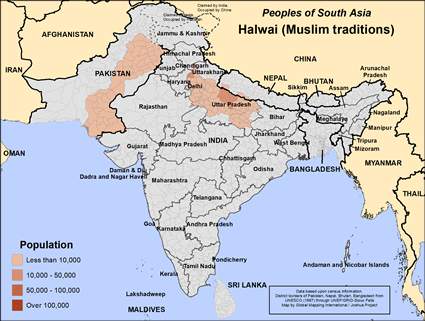
The Halwai following Muslim traditions are a Sunni Muslim community found mainly in northern India, especially in Uttar Pradesh, Bihar, Delhi, Rajasthan, Madhya Pradesh, and neighboring regions. The name "Halwai" comes from the Hindi word halwa, referring to a sweet dish, and historically the community became known for confectionery, sweet-making, and preparation of ceremonial foods. Halwai families have long been respected for their skill in preparing sweets used in weddings, festivals, religious celebrations, and social gatherings throughout South Asia.

Most Halwai in India are Hindus, but some communities converted to Islam over many centuries through interaction with Muslim rulers, traders, and especially Sufi movements in North India. Historical traditions within Muslim Halwai communities often connect their conversion to the influence of prominent Sufi saints such as Moinuddin Chishti and Nizamuddin Auliya. Many Muslim Halwai adopted surnames linked to Sufi orders and spiritual teachers, reflecting discipleship rather than direct ancestry.

Like many South Asian Muslim communities, the Muslim Halwai developed within a social structure influenced both by Islamic identity and older caste-like occupational traditions inherited from the surrounding culture. Family lineage, biradari relationships, and occupational heritage continue to shape marriage patterns and community identity.

Historically, Halwai neighborhoods or "Halwai Mohallas" became common in older North Indian cities where sweet shops and food businesses clustered together. Even today, confectionery remains an important symbol of community identity among many Muslim Halwai families.


What Are Their Lives Like?

Traditionally, the Muslim Halwai worked as confectioners, sweet makers, cooks, bakers, and shop owners. Families specialized in preparing sweets such as halwa, laddus, jalebi, barfi, peda, and other foods used during weddings, festivals, and religious celebrations. Sweet shops owned by Halwai families became common throughout towns and bazaars across North India.

The occupation often required long hours of physically demanding labor involving cooking, frying, sugar work, milk preparation, and food sales. Skills were commonly passed from father to son within family-run businesses. In some areas the Muslim Halwai also worked in tobacco sales, dyeing cloth, catering, food supply, or market trade.

Today, many Muslim Halwai continue operating sweet shops, restaurants, bakeries, and catering businesses, while others have moved into government service, education, transportation, factory work, business, and urban wage labor. Most live in towns and cities rather than isolated rural villages because their traditional trade is tied closely to urban markets and public celebrations.


Family and community relationships remain very important. Marriage is generally arranged within biradari networks, and family honor strongly shapes social life. Men commonly oversee businesses, trade, or outside employment, while women manage household responsibilities and may assist in family food preparation or small-scale economic work. Religious festivals such as Eid are major occasions for both worship and community gatherings, and sweets remain central to hospitality and celebration.

Modernization has brought both opportunity and pressure. Industrial food production, changing consumer habits, and urban competition have affected traditional family businesses. Younger generations increasingly pursue education and professional employment outside the traditional confectionery trade.


What Are Their Beliefs?

The Muslim Halwai are primarily Sunni Muslims, and Islam strongly shapes family and community life. Religious practices commonly include daily prayer, fasting during Ramadan, mosque participation, observance of Eid festivals, and respect for the Quran and Islamic teaching. Islamic identity is deeply tied to family tradition and community belonging.

Sufi influence has historically been very important among many Muslim Halwai communities. Reverence for saints, shrines, pirs, and spiritual lineages often plays a significant role in religious life. Some families maintain devotional practices connected to Sufi orders such as Chishti, Qadri, Naqshbandi, or Faridi traditions.


Alongside formal Islamic belief, folk religious traditions may also influence daily life. Belief in blessings, curses, amulets, spiritual healing, dreams, and unseen spiritual forces can affect decisions involving illness, business success, marriage, and family wellbeing. In many South Asian Muslim communities, local customs and inherited traditions are closely blended with religious practice, creating a syncretistic spiritual environment.

Most Muslim Halwai have had little meaningful exposure to biblical Christianity. Christianity is often viewed as foreign or socially unacceptable within Muslim society. Social pressure, fear of rejection, and strong community identity can make openness to the gospel difficult. The Muslim Halwai need to hear clearly that forgiveness of sins and reconciliation with God come through Jesus Christ alone rather than through religious rituals, inherited identity, or devotion to saints and traditions.


What Are Their Needs?

The Muslim Halwai remain largely unreached with the gospel, and there are very few known believers among them. Their integration into broader North Indian Muslim society and limited access to clear biblical teaching create barriers to gospel outreach. Faithful Christian workers are needed who are willing to build long-term relationships, communicate biblical truth respectfully, and demonstrate the love of Christ with humility and compassion.

Practical needs vary widely depending on location and economic status. Some Muslim Halwai families operate successful businesses, while others struggle with unstable employment, debt burdens, educational limitations, and economic competition. Smaller family-run sweet shops often face pressure from industrial food production and changing urban markets.

The Muslim Halwai need Scripture resources, discipleship materials, and gospel teaching communicated in Hindi, Urdu, Bengali, and related regional languages. Relationship-centered ministry, hospitality, oral Bible storytelling, and personal conversations may be especially effective because of the strong family and community orientation of the culture. Any believers among them would need encouragement, biblical training, and fellowship support because of social pressure surrounding conversion to Christianity.


Prayer Items

Pray that the Muslim Halwai people will hear a clear presentation of the gospel and place their faith in Jesus Christ for salvation.
Pray that God will raise up faithful Christian workers who are willing to serve among the Muslim Halwai with wisdom, humility, patience, and compassion.
Pray that the Muslim Halwai people will be adopted through the People Group Adoption program so that churches and believers will commit to sustained prayer and future gospel outreach among them.
Pray that any believers among the Muslim Halwai will grow strong in biblical truth and wisely share the hope of Christ with their families and communities.


Scripture Prayers for the Halwai (Muslim traditions) in India.


References

https://en.wikipedia.org/wiki/Muslim_Halwai
https://en.wikipedia.org/wiki/Halwai
https://modanwal.blogspot.com/2012/01/halwai-of-india.html
https://www.roundtableindia.co.in/caste-and-caste-based-discrimination-among-indian-muslims-part-9/
https://www.milligazette.com/news/6-issues/33829-casteism-among-indian-muslims/
https://journals.library.brandeis.edu/index.php/caste/article/view/401/195


Profile Source:   Joshua Project  

People Name General Halwai (Muslim traditions)
People Name in Country Halwai (Muslim traditions)
Pronunciation hahl-WYE
Alternate Names Methai Walas; हलवाई (मुस्लिम ट्रेडिशन्स)
Population this Country 180,000
Population all Countries 202,000
Total Countries 2
Indigenous Yes
Progress Scale Progress Gauge
Unreached Yes
Frontier Yes
Unengaged Yes
Pioneer Workers Needed 4
PeopleID3 17551
ROP3 Code 112974
Country India
Region Asia, South
Continent Asia
10/40 Window Yes
National Bible Society Website
Persecution Rank 12  (Open Doors top 50 rank, 1 = highest persecution ranking)
Total States on file 3
Largest States
Uttar Pradesh
175,000
Uttarakhand
4,600
Rajasthan
100
Districts Interactive map, listing and data download
Specialized Website South Asia Peoples
Country India
Region Asia, South
Continent Asia
10/40 Window Yes
National Bible Society Website
Persecution Rank 12  (Open Doors top 50 rank, 1 = highest persecution ranking)
Total States 3
  Uttar Pradesh 175,000
  Uttarakhand 4,600
  Rajasthan 100
Website South Asia Peoples
Primary Religion: Islam
Major Religion Estimated Percent *
Buddhism
0.00 %
Christianity
0.00 %
Ethnic Religions
0.00 %
Hinduism
0.00 %
Islam
100.00 %
Judaism
0.00 %
Non-Religious
0.00 %
Other / Small
0.00 %
Sikhism
0.00 %
Unknown
0.00 %
* From latest India census data.
Current Christian values may substantially differ.
Primary Language Hindi (116,000 speakers)
Ethnologue Language Code hin
Ethnologue Language Familly Indo-European
Glottolog Language Family Indo-European
Written / Published Yes   (ScriptSource Listing)
Total Languages 8
Secondary Languages
Urdu
48,000
Awadhi
4,000
Kanauji
1,700
Bhojpuri
1,500
Garhwali
600
Maithili
200
Bengali
40
Primary Language Hindi (116,000 speakers)
Ethnologue Language Code hin
Ethnologue Language Familly Indo-European
Glottolog Language Family Indo-European
Written / Published Yes   (ScriptSource Listing)
Total Languages 8
Secondary Languages
  Urdu 48,000
  Awadhi 4,000
  Kanauji 1,700
  Bhojpuri 1,500
  Garhwali 600
  Maithili 200
  Bengali 40

Primary Language:  Hindi

Bible Translation Status  (Years)
Bible-Portions Yes  (1806-1962)
Bible-New Testament Yes  (1811-1998)
Bible-Complete Yes  (1818-2026)
FCBH NT (www.bible.is) Online
YouVersion NT (www.bible.com) Online
Possible Print Bibles
Amazon
World Bibles
Forum Bible Agencies
National Bible Societies
World Bible Finder
Virtual Storehouse
Resource Type Resource Name Source
Audio Recordings Audio Bible teaching Global Recordings Network
Audio Recordings DAVAR Partners recording, Old Testament DAVAR Partners International
Audio Recordings Online Audio Scripture Talking Bibles
Audio Recordings Oral Bible stories One Story
Film / Video Following Jesus video Jesus Film Project
Film / Video God's Story video God's Story
Film / Video Indigitube.tv Video / Animation Create International
Film / Video Jesus Film: view in Hindi Jesus Film Project
Film / Video Love letter to you from scripture Father's Love Letter
Film / Video LUMO film of Gospels Bible Media Group/LUMO
Film / Video Magdalena video Jesus Film Project
Film / Video My Last Day video, anime Jesus Film Project
Film / Video Rivka video Jesus Film Project
Film / Video Rock International: King of Glory Rock International
Film / Video Story of Jesus for Children Jesus Film Project
Film / Video Tetelestai:  Creation to Christ Light in Action
Film / Video The Hope Video Mars Hill Productions
Film / Video World Christian Videos World Christian Videos
General Bible and Resources in text or audio or video Internet Publishing Sevice
General Bible for Children Bible for Children
General Bible in text or audio or video Internet Publishing Sevice
General Bible in text or audio or video South Asia Bibles
General Bible Study Helper app Bible Study Helper
General Biblical answers to your questions Got Questions Ministry
General Faith Comes By Hearing - Bible in text or audio or video Faith Comes by Hearing
General Gospel website in this language General / Other
General Scripture Earth Gospel resources links (Hindi) Scripture Earth
General Voice of the Martyrs resources Voice of the Martyrs
General YouVersion Bible versions in text and/or audio YouVersion Bibles
General Zume Resources Zume Project
General Zume Training Zume Project
Mobile App Android Bible app direct APK download (Hindi) SIL
Mobile App Android Bible app: Bibles India Internet Publishing Sevice
Mobile App Android Bible app: Gospel Films (South Asia) Shalom Design S2dio
Mobile App Android Bible app: Hindi YouVersion Bibles
Mobile App Android Bible App: Hindi Bible (हिंदी बाइबिल) Indian Revised Version (IRV) Operation Agape
Mobile App Android Bible app: Hindi Study Bible Grace Ministries and Dusty Sandals
Mobile App Android Bible app: Hindi Word General / Other
Mobile App Android Bible app: Sab Ki Bible Grace Ministries and Dusty Sandals
Mobile App Android Bible app: पवित्र बाइबिल Hindi Bible Biblica
Mobile App Android Bible Radio app: Hindi Bible Radio Shalom Design S2dio
Mobile App Android Book Reading app: Ek Rasta (Bible training) General / Other
Mobile App Android Book Reading app: Ek Rasta Hindi (Bible training) General / Other
Mobile App Android Book Reading app: JM Hindi General / Other
Mobile App Android Book Reading app: Open Bible Stories (Hindi) Shalom Design S2dio
Mobile App Children's Bible app Bible4Kidz
Mobile App Download audio Bible app as APK file Faith Comes by Hearing
Mobile App Download audio Bible app from Google Play Store Faith Comes by Hearing
Mobile App iOS Bible app: Hindi YouVersion Bibles
Mobile App iOS Bible app: Hindi Unlocked Literal Bible Kalaam Media Ltd
Text / Printed Matter Bible: Comic Book Version Super Bible / Comic Bible Society
Text / Printed Matter Children and youth resources One Hope
Text / Printed Matter Hindi Bible General / Other
Text / Printed Matter Jesus Messiah comic book General / Other
Text / Printed Matter Literacy primer for Hindi Literacy & Evangelism International
Text / Printed Matter The Ancient Path Live Global
Text / Printed Matter tools for gospel conversations Cru
Text / Printed Matter Topical Scripture booklets and Bible studies World Missionary Press
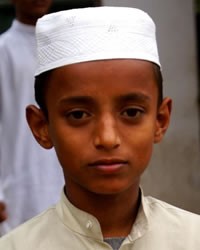
Photo Source (Representative photo)
Copyrighted © 2026  Isudas  All rights reserved.  Used with permission
Map Source People Group data: Omid. Map geography: UNESCO / GMI. Map Design: Joshua Project.  
Profile Source Joshua Project 
Data Sources Data is compiled from various sources. Learn more.
