




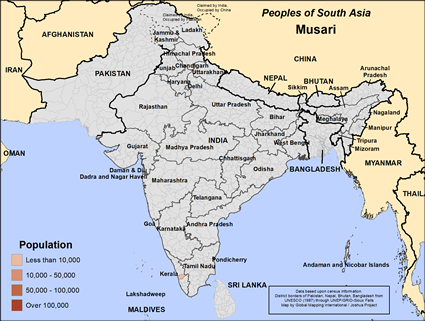
The Musari are a community found in India, though detailed public information about their specific historical background is limited. Like many smaller Indian communities, their identity has likely developed through regional customs, hereditary occupations, language traditions, and close family structures maintained across generations.
Communities throughout India often formed distinct social identities connected to village life, labor patterns, religious affiliation, and local cultural traditions. Over centuries, these identities were preserved through marriage customs, oral tradition, and community relationships. The Musari have likely experienced many of the same social and economic transitions affecting traditional Indian communities today, including migration, modernization, and changing employment opportunities.
The daily lives of the Musari are likely centered around family responsibilities, work, and community interaction. Extended families commonly remain important sources of support and stability, especially in areas where economic conditions are uncertain. Respect for elders and maintaining family honor are often important values in many Indian communities.
Depending on where they live, Musari families may work in agriculture, labor, local trade, transportation, crafts, construction, or small-scale business activities. Rural communities are often closely tied to seasonal work and village relationships, while younger generations may increasingly seek employment or education in towns and cities.
Meals generally reflect regional Indian cuisine and may include rice, lentils, flatbreads, vegetables, dairy products, and locally available foods. Weddings, religious celebrations, and family ceremonies commonly serve as important social gatherings that reinforce cultural identity and family ties.
Like many communities across India, the Musari are likely navigating the pressures of modernization, economic uncertainty, migration, and changing social expectations, particularly among younger generations balancing tradition with contemporary life.
The Musari are associated primarily with Hindu religious traditions. Hindu religious life commonly includes devotion to various gods and goddesses, temple worship, ritual ceremonies, sacred festivals, and household religious practices connected to family life and important life events.
In some communities, folk religion, local spirit beliefs, astrology, ancestral customs, and ritual purity practices may also influence everyday spiritual life. Religious traditions are often inherited through generations and closely connected to cultural identity and social belonging.
Although Hinduism includes many devotional systems and philosophical traditions, the Musari still need the message of the gospel and the assurance of salvation found only through Jesus Christ rather than through ritual observance or religious effort.
The Musari need greater access to Scripture, biblical discipleship, and faithful Christian witness presented with humility, compassion, and cultural understanding. Many communities in India still have little meaningful exposure to evangelical Christianity or to mature believers who can clearly explain the gospel.
Practical needs may include educational opportunities, healthcare access, stable employment, and support for families facing social or economic hardship. Rural and marginalized communities may also face challenges connected to limited infrastructure and restricted access to resources.
There is a need for strong local fellowships capable of discipling believers, strengthening families, and helping future generations grow in biblical faith. Compassionate Christian service combined with faithful gospel proclamation can help open doors for long-term ministry.
Pray that the Musari people would hear the gospel clearly and come to faith in Jesus Christ.
Pray that God would raise up faithful and compassionate believers who will serve among the Musari community with wisdom and perseverance.
Pray that the Musari would be adopted through the People Group Adoption program so that sustained prayer and long-term gospel outreach would continue among them.
Pray for strengthened families, educational opportunity, practical provision, and spiritual openness within the Musari community.
Scripture Prayers for the Musari in India.
https://www.britannica.com/topic/Hinduism
https://www.britannica.com/place/India/People
https://en.wikipedia.org/wiki/Demographics_of_India
| Profile Source: Joshua Project |



