




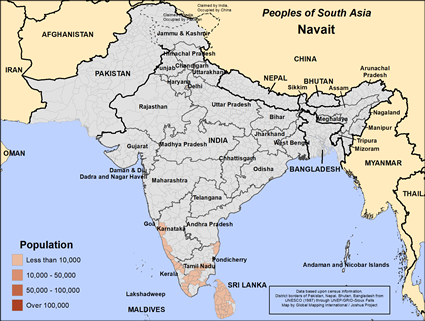
The Navait, also known as Nawayath or Navayath, are a Muslim community found primarily along the western coastal regions of India, especially in Karnataka and parts of the Konkan coast. They are historically connected to ancient Arab maritime trade networks that linked India with the Arabian Peninsula, Persia, and the broader Indian Ocean world. Community traditions trace their ancestry to Arab, Yemeni, Iraqi, and Persian traders who settled along India's western coast many centuries ago and intermarried with local populations.
The Navait developed strong coastal settlements in places such as Bhatkal and nearby towns. Their language, Nawayathi, is a distinct Konkani-based dialect influenced by Arabic, Persian, and Urdu. Over generations, the community became known for maritime trade, scholarship, business, and strong Islamic identity. Their history reflects both Indian coastal culture and enduring connections to the wider Muslim world across the Arabian Sea.
Historically, the Navait maintained close community structures and often preserved their identity through marriage traditions, religious education, and social organizations. Their long-standing presence along India's coastlines also placed them within important trade routes connecting South Asia, East Africa, and the Middle East.
The Navait are generally known as an educated and economically active community. Many families are involved in business, trade, government service, education, shipping, finance, and professional occupations. Coastal commerce and overseas migration, especially to Gulf countries, have influenced community life for generations.
Family relationships are highly valued, and marriages are commonly arranged within the community. Extended family networks often remain strong even when family members live abroad or in major Indian cities. Community associations frequently help oversee welfare matters, religious education, marriages, and social support.
Meals commonly reflect coastal Konkani Muslim cuisine and may include rice, seafood, coconut-based dishes, breads, meat curries, lentils, and regional spices. Religious festivals, weddings, and community gatherings play an important role in preserving both Islamic and cultural identity.
Although many Navait families are financially stable and well educated, younger generations increasingly face tensions between traditional religious expectations and modern global culture, especially through migration, technology, and urbanization.
The Navait are Sunni Muslims, largely following the Shafi'i school of Islamic jurisprudence common along India's western coast. Religious life commonly includes daily prayers, fasting during Ramadan, mosque attendance, Islamic education, and observance of Islamic festivals and family ceremonies.
Islamic identity is deeply woven into Navait culture and family life. Religious learning, respect for Islamic scholars, and preservation of community traditions remain important within many households. In some communities, cultural customs inherited over centuries may also influence daily religious expression.
Although the Navait possess a strong religious heritage and long Islamic tradition, they still need the gospel of Jesus Christ and the assurance of salvation that comes through His death and resurrection rather than through religious observance, ancestry, or inherited faith.
The Navait need continued access to biblical teaching, Scripture, discipleship, and faithful Christian witness presented with humility, wisdom, and cultural understanding. Because they are often educated and historically aware, outreach requires thoughtful engagement and long-term relationship building.
Many Navait communities have limited meaningful exposure to evangelical Christianity beyond stereotypes or cultural assumptions. There is a need for mature believers who can answer questions carefully, demonstrate Christlike character, and faithfully communicate biblical truth.
Practical needs may include guidance for younger generations navigating modern cultural pressures, strengthened family relationships, mentorship, and spiritual clarity in increasingly secular environments.
Strong local fellowships and culturally informed discipleship are also needed for those who become interested in following Christ.
Pray that the Navait people would hear a clear presentation of the gospel and come to know Jesus Christ as Savior and Lord.
Pray that God would raise up wise and compassionate believers who can build trusted relationships and faithfully share biblical truth among the Navait community.
Pray that the Navait would be adopted through the People Group Adoption program so that sustained prayer, discipleship, and long-term gospel outreach would continue among them.
Pray for strengthened families, spiritual openness, and opportunities for younger generations of Navait to encounter the truth of God's Word.
Scripture Prayers for the Navait in India.
https://en.wikipedia.org/wiki/Nawayath
https://en.wikipedia.org/wiki/Konkani_Muslims
https://en.wikipedia.org/wiki/Konkan
https://konkanisunited.blogspot.com/2020/08/konkani-muslims_20.html
https://www.academia.edu/125410730/The_Forgotten_Narrative_Uncovering_the_Origins_of_Muslims_of_Indian_Subcontinent
| Profile Source: Joshua Project |



