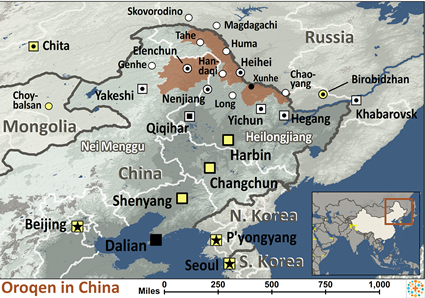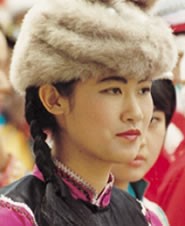

The name Oroqen means "people of the mountain range." The Oroqen were originally part of the Bei Shiwei people. It is believed that they broke away and formed their own identity sometime between AD 420 and 589. A Russian invasion of the area in the mid-1600s, followed by the Japanese occupation in the 1930s and 1940s, drove the Oroqen deep into the mountains and forests of China's northern border regions. In the 1950s the Oroqen were granted status as an official minority group in China.
For generations the Oroqen lived in traditional tents called xianrenzhu, which they cover with birch bark in the summer and deerskin during the bleak winters, when the temperature can fall below minus 50° Celsius (-58°F). After a death occurs, the Oroqen wrap the corpse in birch bark and hang it at the top of a tree to decompose naturally. The Oroqen are great hunters and fishermen. Oroqen in some areas also raise reindeer. Today, due to the massive migration of Chinese to the northeast hinterlands, the Oroqen culture is being quickly assimilated.
Shamanism is the dominant religion among the Oroqen. They believe in an intricate system of demons and spirits. The Oroqen word for shaman means "agitated" or "frenzied" person. This name originated from the appearance of the shaman when he goes into a demonic trance to contact the spirit world. The Oroqen worship certain animals, especially the bear and the tiger, which they believe are blood relatives. They call the bear amaha, meaning "uncle" and the tiger wutaqi, meaning "old man."
Because of their reputation for violence and drunkenness, the few efforts to evangelize the Oroqen have met with resistance. In 1994 a Hong Kong-based ministry invited several Oroqen to work for them in southern China. Only one came; the rest chose to steal the train fare. The one who came was soon sent home after he threatened the other workers with a knife. In 1995 the first ever breakthrough among the Oroqen occurred when 30 accepted Christ after hearing the gospel from the newly converted Daur believers in Heilongjiang Province. Recently gospel recordings were produced in the Oroqen language for the first time.
Without the guidance of Christ, these people are like sheep without a shepherd. They need the good shepherd in their families and communities.
Pray for the spiritual blindness and bondage to the evil one to be removed so they can understand and respond to Christ.
Pray for the Lord to provide for their physical and spiritual needs as a testimony of his power and love.
Pray that the Oroqen people will have a spiritual hunger that will open their hearts to the King of kings.
Pray for an unstoppable movement to Christ among them.
Scripture Prayers for the Oroqen in China.
Operation China, Asia Harvest, Copyrighted © Used with permission
| Profile Source: Joshua Project |