


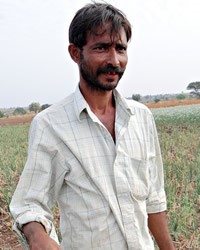

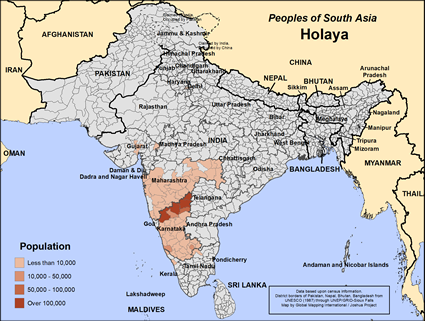
The Holaya, also commonly spelled Holeya or Holiya, are a historically marginalized Hindu community found mainly in the southern Indian state of Karnataka, with smaller populations in neighboring states such as Kerala, Tamil Nadu, Maharashtra, and Andhra Pradesh. The name "Holeya" is generally linked to the Kannada word hola, meaning "field" or "agricultural land," reflecting the community's long association with farming and agricultural labor. Historically, the Holaya were among the primary agricultural workers of southern India and are considered one of the oldest settled communities in Karnataka.
Ancient inscriptions from Karnataka, including early Kannada records such as the Halmidi inscription, mention communities identified with the Holeya name, indicating their long historical presence in the region. Some historical traditions suggest that Holaya groups may once have held greater local authority before later caste hierarchies pushed them into lower social status. During medieval periods many Holaya became tied to systems of bonded agricultural labor and severe caste discrimination under dominant landholding groups.
Colonial records from southern India often described the Holaya as agrestic laborers or former agricultural serfs working in the fields of landlords in Karnataka and Coorg. Despite this oppression, the community preserved strong internal traditions, local leadership structures, folk customs, and occupational skills including weaving, pottery, leatherwork, and manual crafts. Modern social reforms, constitutional protections, and education have improved opportunities for many Holaya families, though caste discrimination and economic hardship still affect parts of the community today.
The Holaya primarily speak Kannada, though some communities also use regional languages such as Tamil, Telugu, or Malayalam depending on location. Community identity continues to be shaped by family networks, village traditions, and the long historical memory of caste-based exclusion.
The Holaya have traditionally worked as agricultural laborers, farmers, field workers, and village servants connected to rural life in Karnataka and surrounding regions. Many families historically worked on the lands of higher-caste landlords, planting and harvesting crops such as millet, rice, sugarcane, pulses, and vegetables. Agriculture remains important for many Holaya families, especially in rural areas.
Over time, Holaya communities also became involved in weaving, pottery, blacksmithing, carpentry, leatherwork, construction labor, and factory work. Today many Holaya live in both villages and urban areas, working in agriculture, transportation, government service, construction, manufacturing, sanitation work, and small businesses. Younger generations increasingly pursue education and urban employment opportunities, though economic inequality remains significant in many communities.
Village life often centers around extended family relationships and strong community ties. Men commonly work in farming, labor-intensive occupations, transportation, or skilled trades, while women contribute heavily through agricultural labor, household management, childcare, gathering fuel and water, and informal economic work. Festivals, marriages, local temple events, and community gatherings remain important social occasions.
Historically, many Holaya communities faced harsh social restrictions connected to untouchability and caste discrimination. Although legal protections now exist, some families still experience social exclusion, limited land ownership, educational barriers, and unequal economic opportunity. Rural poverty, debt burdens, healthcare access problems, and unstable employment continue to affect many Holaya households.
The Holaya are primarily Hindus, and Hindu beliefs strongly shape family and community life. Religious practices commonly include temple worship, household rituals, village festivals, devotion to regional deities, and observance of major Hindu celebrations. Many Holaya communities especially venerate local goddesses and protective village spirits connected to agriculture, health, fertility, and protection from evil influences.
Traditional folk religion remains very influential among many Holaya families. Belief in spirits, ancestral powers, curses, blessings, ritual impurity, and supernatural forces often exists alongside formal Hindu worship. In parts of Karnataka, spirit appeasement practices and forms of bh?ta worship have historically been important within Holaya religious life. Offerings connected to local spirits or deities may still be practiced in some areas.
Some Holaya communities also participate in regional devotional movements connected to saints, local shrines, or reform traditions within Hinduism. Religion is closely tied to family identity, village belonging, and inherited cultural practices.
Although some Holaya have become Christians over the years, large portions of the community still have little understanding of the biblical gospel. Many need to hear clearly that forgiveness of sins and reconciliation with God come through Jesus Christ alone rather than through rituals, caste identity, fear of spirits, karma, or inherited religion.
The Holaya continue to face both spiritual and practical challenges. While some Christian work has taken place among them, many Holaya communities remain spiritually unreached or lack strong biblical discipleship and healthy local churches. There is great need for faithful Christian workers who can communicate the gospel clearly, disciple believers carefully, and help build biblically grounded fellowships within the community.
Practical needs remain significant in many areas. Some Holaya families continue to struggle with poverty, landlessness, caste discrimination, unstable employment, debt burdens, poor housing, healthcare limitations, and educational barriers. Rural laborers are especially vulnerable to economic instability and exploitation. Women and children may face additional vulnerability because of poverty and social marginalization.
The Holaya need Scripture resources, discipleship materials, and gospel teaching in Kannada and other regional languages they understand clearly. Relationship-centered ministry, oral Bible storytelling, compassionate service, and strong local leadership development may all help strengthen gospel witness among the Holaya. Existing believers need encouragement and biblical training so they can share Christ effectively within their own communities.
Pray that the Holaya people will hear a clear presentation of the gospel and place their faith in Jesus Christ for salvation.
Pray that God will raise up faithful Christian workers who are willing to serve among the Holaya with wisdom, humility, compassion, and perseverance.
Pray that the Holaya people will be adopted through the People Group Adoption program so that churches and believers will commit to sustained prayer and future gospel outreach among them.
Pray that Holaya believers will grow strong in biblical truth and boldly share the hope of Christ with their families and surrounding communities.
Scripture Prayers for the Holaya in India.
https://en.wikipedia.org/wiki/Holeya
https://en.wikisource.org/wiki/Castes_and_Tribes_of_Southern_India/Holeya
https://peoplegroups.org/people_groups/pg041392/
https://dalitvoice.net/caste-identity-oneness-of-mahars-holeyas/
https://digitalcommons.calpoly.edu/cgi/viewcontent.cgi?article=1043&context=socssp
https://en.wikipedia.org/wiki/Society_of_the_Hoysala_Kingdom
| Profile Source: Joshua Project |



