


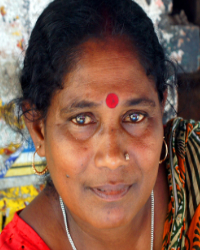

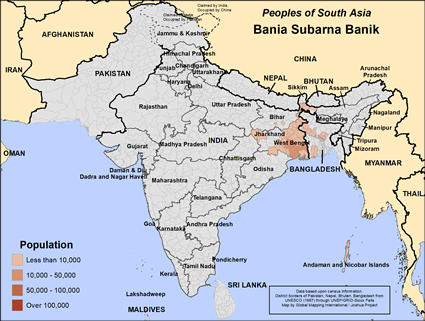
The Subarna Banik Bania community of India is unique for its long-standing identity as a specialized merchant group historically associated with the trade of gold and precious goods. The name "Subarna" itself is connected to gold, reflecting their traditional occupation as gold dealers, traders, and artisans. This close association with valuable commodities set them apart from many other Bania groups and contributed to a reputation for skill in commerce, valuation, and financial management.
One of the most distinctive features of the Subarna Banik community is their deep-rooted connection to trade and urban commercial life, particularly in eastern India. Over generations, they became established in towns and cities where markets and trade networks flourished. Their economic life has traditionally centered on buying, selling, and managing goods of value, requiring trust, precision, and a strong sense of integrity in business dealings.
The Subarna Banik Banias are an integral part of Indian society; they are found everywhere from small villages to large cities. Their transactions keep business flowing for the lowliest farmer who needs a loan to buy seed for next year's crop. They are also prominent in the import-export business and participate in international trade deals.
Like other Bania subgroups, Subarna Banik young men are trained to keep accounts and taught to view profit as the only credible outcome of any transaction. They are skilled in mental arithmetic and can calculate interest rates and other complex calculations. Even at the beginning of their trading careers, Banias learn to sell their inventories to make a profit.
The Subarna Banik community is also known for its adaptability and engagement with changing economic conditions. While their traditional role involved the trade of gold and precious materials, many have expanded into other areas of commerce, finance, and modern professions. Despite these changes, they continue to retain a strong sense of identity tied to their mercantile heritage.
The Subarna Banik community follows Hinduism, but their religious life reflects certain distinct emphases shaped by their history as a merchant caste and their regional setting in eastern India.
One notable distinctive feature is their strong devotion to specific deities associated with wealth, protection, and business prosperity. While they participate in the broader Hindu pantheon, many Subarna Banik families give special emphasis to deities such as Lakshmi, the goddess of wealth, and Ganesha, who is believed to remove obstacles. Worship of these deities is often closely tied to their economic life, with prayers offered for success in trade, financial stability, and wise stewardship.
Another unique aspect is the integration of religious practice with commercial activity. For the Subarna Banik, worship is not limited to temples or festivals but is often directly connected to their work. It is common to perform rituals at the opening of new businesses, at the beginning of accounting cycles, or during important financial decisions. Festivals such as Diwali are especially significant, not only as religious observances but also as key moments in the business year when new account books are opened and blessings are sought for prosperity.
Their worship is also shaped by a strong sense of community tradition and shared identity. Religious observances, festivals, and ceremonies are often conducted within the framework of their caste community, reinforcing unity and continuity. Family shrines and household rituals play an important role, with devotion practiced regularly in the home as well as in temples.
In addition, the Subarna Banik community often reflects regional devotional patterns found in eastern India, including elements of bhakti (devotional worship) that emphasize personal devotion, prayer, and reverence. This may include participation in local festivals, temple worship, and reverence for regional forms of Hindu expression, sometimes alongside broader pan-Hindu traditions
Culturally sensitive Christians need to reach this caste group with the good news of the freedom they can have in Jesus—freedom from the perpetual reincarnations they believe necessary to bring them rest and peace. TV and radio can be incredibly powerful mediums for communicating the gospel because they can penetrate homes where Christian workers may not be able to go.
Pray that the Lord will appoint and anoint workers to create relevant culturally sensitive Christ-centered radio and TV materials for the Subarna Baniks.
Pray that these media presentations will beam the light of His truth to these spiritually needy people.
Scripture Prayers for the Bania Subarna Banik in India.
Some information from "The Scheduled Castes" K. S. Singh, ed. Oxford University Press, USA (1994)
Global Prayer Digest
| Profile Source: Joshua Project |



