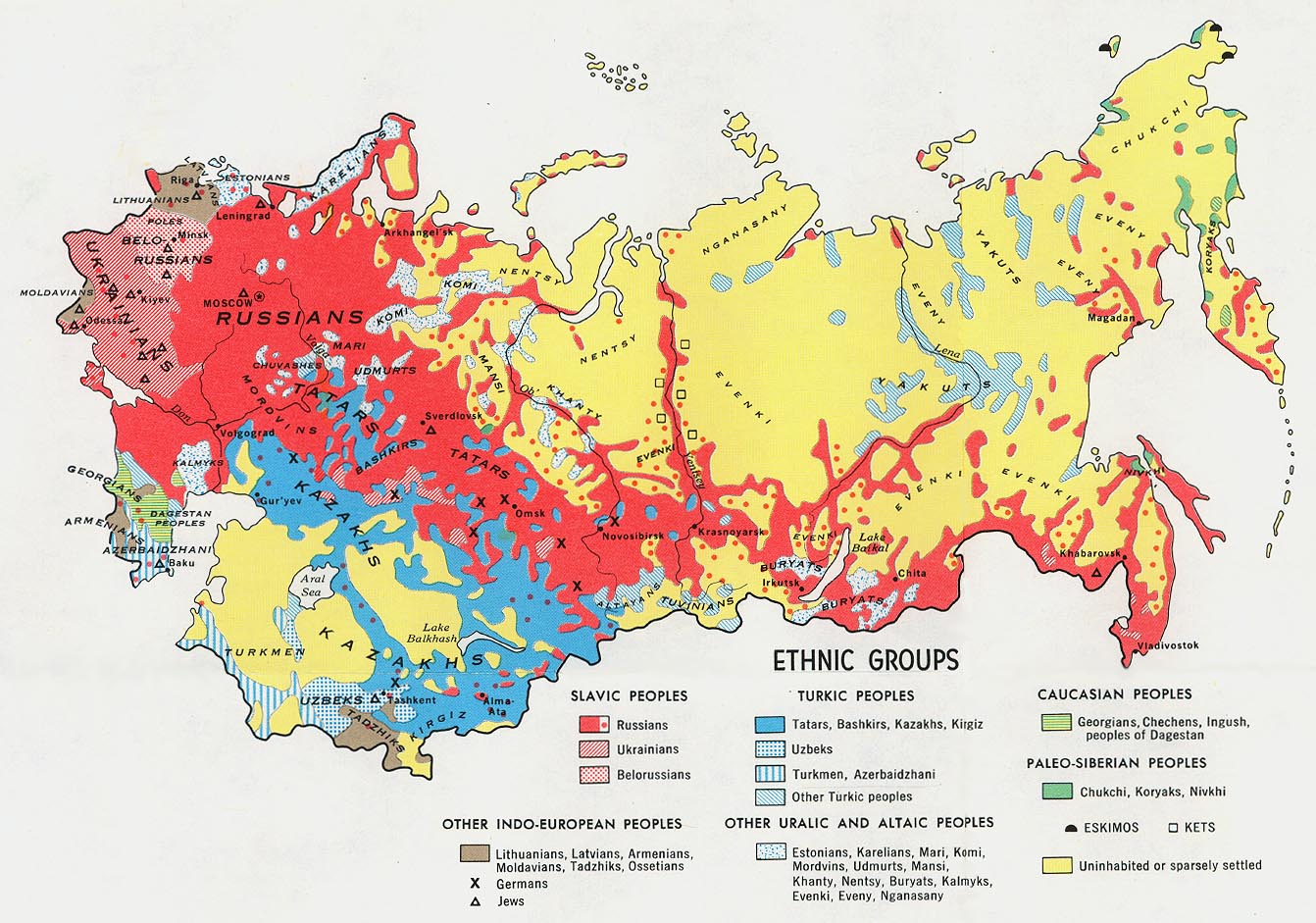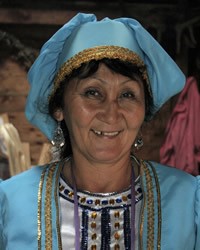

The Chelkan are a small Turkic-speaking indigenous people living primarily in the Altai Republic of southern Siberia in Russia. They are closely connected to the forested mountain regions surrounding the Lebed River and have historically been known by names such as Lebed Tatars because of their location near the Swan River region. The Chelkan language belongs to the Turkic language family and is related to other Altai languages spoken in southern Siberia.
Historically, the Chelkan lived in isolated taiga and mountain environments where hunting, fishing, trapping, gathering, and small-scale agriculture shaped daily life. Russian expansion into Siberia gradually brought outside political and cultural influence into the region, affecting traditional ways of life and increasing interaction with Russian society.
During the Soviet period, collectivization, state control, language decline, and pressure toward secularization significantly affected indigenous Siberian communities such as the Chelkan. Despite these pressures, many families have continued to preserve aspects of their traditional identity, cultural memory, and connection to their ancestral lands.
Many Chelkan families live in small rural settlements within the Altai region where forestry work, fishing, hunting, seasonal labor, livestock care, and local trade support daily life. The mountainous terrain and long winters of southern Siberia continue to shape transportation, housing, and economic opportunity.
Traditional foods historically included fish, wild game, berries, roots, dairy products, and locally available grains. Many families today also use foods common throughout modern Russia while maintaining aspects of older regional food traditions.
Family relationships and local community ties remain important, especially in smaller villages where cooperation is often necessary for daily survival and economic stability. Respect for elders and preservation of cultural heritage continue to carry significance among many Chelkan families.
Remote geography, population decline, economic hardship, limited infrastructure, healthcare access, and reduced employment opportunities remain ongoing challenges in parts of the Altai Republic. Younger generations sometimes leave rural communities for larger towns and cities in search of work or education.
The Chelkan have historically practiced forms of animism and shamanistic belief common among indigenous Siberian peoples. Traditional spiritual practices often involved reverence for nature spirits, sacred places, ancestral customs, and rituals connected to healing, protection, and harmony with the spiritual world.
Russian Orthodox influence entered the region over time, and some Chelkan families identify culturally with Orthodox Christianity. However, among many people, older animistic beliefs and folk spiritual practices have continued alongside outward religious affiliation. This syncretistic mixture of beliefs still influences spiritual understanding in some communities.
Traditional shamans historically played important roles in ceremonies and spiritual guidance. Beliefs concerning spirits connected to mountains, rivers, forests, and ancestors were deeply woven into cultural life.
Many Chelkan still have little access to clear biblical teaching centered on salvation through Jesus Christ alone. Christian witness and discipleship opportunities remain limited among this small indigenous people group.
The Chelkan need greater access to faithful Christian witness communicated clearly within their cultural and linguistic setting. Many have limited opportunity to study Scripture or interact personally with mature followers of Christ.
There is a need for believers who are willing to serve patiently among indigenous Siberian communities, learn local customs, and disciple those who may struggle with isolation, cultural loss, or spiritual confusion. Access to Scripture, Christian teaching materials, and healthy local fellowships is important for lasting spiritual growth.
Practical needs also remain significant, including healthcare access, economic opportunity, addiction recovery support, educational resources, and infrastructure development in remote rural settlements. Compassionate Christian ministry can help demonstrate the love of Christ while opening doors for meaningful gospel conversations.
The Chelkan would benefit from strong local churches capable of discipling believers, strengthening families, and continuing to share the gospel throughout the Altai region.
Pray that the Chelkan people will hear a clear presentation of the gospel and come to understand salvation through Jesus Christ alone.
Pray that God will raise up faithful Christian workers who are willing to serve among the Chelkan with wisdom, endurance, humility, and compassion.
Pray that the Chelkan people will be adopted through the People Group Adoption program so that sustained prayer, outreach, discipleship, and future gospel engagement will continue among them.
Pray that any existing believers among the indigenous peoples of Siberia will grow strong in biblical faith and boldly share the truth of Christ with neighboring communities.
Scripture Prayers for the Chelkan in Russia.
https://peoplegroups.org/explore/GroupDetails.aspx?peid=21444
https://www.britannica.com/place/Altay-Republic-Russia
https://www.britannica.com/topic/shamanism
https://en.wikipedia.org/wiki/Chelkans
https://en.wikipedia.org/wiki/Altai_Republic
| Profile Source: Joshua Project |