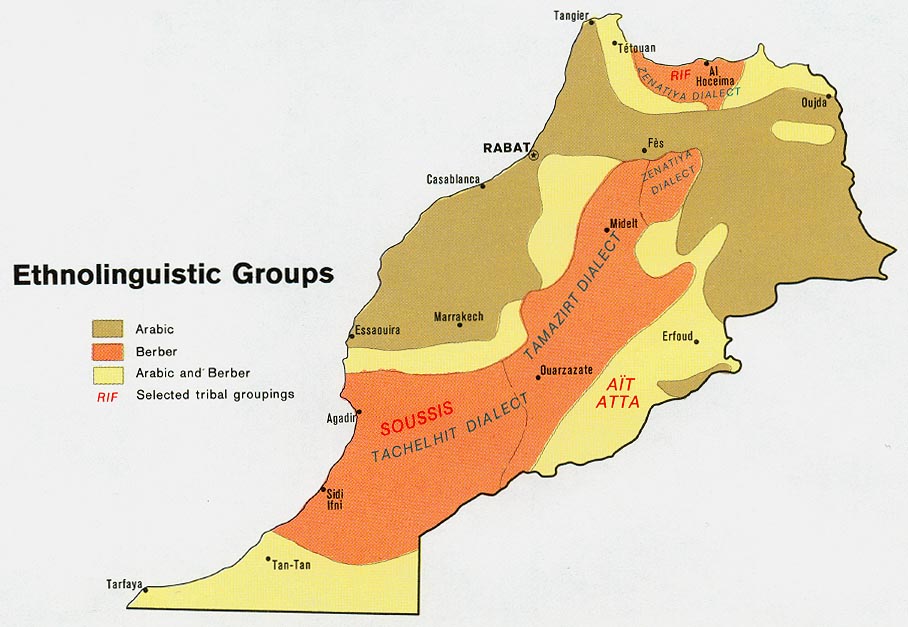

The Senhaja Berber are part of one of the historic Amazigh (Berber) tribal confederations of North Africa. Historically, the Sanhaja tribes were spread across large portions of what are now Morocco, Algeria, Mauritania, Western Sahara, and parts of the Sahel. Over many centuries, they played a major role in the political and religious history of North Africa, including involvement in the rise of important Islamic dynasties such as the Almoravids.
Today the Senhaja Berber of Morocco are concentrated mainly in the Rif and Middle Atlas mountain regions of northern Morocco, particularly around Ketama, Targuist, and neighboring mountain districts. They are often known specifically as the Senhaja de Srair. Their language, Senhaja Berber or Tasenhajit, belongs to the Berber branch of the Afro-Asiatic language family and is considered endangered because of increasing pressure from Arabic and dominant regional languages.
Historically, the mountainous terrain of the Rif helped preserve Senhaja identity, language, and tribal traditions. Their communities developed around agriculture, clan loyalty, and Islamic religious life while remaining somewhat isolated from major urban centers. Despite modernization and migration, many Senhaja families continue to preserve strong Amazigh cultural identity and attachment to their ancestral mountain homeland.
Many Senhaja Berber families live in mountain villages where farming, herding, trade, and small-scale agriculture support daily life. Olive trees, grain crops, goats, sheep, and local produce remain important to the regional economy. In some areas of the Rif Mountains, cannabis cultivation has also become economically significant because of difficult economic conditions and limited employment opportunities.
Village life is strongly centered around family and tribal relationships. Extended family structures continue to shape marriage customs, financial responsibilities, and community leadership. Respect for elders and preservation of Amazigh traditions remain important social values.
Meals commonly include bread, couscous, olives, olive oil, vegetables, mint tea, and meat dishes typical of rural Moroccan culture. Hospitality toward guests is highly valued, and religious festivals and family gatherings remain central parts of social life.
Life in the Rif Mountains can be difficult because of limited infrastructure, unemployment, transportation challenges, and uneven access to healthcare and educational resources. Younger generations increasingly migrate to larger Moroccan cities or to Europe seeking employment and economic opportunity.
The Senhaja Berber are overwhelmingly Sunni Muslim. Islamic identity strongly shapes family life, community customs, religious observance, and social values. Daily prayers, fasting during Ramadan, mosque attendance, and observance of Islamic festivals remain important parts of religious life.
Alongside formal Islamic practice, some communities also retain folk religious customs, belief in saints, shrine visitation, protective rituals, and superstitions inherited through generations of rural mountain life. This syncretistic blending of Islam and traditional practices continues to influence spiritual understanding among some Senhaja communities.
Religious identity is closely connected to Amazigh heritage, family honor, and social belonging. Because of this, choosing to follow Jesus Christ can bring strong opposition, rejection, or isolation from relatives and the surrounding community.
Very few Senhaja Berber have had meaningful exposure to biblical Christianity or a clear explanation of salvation through Jesus Christ alone. Access to Christian discipleship and Scripture in their heart language remains limited.
The Senhaja Berber need greater access to faithful Christian witness communicated clearly within their cultural and linguistic setting. Many have never personally encountered mature followers of Christ or had the opportunity to study Scripture carefully.
There is a need for believers willing to serve patiently among Amazigh communities in northern Morocco, learn local language patterns and customs, and disciple those who may face social pressure for following Jesus Christ. Access to Scripture, Christian teaching materials, and healthy local fellowships is important for lasting spiritual growth.
Practical needs also remain significant in some mountain communities, including healthcare access, educational opportunity, infrastructure development, and stable economic opportunities for struggling families. Compassionate Christian ministry can help demonstrate the love of Christ while opening doors for meaningful gospel conversations.
The Senhaja Berber would benefit from strong local churches capable of discipling believers, strengthening families, and continuing to share the gospel throughout the Rif Mountains and neighboring Amazigh regions.
Pray that the Senhaja Berber people will hear a clear presentation of the gospel and come to understand salvation through Jesus Christ alone.
Pray that God will raise up faithful Christian workers who are willing to serve among the Senhaja Berber with wisdom, humility, endurance, and compassion.
Pray that the Senhaja Berber people will be adopted through the People Group Adoption program so that sustained prayer, outreach, discipleship, and future gospel engagement will continue among them.
Pray that Amazigh believers in Morocco will grow strong in biblical faith and boldly share the truth of Christ with neighboring Berber communities.
Scripture Prayers for the Berber, Senhaja in Morocco.
https://en.wikipedia.org/wiki/Sanhaja
https://en.wikipedia.org/wiki/Senhaja_de_Srair_people
https://en.wikipedia.org/wiki/Senhaja_de_Srair_language
https://www.webonary.org/senhaja/overview/introduction/?lang=en
https://www.britannica.com/place/Morocco
| Profile Source: Joshua Project |