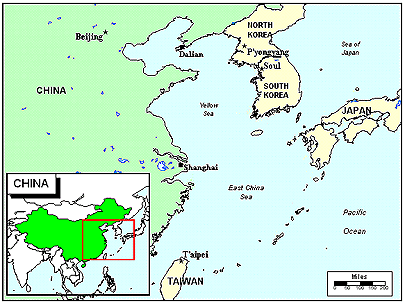

As a result of the hakkio-ichiu (the whole world under one roof) policy, 300,000 Japanese troops invaded northeast China in 1932. Until 1945 they occupied a vast territory, which they renamed Manchkuo. Their rule was a reign of terror. "Undisciplined soldiers looted, raped and killed as they desired. Thousands of Chinese girls were gang raped, then killed for sport. The only safe place was with foreigners. When soldiers were about, mission schools, hospitals and homes were jammed with Chinese women and girls." Due to the sudden defeat and withdrawal of the Japanese forces, many orphans and women were left behind in China.
Despite having adapted to learning the Chinese language and adhering to Chinese cultural traditions, some Japanese in China have stubbornly retained their ethnic identity and have longed to return to their homeland. Yu Kita Otosaka, a mother of four who returned to Japan in 1974, said, "I must not forget how well the Chinese people treated me, though I had fleas and lice all over, but I always wanted to come back to this homeland."
Soon after Japan's defeat all displaced Japanese were forced to learn Mandarin in order to survive in China. Consequently, many of their children are now unable to speak Japanese.
After the war ended, most of the Japanese women who were left behind married Chinese men and settled down to raise children, with many of their traditional Japanese customs being abandoned. Their grandchildren now speak Mandarin rather than Japanese.
The belief of most Japanese in China is a mixture of Mahayana Buddhism and ancestor worship. Many others, because of the influence of communism, are now atheists.
There are no known Christians among the Japanese in China, although the recent revival among the Han Chinese in Heilongjiang Province may have touched the lives of displaced Japanese. Living in Chinese communities for several decades, at least one-fourth of the Japanese in China are estimated to have heard the gospel.
Without the guidance of Christ, these people will be lost in this life and the life to come. They need someone to go to them as Christ-bearers.
Pray for a stirring to arise within the Japanese, so that they start to become unsettled from just accepting past national beliefs and look beyond them to find Jesus Christ as Savior and Lord.
Pray for the Lord to provide for their physical and spiritual needs as a testimony of his power and love.
Pray that the Japanese people will have a spiritual hunger that will open their hearts to the King of kings.
Pray for an unstoppable movement of Christ to convict and comfort the Japanese living in China.
Scripture Prayers for the Japanese in China.
Operation China, Asia Harvest, Copyrighted © Used with permission.
| Profile Source: Joshua Project |