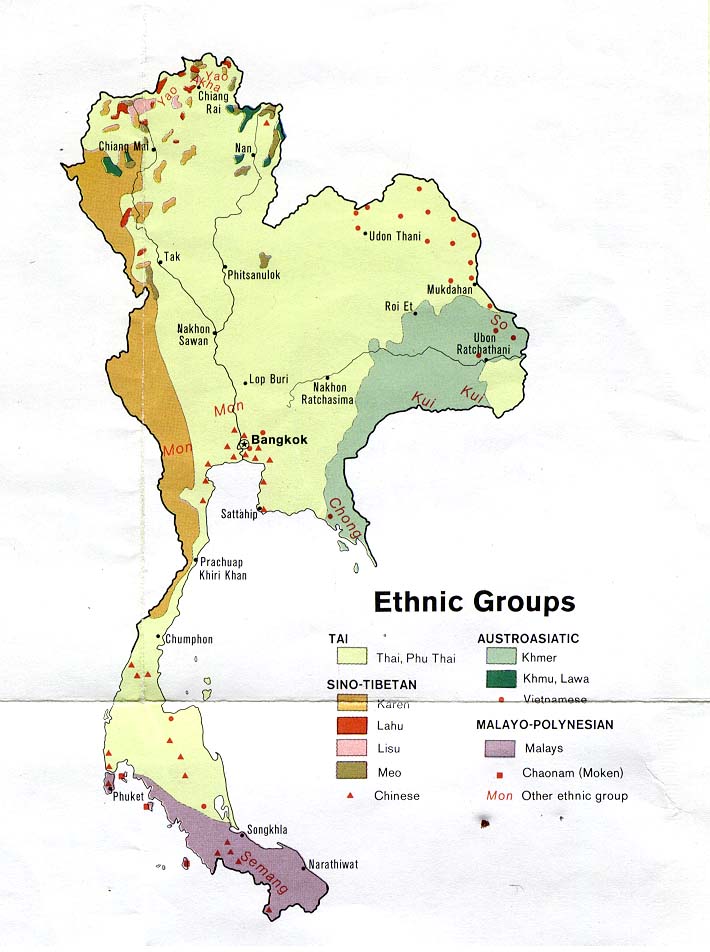

The Lisu live in China, Myanmar / Burma, Thailand, and India. They are one of China's official minorities. The name Lisu means "come-down people." Their original home was in eastern Tibet, where they had a kingdom in the tenth century before they migrated to their present homes in Southeast Asia.The Lisu have a long history of being oppressed by greedy landlords and governments. The Lisu revolt of 1801-03 proved devastating. The Qing government mobilized a huge army of more than 10,000 soldiers from three provinces. Chinese writers criticized this campaign as "using a cattle knife to kill chickens." During the 1940s, the Lisu had to pay 65 different types of taxes and levies - including one for each airplane flying over their region! This provocation resulted in thousands of Lisu seeking life in a new country. Missionary Lilian Hamer described one scene as the Lisu she had sought to reach left en masse: "I saw little children clinging to their mother's skirts, older folk carrying iron cooking pots, blankets, oil lamps. I stood outside my door and watched this wholesale evacuation of the people I had served and loved, mourned and wept over."Before they embraced Christianity, the Lisu were described as "utter savages." They were so given over to alcohol that when one newly converted village threw out all their liquor, all the pigs in the village got drunk! A passion for gambling often led the Lisu into an abyss of suffering. "When they have gambled away their money, they will often stake their children, their wives, and even themselves as slaves. As a result, in one night, a whole family can be gambled away into life-long slavery."
Most today are subsistence farmers.
The conversion of the Lisu is one of the greatest stories in mission history. Their mass movement to Christ was due in part to their ancient belief in Wa Sa, a supreme god of Healing and a village guardian. During one interrogation by the Communists, a young Lisu man exclaimed, "Christianity has already penetrated into our flesh and blood, and it will not be easy to tear it away from us."Several missionaries labored self-sacrificially among the Lisu prior to 1949, including James Fraser, A. B. Cooke, John and Isobel Kuhn, and the Morse family. In 1916 and 1917 alone, Fraser baptized 60,000 Lisu.
Lisus need the resources to send more of their most faithful Christians to those who remain like their ancestors.
Pray for hundreds to be raised up with an unwavering faith in Christ, one that will not be shaken, no matter what comes their way.Pray for God to bring about his purpose for the Lisus.Pray for Lisu Christians to be armed with the fruit and power of the Holy Spirit as they tell others about the King of kings.Pray for a mighty Holy Spirit revival to permeate their families and churches, drawing them into greater love for God and for their neighbors.
Scripture Prayers for the Lisu in Thailand.
Operation China, Asia Harvest, Copyrighted © Used with permission.
| Profile Source: Joshua Project |