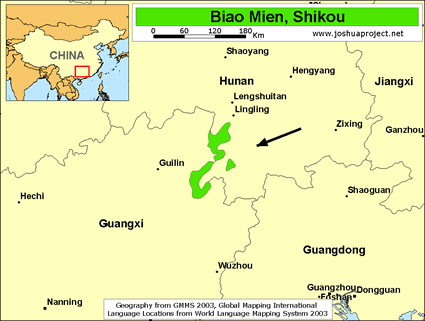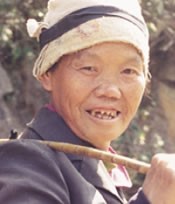

Biao Mien (AKA, Shikou) is a subgroup of the Yao peoples living in southern China, particularly in Guangxi Zhuang Autonomous Region. They are associated with the wider Mien-speaking peoples who are spread across southern China and parts of Southeast Asia. Their language belongs to the Mien branch of the Hmong-Mien language family and reflects their long cultural connection with other Yao and Mien communities.
Historically, the Biao Mien lived in mountainous and forested regions where isolation helped preserve their language and traditional customs. Over centuries they interacted with neighboring Han Chinese, Zhuang, Dong, and other minority peoples while maintaining a distinct ethnic identity. Migration, intermarriage, and government ethnic classifications have shaped aspects of their modern identity, but many traditional cultural patterns remain.
Like many Yao-related groups, the Biao Mien historically depended on agriculture, hillside farming, forestry work, and village cooperation for survival in difficult mountain terrain. Their communities were often geographically isolated from larger population centers, contributing to limited outside influence for much of their history.
Many Biao Mien families live in rural mountain villages where farming, forestry work, livestock care, and seasonal labor support daily life. Rice, corn, vegetables, sweet potatoes, and locally raised animals form important parts of the traditional diet.
Village life is strongly centered around family and community relationships. Cooperation between households remains important for farming, construction, celebrations, and seasonal labor. Respect for elders and preservation of ancestral customs continue to influence social interaction and family responsibilities.
Traditional clothing, music, festivals, and ceremonial practices remain important cultural markers among many Yao-related communities in southern China. Some older customs continue to be preserved more strongly in remote mountain villages than in urbanized areas.
Younger generations increasingly leave rural communities for work and education opportunities in towns and cities. Like many minority populations in rural China, some Biao Mien communities face challenges involving healthcare access, educational opportunity, economic development, and preservation of their traditional language and identity.
The Biao Mien traditionally practice a syncretistic mixture of animism, ancestor veneration, Daoist influence, and folk religion. Spiritual life often centers on rituals connected to ancestors, local spirits, sacred ceremonies, protection from harmful forces, and the pursuit of blessing and harmony.
Daoist traditions have historically influenced many Mien-speaking peoples, especially through ritual specialists, ceremonial texts, and religious observances connected to healing, funerals, and spiritual protection. At the same time, older animistic beliefs involving nature spirits and ancestral powers remain deeply rooted in many communities.
Religious customs are closely tied to family identity, cultural heritage, and village tradition. Many Biao Mien still have little opportunity to hear clear biblical teaching about salvation through Jesus Christ alone. In some remote areas, access to Christian witness and discipleship remains limited.
The Biao Mien need greater access to faithful Christian witness communicated clearly within their cultural and linguistic setting. Many have had little opportunity to study Scripture or interact personally with mature followers of Christ.
There is a need for believers who are willing to serve patiently among minority communities in southern China, learn local customs and languages, and disciple those who may face social pressure for following Jesus Christ. Access to Scripture, Christian teaching materials, and healthy local fellowships is important for long-term spiritual growth.
Practical needs also remain significant in many rural mountain areas, including healthcare access, educational opportunity, economic stability, and support for isolated communities. Compassionate Christian ministry can help demonstrate the love of Christ while opening doors for meaningful gospel conversations.
The Biao Mien would benefit from strong local churches capable of discipling believers, strengthening families, and continuing to share the gospel throughout southern China and neighboring minority communities.
Pray that the Biao Mien people will hear a clear presentation of the gospel and come to understand salvation through Jesus Christ alone.
Pray that God will raise up faithful Christian workers who are willing to serve among the Biao Mien with wisdom, humility, endurance, and compassion.
Pray that the Biao Mien people will be adopted through the People Group Adoption program so that sustained prayer, outreach, discipleship, and future gospel engagement will continue among them.
Pray that believers among the minority peoples of southern China will grow strong in biblical faith and boldly share the truth of Christ with neighboring communities.
Scripture Prayers for the Biao Mien, Shikou in China.
https://people-groups.asiaharvest.org/China/chinaPeoples/B/Biao_Mien_Shikou.pdf
https://www.britannica.com/topic/Yao
https://en.wikipedia.org/wiki/Mienic_languages
https://www.britannica.com/place/Guangxi
https://en.wikipedia.org/wiki/Yao_people
| Profile Source: Joshua Project |