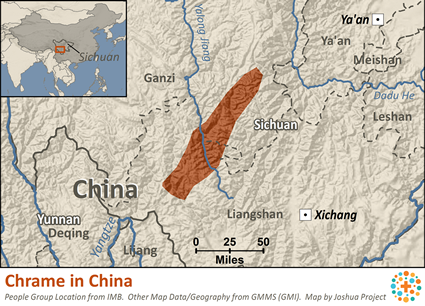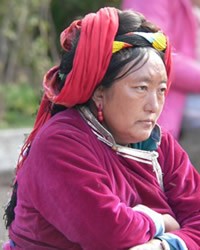

The Chrame are a small ethnic minority living in Sichuan Province in southwestern China. They are associated with the broader Qiang peoples of western China, an ancient group historically connected to the mountainous regions along the eastern edge of the Tibetan Plateau. The Chrame speak a Qiangic language related to other Tibeto-Burman languages found in Sichuan and surrounding mountain regions.
Historically, Qiang-related peoples lived in isolated mountain valleys where geography helped preserve distinct local identities, languages, and customs. Communities such as the Chrame developed within fortified mountain villages shaped by agriculture, herding, clan relationships, and local spiritual traditions. Over centuries, contact with Han Chinese and Tibetan cultures influenced many aspects of their society while still allowing them to preserve a distinct ethnic identity.
The twentieth century brought major social change to Qiang-related communities through modernization, collectivization during the Communist era, migration, and increasing use of Mandarin Chinese. Many traditional customs and spiritual practices weakened under political pressure, though aspects of older culture remain important in some rural communities.
Many Chrame families live in mountain villages where farming, livestock care, forestry work, and seasonal labor support daily life. Terraced agriculture is common in the steep terrain of western Sichuan, and crops often include corn, potatoes, barley, vegetables, and wheat.
Traditional Qiang-related communities historically lived in stone villages with fortified towers and thick stone homes designed for defense and protection in the mountain environment. Some of these architectural traditions still survive in parts of Sichuan today.
Family and village relationships remain important parts of social life. Cooperation between households is often necessary for farming, construction, and seasonal labor. Respect for elders and preservation of ancestral traditions continue to shape community interaction.
Remote geography, transportation difficulties, healthcare access, educational opportunity, and economic development remain challenges in some mountain areas. Younger generations sometimes leave villages for employment and education opportunities in larger towns and cities.
The Chrame traditionally practice a syncretistic mixture of animism, ancestor veneration, folk religion, and influences from Tibetan Buddhism and Chinese religious traditions. Spiritual beliefs often center on mountain spirits, nature powers, ancestral customs, and rituals intended to bring blessing, healing, protection, and harmony.
Among Qiang-related peoples, sacred white stones, mountain deities, and village rituals historically played important roles in religious life. Traditional spiritual leaders known as shamans or ritual specialists conducted ceremonies connected to illness, harvests, funerals, and protection from harmful spiritual forces.
Influence from Tibetan Buddhism and Chinese folk religion has shaped aspects of spiritual life in many mountain communities over generations. This syncretistic mixture continues to influence spiritual understanding and daily life among many families.
Very few Chrame have had meaningful exposure to biblical Christianity. Many still have little opportunity to hear a clear explanation of salvation through Jesus Christ alone, and access to Scripture and mature Christian fellowship remains limited.
The Chrame need greater access to faithful Christian witness communicated clearly within their cultural and linguistic setting. Many have had limited opportunity to study Scripture or interact personally with mature followers of Christ.
There is a need for believers willing to serve patiently among mountain communities in western China, learn local customs and language patterns, and disciple those who may face social pressure for following Jesus Christ. Access to Scripture, Christian teaching materials, and healthy local fellowships is important for lasting spiritual growth.
Practical needs also remain significant in some rural mountain areas, including healthcare access, educational opportunity, infrastructure development, and economic stability for struggling families. Compassionate Christian ministry can help demonstrate the love of Christ while opening doors for meaningful gospel conversations.
The Chrame would benefit from strong local churches capable of discipling believers, strengthening families, and continuing to share the gospel throughout the mountain regions of Sichuan.
Pray that the Chrame people will hear a clear presentation of the gospel and come to understand salvation through Jesus Christ alone.
Pray that God will raise up faithful Christian workers who are willing to serve among the Chrame with wisdom, humility, endurance, and compassion.
Pray that the Chrame people will be adopted through the People Group Adoption program so that sustained prayer, outreach, discipleship, and future gospel engagement will continue among them.
Pray that believers among the minority peoples of western China will grow strong in biblical faith and boldly share the truth of Christ with neighboring mountain communities.
Scripture Prayers for the Chrame in China.
https://peoplegroups.org/explore/GroupDetails.aspx?peid=11718
https://en.wikipedia.org/wiki/Qiang_people
https://www.britannica.com/topic/Qiang
https://www.britannica.com/place/Sichuan
https://en.wikipedia.org/wiki/Qiangic_languages
| Profile Source: Joshua Project |