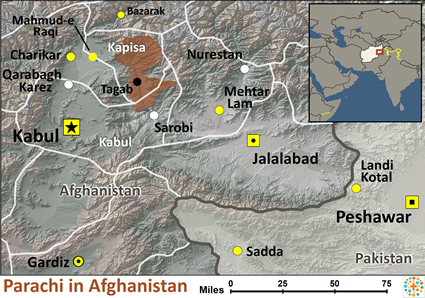

The Parachi are a small ethnic and linguistic community living in eastern Afghanistan, especially in isolated valleys northeast of Kabul in areas such as Nijrab and Shutul. They speak Parachi, a rare Iranian language closely related to Ormuri and distinct from the dominant Dari and Pashto languages surrounding them. The Parachi are one of the older indigenous populations of the region, and their language is considered endangered because many younger people increasingly use Dari or Pashto in daily life.
Historically, the Parachi lived in remote mountain valleys that helped preserve their language and cultural identity for centuries. Their isolation protected many traditional customs but also limited outside contact and development. Over time, larger surrounding populations and political changes in Afghanistan gradually reduced the areas where Parachi was commonly spoken. Today many Parachi communities are bilingual, and pressure from modernization, migration, and cultural assimilation continues to threaten the survival of their traditional language and identity.
Most Parachi families live in rural mountain communities where agriculture, herding, and local trade form the basis of daily life. Wheat, fruits, vegetables, and livestock are important to the local economy. Families often depend heavily on seasonal farming and cooperation with relatives and neighbors to endure difficult economic conditions and harsh winters.
Village and family relationships remain central within Parachi society. Respect for elders, hospitality, and loyalty to family are deeply valued cultural traits. Weddings, religious festivals, and community gatherings help preserve social identity and strengthen ties between families. Oral tradition and storytelling have historically played an important role in preserving community history and language.
Life in many Parachi areas remains difficult because of Afghanistan's long-running instability, poverty, and weak infrastructure. Access to healthcare, quality education, transportation, and economic opportunity can be very limited in isolated valleys. Younger generations increasingly leave traditional communities seeking work or education elsewhere, which further weakens the transmission of Parachi language and culture.
The Parachi are predominantly Sunni Muslim, and Islamic belief strongly shapes family life, social expectations, and community identity. Religious practices commonly include daily prayer, observance of Ramadan, mosque participation, and respect for Islamic traditions and leaders. In many communities, religion and cultural belonging are closely connected.
Alongside formal Islamic observance, folk beliefs and traditional spiritual practices may also influence daily life. Fear of curses, evil spirits, blessings, or spiritual protection through rituals and charms can remain influential in some communities. These beliefs may reinforce spiritual fear and obscure the biblical message of salvation by grace through Jesus Christ alone.
Most Parachi have had little meaningful exposure to biblical Christianity. Those who place their faith in Christ may face rejection, social isolation, or danger from family and community members. New believers need careful discipleship, biblical teaching, and trusted fellowship to help them grow strong in faith and remain grounded in Scripture.
The Parachi need greater access to the gospel through faithful Christian witness, Scripture, and long-term discipleship rooted firmly in the Word of God. Because they are a small and relatively isolated people group, many may never have personally encountered a follower of Jesus Christ or heard a clear explanation of the gospel.
Practical needs are also significant. Many Parachi communities face economic hardship, limited healthcare access, weak educational opportunities, and poor infrastructure. Language preservation is another major concern as younger generations increasingly shift toward dominant regional languages.
Believers from Parachi backgrounds need spiritually mature leadership, biblical resources, and safe fellowship with other Christians. Christian workers serving among Afghan peoples need wisdom, humility, courage, and perseverance as they seek to demonstrate Christ's love in difficult and often dangerous settings.
Pray that the Parachi people would hear the gospel clearly and come to know Jesus Christ as Savior and Lord.
Pray that God would strengthen and protect believers from Muslim backgrounds in Afghanistan and help them remain faithful to biblical truth under pressure.
Pray that the Parachi would be adopted through the People Group Adoption program so that sustained prayer, discipleship, and future gospel engagement would continue among them.
Pray for improved access to healthcare, education, economic opportunity, and language preservation among Parachi communities, and that Christian workers would serve with wisdom, compassion, and endurance.
Scripture Prayers for the Parachi in Afghanistan.
https://www.ethnologue.com/language/prc/
https://www.iranicaonline.org/articles/afghanistan-vii-paraci/
https://en.wikipedia.org/wiki/Parachi_language
https://glottolog.org/resource/languoid/id/para1299
https://www.britannica.com/place/Afghanistan
| Profile Source: Joshua Project |