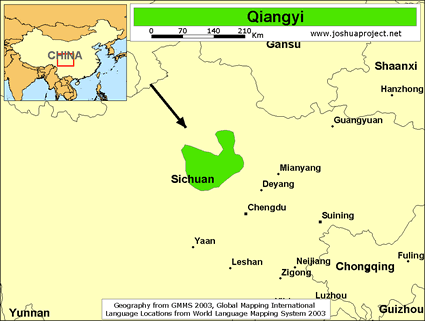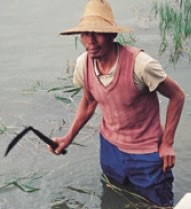

The Qiangyi are a small ethnic community living primarily in Xiangyun and Binchuan counties in Yunnan Province in southwestern China. Although officially classified by the Chinese government as part of the larger Yi nationality, the Qiangyi maintain a distinct identity and are considered one of the more unusual Tibeto-Burman peoples in southern China. Their name preserves a historical connection to the ancient Qiang tribes that once lived in northwestern China thousands of years ago. Researchers believe the Qiangyi may represent a surviving link between those ancient Qiang peoples and many later Tibeto-Burman groups that spread across southwestern China.
Historical traditions suggest that ancient Qiang populations migrated southward from Gansu through Sichuan into Yunnan over many centuries. As these migrating peoples separated and mixed with other populations, numerous tribes and ethnic groups emerged. The Qiangyi are one of the few groups in Yunnan that still preserve the name "Qiang" within their own identity. Their language is related to Yi languages, although some researchers have suggested it may be more closely connected to Southern Qiang varieties. Most Qiangyi today also speak Mandarin Chinese fluently.
Because of their small population and isolated communities, the Qiangyi remain relatively unknown even within China. Much of their traditional culture has gradually blended with surrounding Han Chinese and Bai influences, though they still preserve elements of their older ethnic identity.
The Qiangyi live mainly in rural communities in Yunnan's mountainous and agricultural regions. Daily life often revolves around farming, small-scale agriculture, livestock care, and village relationships. Families commonly cultivate rice, corn, vegetables, and other crops suited to the climate of southwestern China. Rural communities in Yunnan often depend heavily on seasonal agricultural cycles and close cooperation among relatives and neighbors.
Little detailed information exists about the Qiangyi way of life today, but traditional family structures remain important. Extended families commonly stay closely connected, and respect for elders continues to shape social relationships. Historically, the Qiangyi wore distinct ethnic clothing, although most now dress similarly to surrounding Han Chinese populations except during festivals and cultural celebrations.
Food commonly includes rice, vegetables, preserved foods, pork, and spicy dishes typical of Yunnan cuisine. Village festivals and ceremonies often include singing, dancing, and customs shared with neighboring Yi and Bai peoples. Traditional folk music and oral storytelling remain important among many Yi-related groups in Yunnan.
Economic opportunities in rural Yunnan can be limited. Younger generations sometimes leave villages for work in larger towns and cities, while older family members remain connected to agricultural life. Remote communities may still face challenges related to healthcare access, transportation, and educational opportunities.
The Qiangyi primarily follow polytheistic and animistic religious traditions. Their beliefs include worship of multiple gods, reverence for ancestors, and fear of unseen spiritual powers that are believed to influence daily life. Traditional rituals and ceremonies are often performed to seek protection, blessing, healing, or prosperity.
Elements of Daoism and Chinese folk religion have also influenced the Qiangyi through long contact with Han Chinese and Bai neighbors. Ancestor worship remains important, and spiritual practices are deeply connected to family traditions and community identity. Like many traditional peoples in southwestern China, the Qiangyi worldview includes a strong awareness of spiritual forces connected to nature, health, and fortune.
Very few Qiangyi have had meaningful exposure to biblical Christianity. There are reportedly no known Christians among them, and only a small Christian presence exists in the counties where they live. Government-approved churches in the area are mainly attended by elderly Han Chinese and Bai believers rather than Qiangyi people.
The Qiangyi need faithful access to the gospel through Scripture, discipleship, personal relationships, and compassionate Christian witness presented in culturally understandable ways. Because they are a small and little-known minority, many have never heard a clear biblical explanation of salvation through Jesus Christ.
Practical needs include healthcare access, educational opportunities, transportation infrastructure, and economic development for rural communities in Yunnan. As modernization continues, younger generations also face pressures related to migration, cultural change, and loss of traditional identity.
There is a strong need for spiritually mature believers willing to build long-term relationships among the Qiangyi and help establish biblically grounded churches. Christian resources in forms accessible to oral learners and bilingual Mandarin speakers would greatly strengthen future ministry efforts among them.
Pray that the Qiangyi people will hear a clear and understandable presentation of the gospel in their own language and cultural setting.
Pray that God will raise up compassionate Christian workers who are willing to serve faithfully among the Qiangyi communities of Yunnan Province.
Pray that the Qiangyi people will be adopted through the People Group Adoption program so that ongoing prayer and future gospel engagement will continue among them.
Pray that any future believers among the Qiangyi will grow strong in biblical faith and faithfully share the truth of Jesus Christ with neighboring peoples.
Scripture Prayers for the Qiangyi in China.
https://peoplegroups.org/people_groups/pg022107/
https://people-groups.asiaharvest.org/China/chinaPeoples/Q/Qiangyi.pdf
https://en.wikipedia.org/wiki/Yi_people
https://en.wikipedia.org/wiki/Qiang_people
https://en.wikipedia.org/wiki/Xiangyun_County
| Profile Source: Joshua Project |