




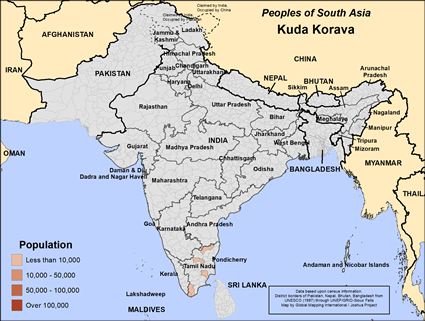
The Kuda Korava are a tribal community found primarily in the southern Indian state of Tamil Nadu. They are also known by related names such as Kudumiyanmalai Koravar and Yenadi Korava. The Kuda Korava belong to the wider Korava or Kurava tribal tradition found across parts of South India, where related communities are known by different regional names. Historically, these groups have been associated with forest living, hunting, gathering, basket-making, fortune telling, and mobile or semi-nomadic lifestyles.
The Kuda Korava have long lived on the margins of mainstream society and are recognized as a Scheduled Tribe in India. Their traditional way of life was closely connected to forests, wildlife, and natural resources. Colonial policies, forest restrictions, conservation laws, and modern development projects disrupted many of their traditional livelihoods and contributed to poverty and social marginalization.
Their heart language is associated with Kudagu, though many today also speak Tamil and other regional languages. Like many tribal communities in India, the Kuda Korava have preserved aspects of their identity through oral tradition, clan relationships, family customs, and inherited cultural practices.
The Kuda Korava are traditionally skilled in understanding the forests, wildlife, and natural environment around them. Historically, many families survived through hunting, fishing, gathering forest products, crafting simple goods, and seasonal labor. Some related Korava communities are also known for making baskets, mats, brooms, and small handmade items from bamboo and forest materials.
Family and community relationships are important within Kuda Korava society. Extended families often help support one another during periods of hardship, especially where work opportunities are uncertain. Respect for elders and maintaining community loyalty remain important cultural values.
Meals commonly include rice, lentils, vegetables, fish, locally gathered foods, and regionally available meat. Rural and tribal life can be physically demanding, especially for families dependent on seasonal labor or natural resources for survival.
Modern economic pressures, loss of forest access, migration, education, and urbanization are gradually changing traditional lifestyles. Younger generations may seek work in towns and cities while older generations continue to value inherited customs and community traditions.
The Kuda Korava primarily follow Hindu religious traditions mixed with tribal and folk religious practices. Religious life commonly includes devotion to Hindu gods and goddesses, participation in local festivals, temple worship, and household rituals connected to important family events.
Among tribal communities such as the Kuda Korava, folk beliefs concerning spirits, ancestors, local deities, sacred places, ritual protection, and supernatural forces may also strongly influence everyday life. Religious customs are often inherited through generations and closely tied to community identity and cultural belonging.
Although the Kuda Korava may sincerely practice inherited religious traditions, they still need the gospel of Jesus Christ and the assurance of salvation that comes through faith in Him rather than through rituals, spirit appeasement, or ancestral custom.
The Kuda Korava need greater access to Scripture, biblical discipleship, and faithful Christian witness presented with humility, compassion, and cultural understanding. Many tribal communities in India still have limited exposure to clear evangelical teaching and long-term discipleship rooted in God's Word.
Practical challenges include poverty, unstable employment, social marginalization, limited educational opportunity, healthcare access, and the loss of traditional livelihoods because of environmental restrictions and development pressures. Families dependent on forest resources or seasonal labor often face ongoing financial insecurity.
There is a need for mature believers who are willing to patiently build relationships, serve compassionately, and establish strong local fellowships capable of discipling future generations while respecting the dignity of the Kuda Korava people.
Pray that the Kuda Korava people would hear the gospel clearly and come to know Jesus Christ as Savior and Lord.
Pray that God would raise up compassionate and biblically faithful workers who will serve among the Kuda Korava with wisdom, humility, and perseverance.
Pray that the Kuda Korava would be adopted through the People Group Adoption program so that sustained prayer, discipleship, and long-term gospel outreach would continue among them.
Pray for strengthened families, improved educational opportunities, stable livelihoods, and spiritual openness within Kuda Korava communities throughout Tamil Nadu.
Scripture Prayers for the Kuda Korava in India.
https://en.wikipedia.org/wiki/Koravar
https://en.wikipedia.org/wiki/Kurava
https://www.britannica.com/topic/Hinduism
| Profile Source: Joshua Project |



