


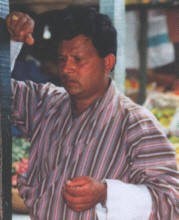

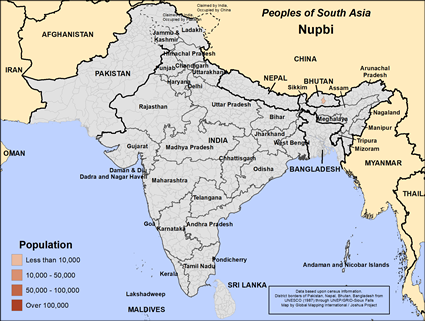
The Nupbi are a small ethnolinguistic people group living primarily in and around the town of Trongsa in central Bhutan. Their language, Nupbikha, belongs to the East Bodish branch of the Tibeto-Burman language family and is closely related to the Bumthang language spoken further east. Although linguistically connected to neighboring groups, the Nupbi maintain a distinct ethnic identity and do not generally consider themselves part of the Bumthang people.
Trongsa occupies an important place in Bhutan's history because of its strategic location in the mountainous center of the country. For centuries, the region served as a cultural and political crossroads linking eastern and western Bhutan. The Nupbi developed within the broader Tibetan Buddhist world that has shaped much of Bhutanese culture, though their language preserves older linguistic features not found even in Classical Tibetan.
Like many small Himalayan peoples, the Nupbi have historically lived in relative isolation because of Bhutan's rugged mountain terrain and difficult travel conditions. Their community identity has been preserved through language, family ties, village traditions, and shared religious customs.
The Nupbi live in the mountainous highlands of central Bhutan where agriculture, livestock care, and village cooperation shape daily life. Families commonly cultivate crops suited to mountain environments, including barley, potatoes, buckwheat, and rice in lower valleys. Livestock such as yaks, cattle, and goats are important for food, labor, wool, and trade.
Village life is strongly centered around family and community relationships. Extended families often live close together, and respect for elders remains important. Traditional Bhutanese homes are commonly built from timber, stone, and clay to withstand the mountain climate. Seasonal rhythms tied to planting, harvesting, and religious festivals continue to influence daily routines.
Food commonly includes rice, butter tea, barley products, vegetables, chili peppers, dairy foods, and locally prepared meat dishes. Religious festivals and monastery celebrations are important social events that strengthen community identity and cultural continuity.
The mountainous environment can make transportation, healthcare, and educational access difficult in remote areas. Younger generations increasingly leave villages for schooling or employment opportunities in larger towns, which creates pressure on traditional language use and village life.
One distinctive traditional practice among the Nupbi has been sky burial, in which the dead are placed in remote mountain areas where birds consume the remains. This practice reflects Tibetan Buddhist beliefs concerning death, impermanence, and the release of the soul from the physical body.
The Nupbi primarily follow Tibetan Buddhism, especially forms of Vajrayana Buddhism common throughout Bhutan. Their religious life includes devotion to Buddhist teachings, prayer rituals, monastery ceremonies, sacred festivals, and reverence for monks and lamas.
Alongside formal Buddhism, the Nupbi also retain strong shamanistic and animistic beliefs. Fear of spirits, local deities, curses, unseen supernatural powers, and ritual impurity can strongly influence daily decisions and community life. Ritual specialists may be consulted for healing, protection, blessing, or guidance during times of sickness or hardship. Sacred mountains, natural sites, and ancestral customs often hold spiritual significance.
Very few Nupbi have heard a clear biblical presentation of the gospel. There has historically been little or no Christian witness among them, and many have never encountered biblical teaching about Jesus Christ as Savior and Lord.
The Nupbi need faithful access to the gospel through Scripture, discipleship, personal relationships, and compassionate Christian witness presented with humility and cultural understanding. Because Bhutan remains strongly influenced by Tibetan Buddhist identity and government restrictions, Christian outreach can be difficult and sensitive.
Practical needs include healthcare access, transportation, educational opportunities, and economic support for remote mountain communities. Geographic isolation and harsh weather conditions can make daily life difficult, especially in smaller villages.
The Nupbi also need Christian resources in their own language. Oral communication remains important in many Himalayan cultures, making audio Scripture, storytelling, and personal discipleship especially valuable for future ministry.
There is a great need for spiritually mature believers willing to serve patiently among the Nupbi and help establish biblically grounded discipleship and local churches in central Bhutan.
Pray that the Nupbi people will hear a clear and understandable presentation of the gospel in their own language.
Pray that God will raise up compassionate Christian workers who are willing to serve faithfully among the isolated mountain communities of the Nupbi.
Pray that the Nupbi people will be adopted through the People Group Adoption program so that ongoing prayer and future gospel engagement will continue among them.
Pray that God will provide Scripture resources, discipleship tools, and faithful local believers who can help establish strong biblical foundations among the Nupbi people.
Scripture Prayers for the Nupbi in Bhutan.
https://peoplegroups.org/people_groups/pg048798/
https://en.wikipedia.org/wiki/Nupbi_language
https://people-groups.asiaharvest.org/Bhutan/Nupbi.pdf
https://en.wikipedia.org/wiki/Ngalop_people
https://en.wikipedia.org/wiki/Ethnic_groups_in_Bhutan
| Profile Source: Joshua Project |


