Akum in Cameroon
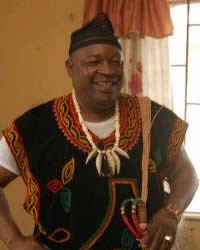
Photo Source:
Anonymous
|
Send Joshua Project a map of this people group.
|
| People Name: | Akum |
| Country: | Cameroon |
| 10/40 Window: | No |
| Population: | 2,700 |
| World Population: | 3,700 |
| Primary Language: | Akum |
| Primary Religion: | Christianity |
| Christian Adherents: | 62.00 % |
| Evangelicals: | 8.00 % |
| Scripture: | Translation Started |
| Ministry Resources: | No |
| Jesus Film: | No |
| Audio Recordings: | Yes |
| People Cluster: | Benue |
| Affinity Bloc: | Sub-Saharan Peoples |
| Progress Level: |

|
Introduction / History
Tucked into the highlands of Cameroon's Northwest Region, the Akum people occupy a handful of villages in the Furu-Awa Subdivision of Menchum Division — a rugged, mountainous landscape near the Nigerian border. Their principal village, known simply as Akum (also called Bagangu), sits along the famous Bamenda Ring Road, one of Cameroon's most scenic highland routes. A smaller Akum community also lives just across the border in Nigeria.
The Northwest Region has known centuries of cultural complexity. Like other peoples of the Western Cameroon Grasslands, the Akum live within a region long shaped by local chieftaincy systems, external colonial administration (successively German, British, and French), and the rich tapestry of Bantoid-speaking communities. Their language, Akum (ISO 639-3: aku), belongs to the Southern Bantoid family — part of the Niger-Congo world — and is spoken across five distinct villages, three in Cameroon and two in Nigeria.
What Are Their Lives Like?
Life for the Akum revolves around their highland villages. Agriculture anchors the community — the fertile volcanic soils of Menchum Division yield maize, plantains, cocoyams, cassava, yams, and groundnuts. The Northwest Region is also known for coffee farming, and cash crops play a role in connecting families to wider markets, though access to those markets remains limited in the more remote subdivisions.
The Akum language is vigorously used at home, on the farm, and among friends. According to a sociolinguistic survey, it is the unanimous choice when neighbors gather without outsiders present. English (Cameroon's co-official language) and Cameroon Pidgin English are used in trade and wider communication, while Jukun serves as a bridge language with related neighboring groups. Young people are increasingly drawn toward English and Pidgin, creating some pressure on intergenerational transmission of the mother tongue.
The community structure follows patterns common to the Northwest highlands, where celebrations of births, marriages, and funerals are important social occasions that bind families and lineages together. Access to formal healthcare is limited; the region's principal hospitals are in Bamenda and Wum, both some distance from the more remote subdivisions. Clean water and sanitation remain ongoing challenges.
What Are Their Beliefs?
Christianity has taken root among the Akum. Most of the community identifies with the Christian faith in some form, and a church presence exists — yet the depth and vitality of that faith is uneven. Evangelical believers represent a genuine but modest presence, and local congregations have not yet developed a strong culture of outward witness or discipleship. The faith of many sits closer to cultural identification than to transforming personal conviction.
Traditional ethnic religion remains a living force among a significant portion of the community. In the Northwest highlands broadly, these beliefs center on ancestral relationships, communal rites, and the spiritual authority embedded in local leadership structures. For many Akum people, these practices exist alongside — and sometimes intertwined with — Christian profession, making theological clarity and patient discipleship particularly important for any ministry among them.
Notably, Islam does not appear to have a foothold among the Akum — a distinction from some of the peoples further north in Cameroon's Adamawa region where Islamic influence has a longer history.
What Are Their Needs?
The church among the Akum needs strengthening from within. With evangelical faith representing only a fraction of the broader Christian community, there is a pressing need for teaching, discipleship, and local leadership development. Nominal Christianity — faith held in name rather than in life — is the quiet challenge that shapes the spiritual landscape. Workers who can come alongside existing believers, help root them in Scripture, and encourage the church to look outward would be a tremendous gift.
Practically, the Akum face the daily realities of limited healthcare access, unreliable clean water, and constrained economic opportunity. Meeting these needs with integrity — not as a tool for conversion but as an expression of love for neighbors made in God's image — remains a wide-open door for the church and for mission partners.
Prayer Points
Pray for the evangelical believers among the Akum — that they would grow in boldness, be grounded in the word, and become disciple-makers among their own people and especially among Muslims.
Pray for workers with the patience and love to dwell among the Akum, learn their language, and serve the church from within rather than from a distance.
Pray against nominal faith — that the line between cultural Christianity and living trust in Christ would become clear and compelling across the community.
Pray for those still following traditional religion — that the God who made these highland villages and every person in them would make himself known by name.
Pray for the practical flourishing of Akum families — for access to clean water, healthcare, and economic opportunity — and that the church would be a visible witness of God's care in meeting these needs.