Malagasy-Antalaotra in Comoros
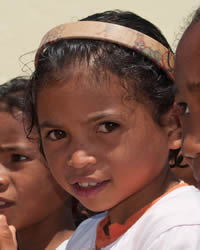
Photo Source:
Saveoursmile - Wikimedia
Creative Commons
|
Send Joshua Project a map of this people group.
|

| People Name: | Malagasy-Antalaotra |
| Country: | Comoros |
| 10/40 Window: | No |
| Population: | 1,200 |
| World Population: | 1,200 |
| Primary Language: | Malagasy, Merina |
| Primary Religion: | Christianity |
| Christian Adherents: | 70.00 % |
| Evangelicals: | 15.00 % |
| Scripture: | Complete Bible |
| Ministry Resources: | Yes |
| Jesus Film: | Yes |
| Audio Recordings: | Yes |
| People Cluster: | Malagasy |
| Affinity Bloc: | Malay Peoples |
| Progress Level: |

|
Introduction / History
The Malagasy-Antalaotra are a small but distinct community living in the Comoros, a chain of islands in the Indian Ocean between Madagascar and the East African coast. Their name, drawn from the Malagasy language, means "people of the sea" — a fitting title for a group whose identity has been shaped by centuries of maritime life and cross-cultural movement.
Their origins trace back to Swahili traders who settled the northwest coast of Madagascar between the 10th and 12th centuries, intermarrying with Malagasy and Makoa women and gradually forming a people of their own. The Antalaotra became skilled intermediaries in Indian Ocean trade networks, bridging Madagascar and the East African coast. When conflict disrupted their homeland — particularly the burning of Mahajanga during 19th-century warfare — many Antalaotra dispersed across the region, eventually finding their way to the Comoro Islands.
Their language, Kiantalaotsy, is a Malagasy dialect bearing clear Swahili influence. Culturally, the Antalaotra lean more toward East African traditions than many other Malagasy groups, often carrying Arabic or Swahili names alongside their Malagasy heritage.
What Are Their Lives Like?
Daily life for the Malagasy-Antalaotra in the Comoros is shaped by the rhythms of island living. Fishing and small-scale agriculture form the backbone of economic life, as they do across much of the archipelago. Families are tightly knit, with community bonds forged through shared labor, shared meals, and shared celebration.
The Comoros islands host a lively tradition of communal festivities. Wedding celebrations are elaborate, multi-day affairs involving entire villages, with music, food, and participation from extended family networks. These events reinforce a sense of collective identity that runs deep in island culture.
The Antalaotra in the Comoros are a small community within a broader society, which means they likely navigate questions of identity carefully — maintaining their Malagasy heritage while also participating in the wider Comorian social world. The ocean remains central to their livelihood and their sense of self.
What Are Their Beliefs?
What makes the Malagasy-Antalaotra stand out from nearly every other people group in the Comoros is their religious identity. While the surrounding Comorian population is overwhelmingly Muslim, the majority of Malagasy-Antalaotra identify as Christian. This is a remarkable contrast to their neighbors. The Comoros is an Islamic republic, and most other groups on the islands have little to no Christian presence. Yet the Antalaotra, connected as they are to their Malagasy roots, carry a Christian heritage that sets them apart in this context.
That said, being significantly reached does not mean the work is finished. Christian identity in any community can vary widely in depth and commitment. Nominal faith, cultural Christianity, and incomplete discipleship are real challenges wherever the gospel has gone but has not fully taken root. The Malagasy-Antalaotra need believers who are not just Christian in name, but growing disciples who know Christ personally and are equipped to share him with others — including their Muslim neighbors.
What Are Their Needs?
The Malagasy-Antalaotra face the practical challenges common to small communities living in one of the world's more economically fragile regions. Access to quality education, healthcare, and sustainable livelihoods can be limited across the Comoros islands, and a small diaspora community may feel these pressures acutely.
Spiritually, the greatest need is for depth. A community with a significant Christian presence still requires ongoing discipleship, sound teaching, and mature leadership. Believers need to be grounded in Scripture and equipped to live out their faith faithfully in a Muslim-majority context — and to be a witness to the people around them. The Malagasy-Antalaotra are uniquely positioned: a Christian community embedded within one of the least-reached Islamic nations on earth. That is not an accident — it is an opportunity.
Prayer Points
Pray that Malagasy-Antalaotra believers would move beyond nominal faith into genuine, growing relationship with Christ — rooted in scripture, sustained by prayer, and expressed in daily life.
Pray that this community would see itself as missionaries to the Comoros. Ask God to give them courage and wisdom to share the gospel with the Muslim people groups living all around them.
Pray for the raising up of godly Antalaotra pastors, teachers, and elders who can shepherd their community well and send others out in mission.
Ask the Lord to provide for families facing economic hardship, limited healthcare, and poor infrastructure, and that his provision would become a testimony to His goodness.
Pray that global mission agencies would come alongside the existing church to help strengthen and mobilize it for the work of the gospel.