Armenian in Kazakhstan
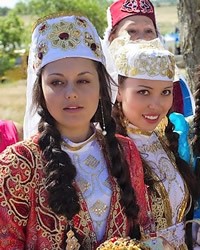
Photo Source:
Anonymous
|
Send Joshua Project a map of this people group.
|
| People Name: | Armenian |
| Country: | Kazakhstan |
| 10/40 Window: | Yes |
| Population: | 17,000 |
| World Population: | 6,018,800 |
| Primary Language: | Armenian, Western |
| Primary Religion: | Christianity |
| Christian Adherents: | 94.00 % |
| Evangelicals: | 8.00 % |
| Scripture: | Complete Bible |
| Ministry Resources: | Yes |
| Jesus Film: | Yes |
| Audio Recordings: | Yes |
| People Cluster: | Armenian |
| Affinity Bloc: | Eurasian Peoples |
| Progress Level: |

|
Introduction / History
Throughout history, Armenia has been a battlefield for many invaders and contending empires and a bridge for many cultures and civilizations. During the past 2,700 years, Armenia has been conquered by the Persian Empire, Alexander the Great, the Roman Empire, the Byzantines, Arabs, Mongols, Tatars, Ottomans, Persians and Russians. Armenian kingdoms, principalities, and even a short-lived empire (95-55 B.C.) managed to survive and thrive for some 1,700 years. Under various kings and princes, the Armenians developed a sophisticated culture, original architecture, and their own alphabet.
The 1905 Russian Revolution and the 1908 Young Turk Revolution raised the hopes of the Armenians for reform and an opportunity to build a homeland in historical Armenia. These hopes were dashed as the Ottoman and the Russian Empires fought each other during World War I. A dark hour of Armenian history is the Armenian genocide, which started on April 24, 1915. Some 1,750,000 Armenians were deported into Syria and Mesopotamia by the Ottoman authorities. Subject to famine, disease, and systematic massacres, most of them perished. This "ethnic cleansing" of the Armenians from their historical homeland led Raphael Lemkin, the father of the Genocide Treaty, to coin the new term "genocide" in the 1930s to describe the historical plight of the Assyrians and the Armenians as subjects of the first genocide of the 20th century. Armenia gained independence on September 23, 1991.
Today, there are several million Armenians worldwide. Significant numbers are located in Armenia, France and the United States of America. Major diaspora centers of the Middle East are Iran, Syria and Lebanon. Some came hundreds of years ago as warlords in the various Central Asian countries. During the days of the Soviet Union, some Armenians found their way to Turkmenistan.
What Are Their Lives Like?
Armenians in Turkmenistan have a long history of fighting for the Soviet Union. After they settled there, they became a religious minority in a Sunni Muslim country. They can be salt and light to their neighbors if they choose to do so.
What Are Their Beliefs?
In 301 AD, during the rule of King Dirtad III, Armenia became the world's first Christian nation. A Christian monk, commonly known as Krikor Lusavorich or St. Gregory the Illuminator, cured the king of a disease. After this event, King Dirtad III was bapt
What Are Their Needs?
The traumatizing experience of being expelled from their homeland and the historic genocide made a deep impression on Armenians. Many have trouble forgiving the Turks even after over 100 years. This impedes their spiritual lives.
Prayer Points
Pray for healing for Armenians and for the ability to integrate into Turkmenistan.
Pray for the Armenians in the diaspora to hold on to their Christian faith and to have a personal experience with Jesus Christ.
Pray for Armenians to become vibrant witnesses of Christ's grace, mercy and power to their Turkmen neighbors. Pray for them to share Christ's spiritual answers.
Pray that God would bring revelation of Christianity as a spiritual relationship rather than a call to nationalism.