Bamukumbit in Cameroon
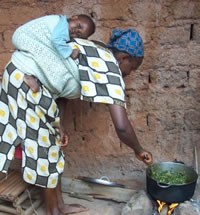
Photo Source:
Anonymous
|
Send Joshua Project a map of this people group.
|
| People Name: | Bamukumbit |
| Country: | Cameroon |
| 10/40 Window: | No |
| Population: | 20,000 |
| World Population: | 20,000 |
| Primary Language: | Mankong |
| Primary Religion: | Christianity |
| Christian Adherents: | 76.00 % |
| Evangelicals: | 5.00 % |
| Scripture: | Portions |
| Ministry Resources: | No |
| Jesus Film: | No |
| Audio Recordings: | Yes |
| People Cluster: | Benue |
| Affinity Bloc: | Sub-Saharan Peoples |
| Progress Level: |

|
Introduction / History
On the fertile Ndop Plain of Cameroon's Northwest Region, where volcanic soils stretch between mountain ranges along the Ring Road, the Bamukumbit people have lived as one of the thirteen villages of Ngo-Ketunjia Division. Their village, also known as Mankong, lies within Balikumbat Subdivision, about twenty kilometers southwest of the market town of Ndop — a flat, well-watered landscape renowned as one of Cameroon's premier rice-growing areas.
The Bamukumbit trace their origin to an ancestor named Mangeh, who is remembered as the common forefather of five closely related villages on the Ndop Plain. According to oral tradition, Mangeh had five children: two sons who founded Bambalang and Bamunka, and three daughters who established the villages of Bamali, Bafanji, and Bamunkumbit. The youngest daughter, Mekheng, gave her name and legacy to the Bamukumbit people. These five Mangeh villages share such deep kinship that no formal boundary has been drawn between them — they are understood to be one family. The Mangeh Family Association continues to convene across generations to maintain unity among communities that have spread throughout Cameroon and abroad.
The Bamukumbit are part of the wider Grassfields cultural world, a mosaic of Bantu-speaking fondoms that developed in the highlands of what is now Cameroon's Northwest and West Regions. Their language, Mankong, belongs to the Bantu linguistic family and is written and published, with Scripture portions produced between 2014 and 2018. The Bamukumbit share their subdivision with the Balikumbat, Bafanji, Baligansin, and Baligashu communities, each maintaining its own language, traditions, and chiefly hierarchy. In recent years, the broader Balikumbat Subdivision has been caught in the turbulence of Cameroon's Anglophone crisis — an armed conflict between government forces and separatists that has brought insecurity, displacement, and hardship to the Northwest Region since 2016.
What Are Their Lives Like?
Agriculture anchors daily life on the Ndop Plain. Bamukumbit families cultivate maize, beans, and potatoes on the fertile volcanic soils surrounding the village, and coffee — both Arabica and Robusta varieties — is grown as a cash crop on hillside plots. The Upper Nun Valley Development Authority (UNVDA) has developed extensive rice fields across the Ndop Plain, and rice cultivation has become a significant part of the local agricultural economy, providing livelihoods and connecting Bamukumbit farmers to regional markets. Women carry a heavy share of food crop cultivation alongside domestic responsibilities, while men tend coffee and manage communal affairs.
Social life is organized through patrilineal clans, with elder men holding authority over family land, marriages, and the resolution of disputes. The Fon — the hereditary chief — sits at the apex of visible governance and represents the community in its dealings with the broader world. Celebrations in the Ngo-Ketunjia area are rich with color and tradition: annual cultural festivals feature masquerades whose powers are understood to be ancestral, the stately Lela dance performed in the Balikumbat area, processions of queens and dignitaries, and nights of traditional music. Palm wine flows at communal gatherings, and death celebrations — elaborate multi-day observances honoring departed elders — are among the most important communal events in the Grassfields calendar, typically held between November and February.
What Are Their Beliefs?
Christianity is the religion of three-fourths of the Bamukumbit. Catholic, Presbyterian, Baptist, and Full Gospel congregations are present in the community, a legacy of mission work that spread through the Cameroon Grassfields over the past century. For many Bamukumbit families, Christian faith shapes the rhythms of the week and marks the milestones of life.
Yet the deepest traditional spiritual authority in the village is not held by the church — it belongs to the Kwifor. The Kwifor is the secret society that functions as the supreme governing body of the community, understood to rule the village spiritually while the Fon rules it physically. Even the Fon is expected to submit to the Kwifor's authority. Membership in this society, its rituals, and the power it is believed to exercise over community life remain central to the identity of many Bamukumbit, particularly among the elderly, for whom traditional beliefs are not a relic but a living reality. The masquerades that appear at festivals are considered to carry the power of the ancestors and are treated with reverence by the entire community.
A small Mbororo (Fulani) community within the Bamukumbit area practices Islam, reflecting the diverse religious landscape of the Ndop Plain. The Evangelical witness in the community is modest but present — and those believers who have found living faith in Jesus Christ have a remarkable opportunity to deepen the church's roots and carry the gospel to others.
What Are Their Needs?
The Mankong language has Scripture portions published between 2014 and 2018, but the New Testament and a complete Bible remain unfinished. Bamukumbit believers who worship in their mother tongue are still waiting for the full counsel of God's Word in Mankong — a gap that limits deep discipleship, exposes the church to syncretism with Kwifor tradition, and slows the development of confident local Christian leaders. The Anglophone crisis has brought ongoing insecurity to Balikumbat Subdivision, disrupting schooling, displacing families, and creating trauma that communities are still working to process. Reliable healthcare, clean water access, and economic recovery are daily concerns for families in the area. The church's witness is most powerful when it speaks to both spiritual and physical needs — accompanying communities through hardship while proclaiming a hope that outlasts conflict.
Prayer Points
Pray for the completion of the New Testament — and ultimately a full Bible — in the Mankong language, so that every Bamukumbit believer can read, hear, and be transformed by God's Word in their heart language.
Pray that Bamukumbit Christians and their churches will grow in bold, rooted faith and send gospel workers to the many less-reached ethnic groups throughout the Cameroon Grassfields and Northwest Region who have yet to encounter Jesus.
Pray that the hold of the Kwifor secret society and ancestral ritual will be broken by the power of the Holy Spirit, drawing Bamukumbit men and women — including elders and community leaders — into the freedom and life that Christ alone offers.
Pray for lasting peace in the Anglophone regions of Cameroon, for healing for families traumatized by the conflict in Balikumbat Subdivision, and for the restoration of schools, healthcare, and community stability across the Ndop Plain.