Brong in Ghana
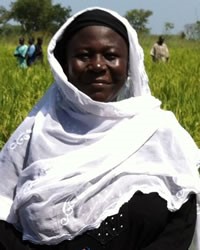
Photo Source:
Eileen Delhi - Flickr
Creative Commons
|
Send Joshua Project a map of this people group.
|
| People Name: | Brong |
| Country: | Ghana |
| 10/40 Window: | No |
| Population: | 1,620,000 |
| World Population: | 1,911,000 |
| Primary Language: | Abron |
| Primary Religion: | Islam |
| Christian Adherents: | 48.00 % |
| Evangelicals: | 24.96 % |
| Scripture: | New Testament |
| Ministry Resources: | Yes |
| Jesus Film: | No |
| Audio Recordings: | Yes |
| People Cluster: | Guinean |
| Affinity Bloc: | Sub-Saharan Peoples |
| Progress Level: |

|
Introduction / History
In the heart of Ghana, occupying the broad transitional zone where forest meets savanna, live the Brong — also known as the Bono — an Akan people whose homeland centers on the Bono East and Bono regions of central Ghana. Their principal city, Techiman, sits astride ancient trade routes and is widely regarded as the cradle of Akan civilization. The Brong speak Abron, a language within the Kwa branch of the Niger-Congo family, and they take their name from the phrase Abono woo, meaning "pioneer" or "firstborn of the land" — a title they regard as more than a name.
Oral tradition traces the earliest Brong ancestors to a sacred cave called Amowi, from which the first settlers emerged to found the original settlement of Yefiri, meaning "we are coming out." By the twelfth century, the Bono kingdom — known as Bonoman — had grown wealthy through gold mined from the Twi and Prabom river valleys, and Begho had developed into one of the largest market towns in interior West Africa, connecting trans-Saharan trade routes with the forest zone. Many other Akan subgroups, including the Asante and the Fante, trace their own origin migrations back to Bono-Manso, making the Brong a foundational people in the wider Akan world.
Centuries of tension with the expanding Asante Empire left their mark on Brong identity. The Asante destroyed Bono-Manso in 1723, and the Brong endured periods of subordination until they formally broke from the Asante Confederacy in 1952. Seven years later, in 1959, Ghana's government created the Brong-Ahafo Region as a distinct administrative area, giving the Brong official recognition as a people apart.
What Are Their Lives Like?
The Brong live primarily from the land. Their region has earned the title "food basket of Ghana," and agriculture anchors daily life — families cultivate cocoa, cassava, maize, plantains, and yams for both subsistence and commerce. Techiman hosts one of the largest outdoor markets in all of West Africa, drawing traders from across the region multiple days each week. Women are the backbone of this marketplace economy, running stalls and managing household finances with considerable skill and independence.
Fufu with palm nut soup is a staple of the Brong table, as are dishes built around yam and plantain. The surrounding forest and rivers supplement the diet with fish and game. Traditional crafts remain part of daily life and local commerce: pottery, basket weaving, and woodcarving are practiced and sold alongside farm produce. The ancient craft of Kyenkyen cloth — woven from the bark of a tree — can still be observed in nearby villages.
Family life follows the matrilineal pattern common to Akan peoples, with clan membership and property passing through the mother's line. The queenmother holds a respected and constitutionally important role in succession and community governance, nominating kings and ensuring the continuity of royal lineage. Chiefs and their councils remain influential in local affairs, and the ceremonial stool continues to symbolize both royal authority and ancestral presence.
Two festivals define the community calendar in a particularly vivid way. The Apoo festival, held each November in Techiman and Wenchi, is a weeklong purification observance during which social wrongs are publicly called out — not even chiefs are exempt from community accountability. It is also a time of reunion, drawing families together from distant towns and cities. The annual Yam Festival in August celebrates the harvest with drumming, dancing, and traditional ceremony, honoring the agricultural rhythms that have sustained the Brong for generations.
What Are Their Beliefs?
Islam is the primary religious identity among the Brong of Ghana, a reality rooted in centuries of contact with Mande-speaking Muslim traders who passed through Techiman and Begho along trans-Saharan commercial routes. That longstanding presence has made Islam a deeply embedded part of Brong community life for many families. A significant portion of the Brong also identify as Christian, representing a substantial segment of the community, while a smaller number hold to traditional ethnic religion.
Those who practice traditional religion trust in Nyame as the supreme creator, while directing daily spiritual attention toward lesser spirit beings associated with rivers, forests, and natural forces, sought through priests and shrines for guidance, healing, and protection. Ancestors are venerated as spiritually present guardians whose goodwill must be maintained through libations and ritual offerings. These are active expressions of faith — real trust placed in spiritual powers — not relics of a fading past. Among both Muslims and those who blend Christian identity with traditional practice, the same underlying spiritual loyalties can persist beneath the surface of religious profession. Only in Jesus Christ is there true reconciliation with the living God, freedom from spiritual fear, and the certainty of eternal life.
What Are Their Needs?
Food insecurity remains a troubling reality in parts of Techiman and surrounding communities, even within Ghana's most agriculturally productive region. Access to land for farming is complicated by traditional chiefly land ownership, and a significant share of households face food stress at various points in the year. Better rural infrastructure and sustainable agricultural support could transform lives in communities that already know how to farm but lack consistent resources. Youth unemployment is a growing concern as urban migration accelerates, pulling young Brong away from their home communities and leaving some villages without the next generation of farmers and leaders.
The Brong have a New Testament in Abron, completed between 2021 and 2024, which is a remarkable and recent gift. What is now urgently needed are workers — both from outside and from within the growing Christian community — willing to bring that Word to life through faithful teaching, church planting, and personal witness among a people where Islam predominates and traditional spiritual loyalties run deep.
Prayer Points
Pray that the newly completed Abron New Testament would find its way into Brong homes and hearts, and that the Holy Spirit would use it to draw both Muslims and traditionalists to saving faith in Jesus Christ.
Pray for sustainable livelihoods and food security in Brong communities, and for wise stewardship of the agricultural abundance that surrounds them but does not always reach the most vulnerable.
Pray for the growth and boldness of Brong believers — that those who have come to faith would be grounded in Scripture, equipped for discipleship, and unafraid to share Christ with their Muslim and traditionalist neighbors.
Pray for cross-cultural workers willing to learn the Abron language and culture, and to invest long-term in church planting among this significant and historically rich people.