Hazara in Sweden
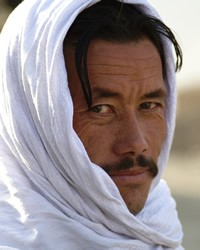
Photo Source:
Anonymous
|
Send Joshua Project a map of this people group.
|
| People Name: | Hazara |
| Country: | Sweden |
| 10/40 Window: | No |
| Population: | 50,000 |
| World Population: | 4,706,700 |
| Primary Language: | Hazaragi |
| Primary Religion: | Islam |
| Christian Adherents: | 0.00 % |
| Evangelicals: | 0.00 % |
| Scripture: | New Testament |
| Ministry Resources: | Yes |
| Jesus Film: | Yes |
| Audio Recordings: | Yes |
| People Cluster: | Persian |
| Affinity Bloc: | Persian-Median |
| Progress Level: |

|
Introduction / History
The Hazaras are a distinct people of Afghanistan, set apart from fellow Afghans by religion, mixed ethnicity, and an independent nature. They have been persecuted for these differences, especially over the last 200 years. They face discrimination as Shia Muslims, a minority among Afghanistan's dominant Sunni Muslims, as well as for ethnic bias. Their Asiatic facial features make them stand out in Afghanistan.
Pre-second century inhabitants, they are likely Afghanistan's oldest. Their traditional homeland lies in central Afghanistan amid rugged mountains in a nearly inaccessible region of craggy peaks and rushing rivers called the Hazarajat.
Hazara origins are much debated. The current theory, supported by obvious Asian features, favors descent from Mongol soldiers left behind by Genghis Khan in the 13th century, with considerable Turkish admixture. Their unwritten dialect, Hazaragi, contains elements of many languages: Arabic, Urdu, Mongol, Turkish, and Dari.
Prior to the 19th century, the Hazaras were 67 percent of the total population of Afghanistan. More than half were massacred in 1893 when their autonomy was lost as a result of political action. Later fundamentalist governments, including the Taliban, attempted to dismiss them historically, politically, and culturally. Other people groups in Afghanistan have continued to attack them until the Hazaras were driven from political power. A fortunate few have been able to flee to peaceful countries like Sweden.
What Are Their Lives Like?
Often, Hazaras who have made their way to Europe are traumatized. They have often lost family members, homes, and their dignity. Compassionate Christians can be like a healing balm to these hurting people.
What Are Their Beliefs?
Shia practices tend toward the ecstatic. They affirm human free will, and they differ with the Sunni Muslims in matters of law and ceremony. Unlike the Sunnis, Shias believe that Mohammad's successor should be someone in his bloodline, namely Ali. Because some of their leaders have faced violent, martyr's death, Shias understand that a righteous man can be killed by the unrighteous. For this reason, Christ's death on a Roman cross isn't as foreign to them as it is to Sunnis. Only about 15 percent of the world's Muslims are Shia; most of the rest are Sunni.
To live a righteous life, you must utter the Shahada (a statement of faith), pray five times a day facing Mecca, fast from sunup to sundown during the month of Ramadan, give alms to the poor, and make a pilgrimage to Mecca if you have the means. Muslims are prohibited from drinking alcohol, eating pork, gambling, stealing, slandering, and making idols. They gather for corporate prayer on Friday afternoons at a mosque, their place of worship.
What Are Their Needs?
The Hazaras need the spiritual hunger it takes to embrace Jesus as their only hope no matter what pressures they have in their communities. It will take vibrant, obedient Christians to show them the way to the cross.
Prayer Points
Ask the Lord to call people who are willing to share Christ with the Hazaras and to help them adjust to live in Sweden.
Pray that the Christians who live near and among the Hazaras in Sweden will be bold and loving in sharing their faith in Jesus.
Pray for the Holy Spirit to birth a cascading discipleship movement among the Hazaras for God's glory.