Idate in Timor-Leste
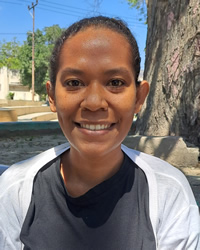
Photo Source:
Anonymous
|
Send Joshua Project a map of this people group.
|
| People Name: | Idate |
| Country: | Timor-Leste |
| 10/40 Window: | Yes |
| Population: | 17,000 |
| World Population: | 17,000 |
| Primary Language: | Idate |
| Primary Religion: | Christianity |
| Christian Adherents: | 58.00 % |
| Evangelicals: | 0.80 % |
| Scripture: | Translation Started |
| Ministry Resources: | No |
| Jesus Film: | No |
| Audio Recordings: | Yes |
| People Cluster: | Timor |
| Affinity Bloc: | Malay Peoples |
| Progress Level: |

|
Introduction / History
The Idaté people are a distinct ethnic and linguistic group primarily inhabiting the rugged central highlands of Timor-Leste. They are mostly concentrated in the Manatuto Municipality, particularly within the administrative posts of Laclubar and Soibada. The Idaté language belongs to the Austronesian family and is part of a specific linguistic subgroup known as Idalaka, which they share with the nearby Lakalei and Isí peoples. Historically, the Idaté region, especially Soibada, holds a prestigious place in Timorese history as a major center for Portuguese Catholic missions and education during the colonial era. For many decades, Soibada was home to influential seminaries and schools that produced many of the nation's early intellectual and political leaders. Despite this historical connection to colonial education centers, the Idaté people living in the surrounding mountains remained relatively isolated, maintaining a traditional social structure that relied on the defensive advantages of their high-altitude environment during times of conflict and occupation.
The Idaté are generally multilingual, speaking their native Idaté at home and among kin, while utilizing Tetum for regional trade and interactions with the national government.
What Are Their Lives Like?
The lives of the Idaté people are fundamentally shaped by the steep and often difficult terrain of the central mountains. Their economy is primarily based on subsistence agriculture, with families cultivating maize, beans, and various tubers across the sloping hillsides. In the higher, cooler elevations of Laclubar, coffee is a significant cash crop, providing the limited currency needed for modern necessities. Livestock also play a vital role in their social and economic life; horses are frequently used for transportation across rugged trails, while cattle and water buffalo serve as both agricultural labor and essential assets for traditional ceremonies and bride-price exchanges. Because of the historical missionary presence in the region, there is a deep respect for formal education, yet the daily reality for most families remains a physically demanding life of rural farming and community-based labor.
What Are Their Beliefs?
The spiritual identity of the Idaté people is characterized by a strong adherence to Roman Catholicism, which is deeply rooted in the historical legacy of the Soibada mission. However, this Christian faith is intricately layered over an ancient indigenous worldview centered on the concept of Lulik, or the sacred. They hold a profound belief in the active presence of ancestral spirits who are thought to guard the land and oversee the morality of the living. Most Idaté villages still maintain sacred ancestral houses, which serve as repositories for clan history and the focus of traditional rituals. These rituals are performed to ensure harmony with the spirit world, particularly during agricultural milestones or family events like marriages and funerals. It is common for the Idaté to participate in Catholic Mass while simultaneously observing ancestral taboos and customary laws, seeing no contradiction in honoring both their Christian faith and their traditional spiritual heritage.
What Are Their Needs?
The primary needs of the Idaté people revolve around overcoming the physical isolation imposed by their mountainous geography. The roads leading into Laclubar and Soibada are often in poor condition, characterized by steep gradients and unpaved surfaces that become treacherous or impassable during the rainy season. This isolation prevents farmers from efficiently getting their coffee and produce to larger markets in Manatuto or Dili and significantly delays access to emergency healthcare. There is a critical need for consistent, all-weather road infrastructure and better telecommunications coverage in the more remote mountain villages.
Furthermore, while Soibada has a rich educational history, modern schools in the region often suffer from a lack of resources and qualified teachers, leading to educational disparities for Idaté children. Access to clean, reliable water is also a major concern, as many highland communities must travel long distances to reach springs, which can become contaminated or run dry during the extensive dry season.
Prayer Points
Pray for the Idaté people, that they would find true spiritual clarity and a personal relationship with Christ that brings freedom from the fear of ancestral spirits.
Pray for the local Idate Christians to be centered on biblical truth.
Pray that soon Idate disciples will make more disciples.
Pray for the physical safety of those living in the steep central highlands, especially during the monsoon season when landslides and road washouts are common.
Pray for the revitalization of the educational and economic opportunities in the region, particularly for the youth who often feel forced to move to the capital to find a future.