Lao in Myanmar (Burma)
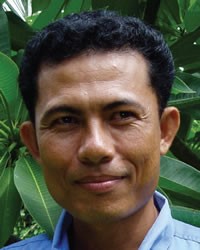
Photo Source:
Cambodia Research Network
|
Send Joshua Project a map of this people group.
|
| People Name: | Lao |
| Country: | Myanmar (Burma) |
| 10/40 Window: | Yes |
| Population: | 25,000 |
| World Population: | 4,114,000 |
| Primary Language: | Lao |
| Primary Religion: | Buddhism |
| Christian Adherents: | 3.00 % |
| Evangelicals: | 0.90 % |
| Scripture: | Complete Bible |
| Ministry Resources: | Yes |
| Jesus Film: | Yes |
| Audio Recordings: | Yes |
| People Cluster: | Lao |
| Affinity Bloc: | Southeast Asian Peoples |
| Progress Level: |

|
Introduction / History
A small number of Lao people live in Myanmar, with most concentrated in Tachileik District in Shan State's Golden Triangle area, where Myanmar, Thailand, and Laos intersect across the Mekong River.
Identifying Lao people in Myanmar today is a challenge, as they often blend in with Shan, Khun, and other Tai-speaking groups, where languages and cultures often overlap. The Lao people in northeast Shan State, who may be known locally as "Yun," first appeared as "Lao Shan." The Lao continue to be recognized by the Myanmar government as one of the country's ethnic groups though they have much greater numbers in Laos.
The Lao are one of the great Tai-speaking peoples of Asia, alongside groups like the Thais of Thailand, the Shan of Myanmar, and the Zhuang of China. They are not to be confused with the Lao Naga tribe in western Myanmar, which is a Tibeto-Burman speaking group completely unrelated to the Lao.
The ancestors of the Lao people are believed to have migrated south from China into Southeast Asia approximately 1,000 years ago. As they made their way into today's Laos, they found the land already inhabited by the Khmu. They drove the Khmu into the mountains and took the best land for themselves.
What Are Their Lives Like?
The Lao are renowned for being a gentle, friendly, and peace-loving people. Their communities revolve around close-knit family ties. It is common to find families with ten or more children in Laos, which has one of the highest birth rates of any country. Most of the Lao in Myanmar are engaged in farming or fishing, with some growing fruit and cotton. Their houses are typically built on stilts and are made of wood or bamboo, with chicken and livestock roaming beneath the floorboards.
What Are Their Beliefs?
Although nearly all Lao people identify as Theravada Buddhists, their faith is "interwoven with beliefs in various deities and local spirits. The latter, called phi, are ever-present in Lao religious beliefs; they reside in villages, houses, gardens, trees, water, crops, and ancestors. They have to be placated by offerings of food placed in small shrines and occasionally with sacrifices, such as chickens and pigs."
What Are Their Needs?
Catholic missionaries first entered Laos in the 17th century, but Evangelical Christianity never took root until the late 1800s, when Presbyterian missionary Daniel McGilvary and his team entered Laos from their base in northern Thailand, winning 3,000 Lao converts over the years.4 Since the start of the new millennium, the Church in Laos has experienced strong growth. Although as many as 100,000 (3%) of Lao people in Laos are Christians today, in Myanmar the status of Christianity among them is unclear, and they remain unreached. One of the biggest obstacles to their evangelization is the relaxed, care-about-nothing attitude of many Lao. A missionary once asked a Lao boy what his idea of heaven was. He replied, "It is like this: A large shade tree that casts a cool shadow under which I can lie and have someone fan me and bring me water and wait on me…. And I must have nothing whatever to do."
Prayer Points
Pray for his kingdom to come and his will to be done among the Lao people.
Pray for a movement of Lao households to study the Bible and accept the blessings of Christ.
Pray for a spiritual hunger that will drive the Lao people to the arms of Jesus.
Pray for workers who are filled with the fruit and the power of the Holy Spirit to go to the Lao people.