Kayah (Eastern) in Myanmar (Burma)
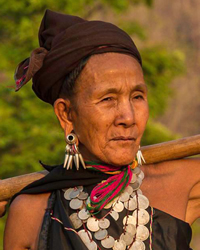
Photo Source:
Asia Harvest-Operation Myanmar
|
Send Joshua Project a map of this people group.
|
| People Name: | Kayah (Eastern) |
| Country: | Myanmar (Burma) |
| 10/40 Window: | Yes |
| Population: | 9,000 |
| World Population: | 28,000 |
| Primary Language: | Kayah, Eastern |
| Primary Religion: | Buddhism |
| Christian Adherents: | 20.00 % |
| Evangelicals: | 14.00 % |
| Scripture: | New Testament |
| Ministry Resources: | Yes |
| Jesus Film: | No |
| Audio Recordings: | Yes |
| People Cluster: | Karen |
| Affinity Bloc: | Tibetan-Himalayan Peoples |
| Progress Level: |

|
Introduction / History
Nine thousand Eastern Kayah people inhabit villages in Kayah State's Loikaw District, west of the Salween River which forms the border with Thailand. In Burmese, the Salween is known as the Thanlwin River. A small number of Eastern Kayah live in southern Shan State. The Kayah first established a permanent village in Thailand in the 1940s and have since been joined by thousands of refugees who have fled across the border due to war and deprivation. Now, more Eastern Kayah live as refugees in Thailand and around the world than remain in their homeland. Some have been resettled in the U.S.
The Kayah are divided into two very distinct language groups, labeled Eastern and Western Kayah. An overwhelming number identified as Christians. The Kayah population had increased substantially from two decades earlier in 1911.
Although they have some words in common, Eastern and Western Kayah have diverged over many generations so that today people from the two main Kayah groups have difficulty communicating with each other. Most Eastern Kayah also speak S'gaw Karen and Burmese, while many families languishing in refugee camps have learned other languages including Shan, Thai, and Western Kayah.
For centuries the Kayah were feared as fierce warriors, with the first missionary to preach the gospel to them, Francis Mason, writing, "I visited them in 1859 and was favorably received. We had assistants and schools among them for several years…. They do a large business in plundering the weaker tribes in their vicinity and carry off their women and children to sell them into captivity. Any town or village too weak to protect themselves is considered lawful prey." The Kayah were led by local princes, or sawbwas, whom the Burmese kings frequently tried to conquer. Their efforts failed, and the Kayah "maintained their independence under native chiefs, who ruled the two or three districts into which their country is divided."
What Are Their Lives Like?
Kayah society was once devastated by alcoholism, with even little children lying around the village inebriated. Eastern Kayah women wear black dresses with white belts and fasten lacquered cane rings around their legs. In some cases, the canes can weigh up to 60 lbs. (27 kg) and are so bulky that the Burmese have nicknamed the Kayah women "elephant women." Despite their poverty, they also love to adorn themselves with amber and coral necklaces. Festivals are grand occasions, when the villagers dance around a totem pole as musicians play traditional brass drums called Hpa Si, or "frog drums."
What Are Their Beliefs?
Although many Eastern Kayah living in remote villages still follow animistic rituals, most members of this tribe have converted to Buddhism due to the influence of neighboring Buddhist groups. Approximately one-fifth of Eastern Kayah people profess Christ, but the gospel has not penetrated their communities as deeply as it has among many of the Karen tribes.
What Are Their Needs?
Missionary Alonzo Bunker and his wife arrived in Loikaw to work among the Eastern Kayah in 1866. On his first exploratory visit, Bunker and a group of Karen Christians shared the gospel with some wild-looking Kayah men on a jungle path. He wrote: These wild men joined us at our evening worship. They saw the reverent attitude of our Karen Christians and listened to their sweet singing, such as they had never heard." Today, most Eastern Kayah churches are Catholic or Baptist, but the Eastern Kayah believers need to be revived by the Holy Spirit, as many have fallen into nominalism or syncretism. The first Scripture in Eastern Kayah finally emerged with the publication of the New Testament in 2022.
Prayer Points
Ask God to strengthen those who are sharing the gospel so they can do it with love and wisdom.
Pray for Eastern Kayah hearts to be open and for whole families to experience peace and hope in Christ.
Pray for revival fire to spread uncontrollably from family to family.
Pray for their leaders to listen to the Lord, hear him, and obey him.